Creative Wedding Video Ideas: Cool Concepts for a Film That Feels Like You
Most wedding videos look like the same film with different faces. The ceremony, the first dance, the speeches — assembled in the same order, set to the same three categories of royalty-free music. It takes about five minutes to forget you watched it.
Creative wedding video ideas aren't about novelty. They're about specificity — making a film that reflects who you actually are instead of how wedding videos are supposed to look.
Quick Answer:
The most effective creative wedding video ideas reframe the storytelling structure, not just the shot list. Think non-linear edits that open at a peak moment, voiceover narration in the couple's own words, mockumentary-style guest interviews, or super 8 insert footage that gives the film a handmade texture. The goal is a film with a clear directorial perspective — one that would feel distinct even without knowing whose wedding it was.

In this article
- What makes a wedding video feel like you?
- What are the most creative wedding video ideas worth asking for?
- What cool wedding video ideas work for any venue?
- How do you tell your videographer what you actually want?
- What is the difference between wedding coverage and a wedding film?
- Who is this for?
- Frequently asked questions
What Makes a Wedding Video Feel Like You?
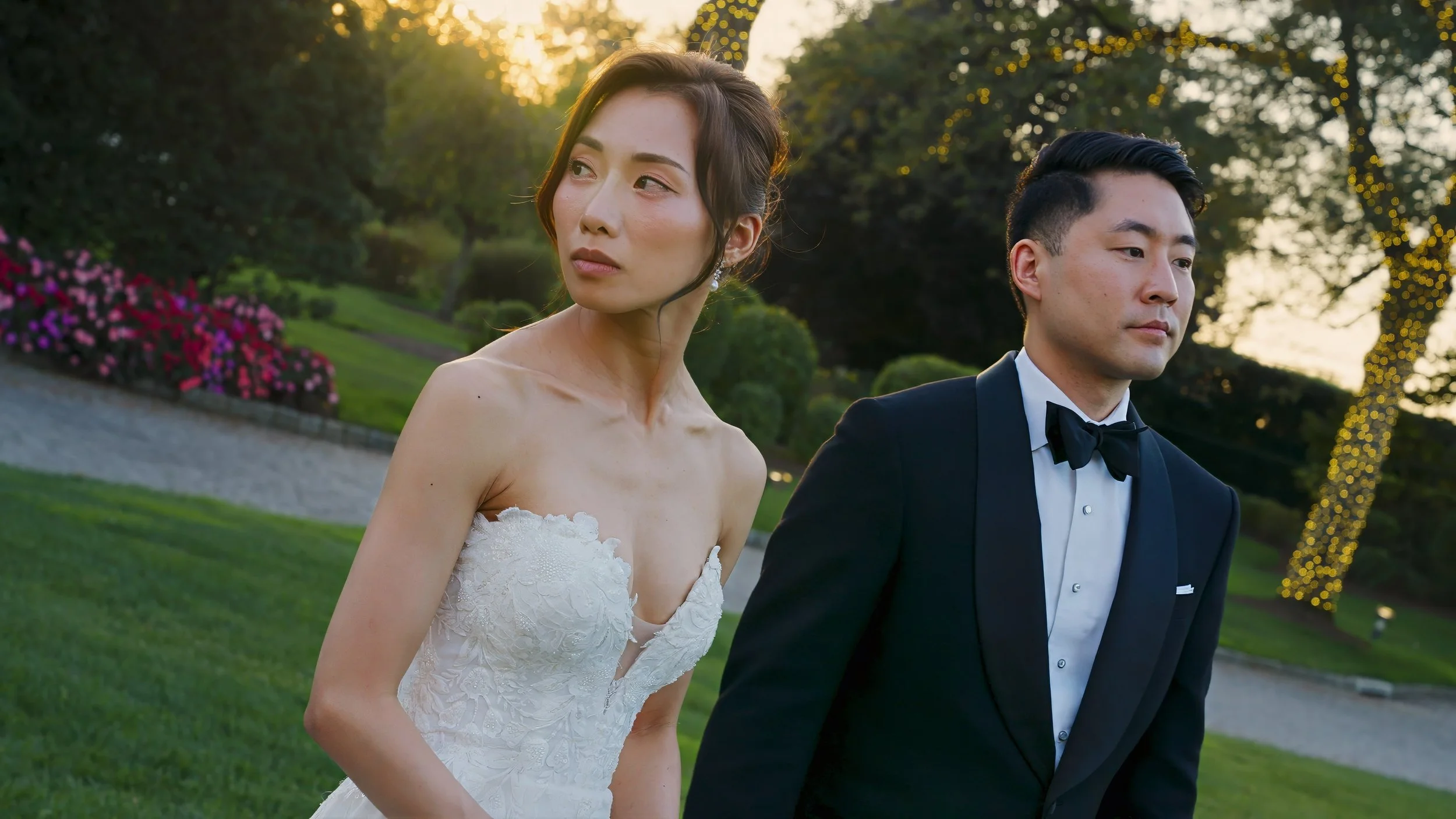
The short answer is editorial decisions. A wedding video feels like "you" when the edit is built around choices — what to show, what to cut, how to sequence it — that reflect the couple's actual personality. That requires a director with a point of view, not just a camera operator covering the timeline.
Most wedding videos fail this test not because of technical quality but because they're assembled rather than directed. The vendor captures everything in case the client wants it. The result is comprehensive and forgettable.
The films people actually rewatch, share, and describe to their friends years later are the ones where someone made choices. What to leave in. What to cut. How to open. Where to let silence sit. These are directorial decisions, not coverage decisions — and they're exactly what separates a wedding film from a wedding video.
If you're looking for cool wedding video ideas, start here: before you search for inspiration on what to include, decide what should define the film. That answer will tell you what to brief your filmmaker on.
What Are the Most Creative Wedding Video Ideas Worth Asking For?
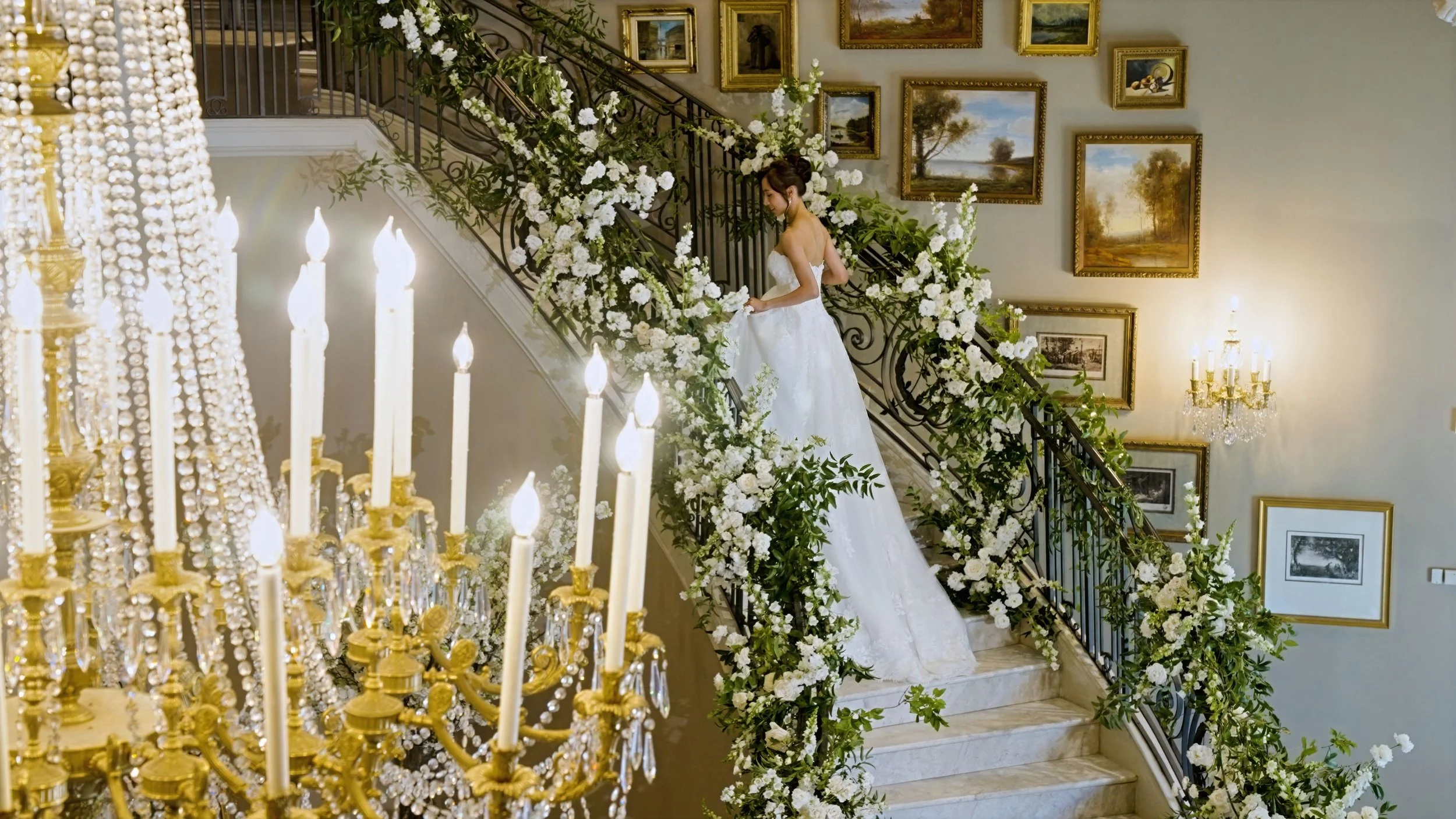
The concepts below aren't trendy filters or camera overlays. Each one changes the narrative structure or emotional logic of the film in a way that makes it harder to watch passively. These are the wedding video ideas worth having a real conversation about before the day arrives.
| Concept | What it looks like | Best for |
|---|---|---|
| Non-linear edit | Film opens at an emotional peak, then works backward as the story | Couples who want narrative structure, not chronology |
| Voiceover narration | Couple's own words recorded separately, layered into the edit | Couples with a strong shared story or distinct voice |
| Mockumentary / talking heads | Brief guest interview clips intercut with the day's footage | Couples with a sense of humor; close-knit groups |
| Super 8 / film grain inserts | Short sequences shot on film stock or high-quality emulation | Couples who want a handmade, personal texture |
| Split-screen getting ready | Both partners' preparation cut side by side to the same music | Any couple — especially effective before the first look |
| Guest video booth messages | Styled lounge where guests record short video messages during reception | Couples who want to capture their guests' voices, not just presence |
| Social / teaser cut | 60–90 second vertical or square edit built for Reels/Instagram | All couples — planned separately from the main film |
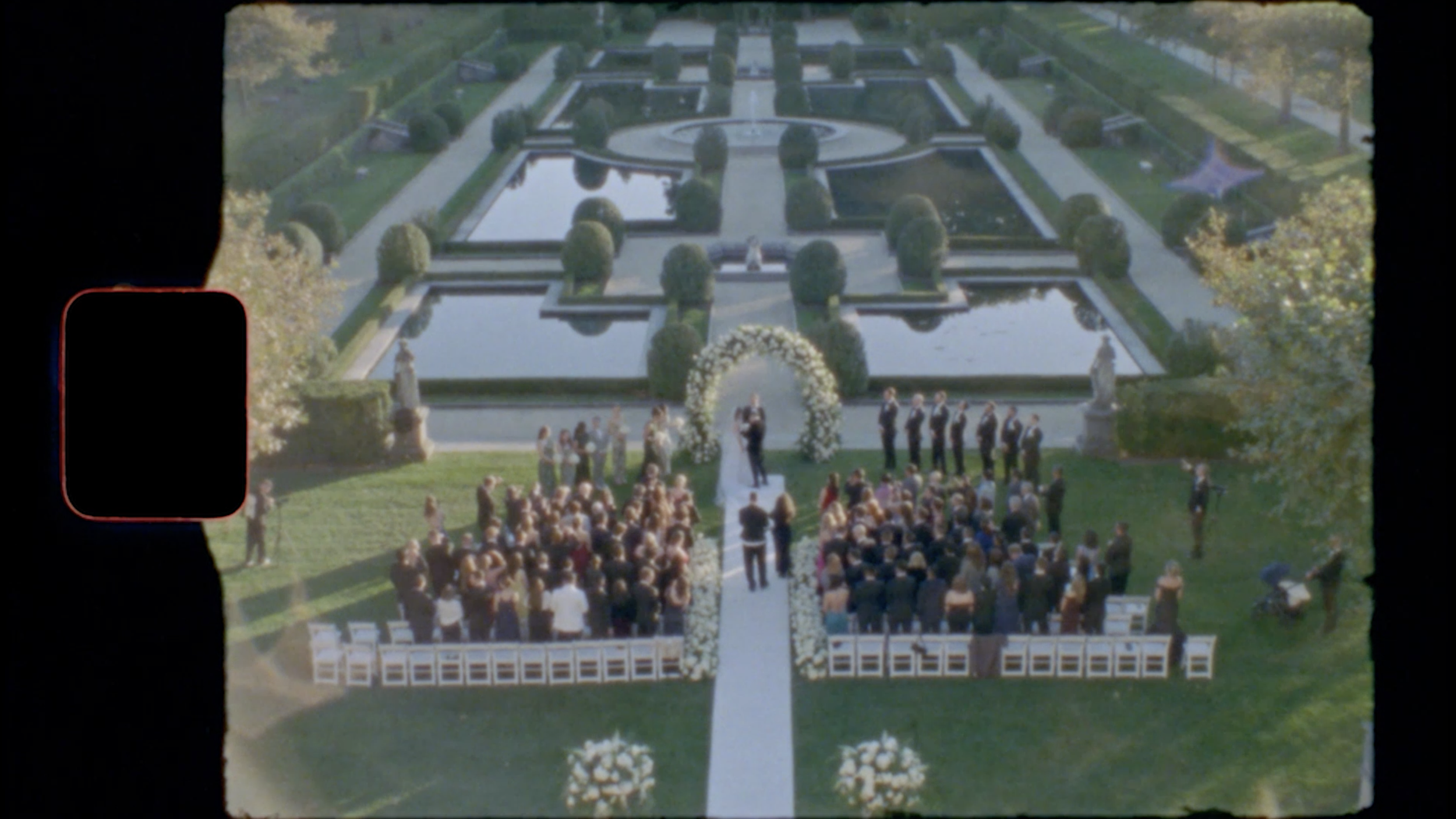
| Dedicated drone sequence | Aerial footage used as structural transitions, not just B-roll | Outdoor / estate / vineyard / waterfront venues |
Non-linear edit: Most wedding films follow the day's timeline — ceremony to cocktail hour to reception. A non-linear edit doesn't. It opens on a peak moment — the kiss, the first dance, the burst of tears during vows — and uses that as the emotional anchor. Everything before it becomes the setup. The structure works because it treats the film as a story with a beginning and a payoff, not a sequence of events. Ask for this if you want the film to feel like it was written, not recorded.
Voiceover narration: The couple records their own words — not in a formal sit-down interview, but in a loose, honest session before or after the wedding. What they say about each other, about the day, about what they were thinking when they saw their partner walk in. That audio gets layered into the edit, replacing or supplementing the music as the emotional driver. The result is a film that sounds like the couple. That's a different category of memorable.
Mockumentary / talking heads: Borrowed from The Office and Parks and Recreation, this format intercuts the day's events with brief talking-head moments from guests, the wedding party, or the couple. Five to ten seconds per person — funny, honest, occasionally ridiculous. It works because it captures other people's experience of the wedding, a dimension standard highlight reels miss completely.
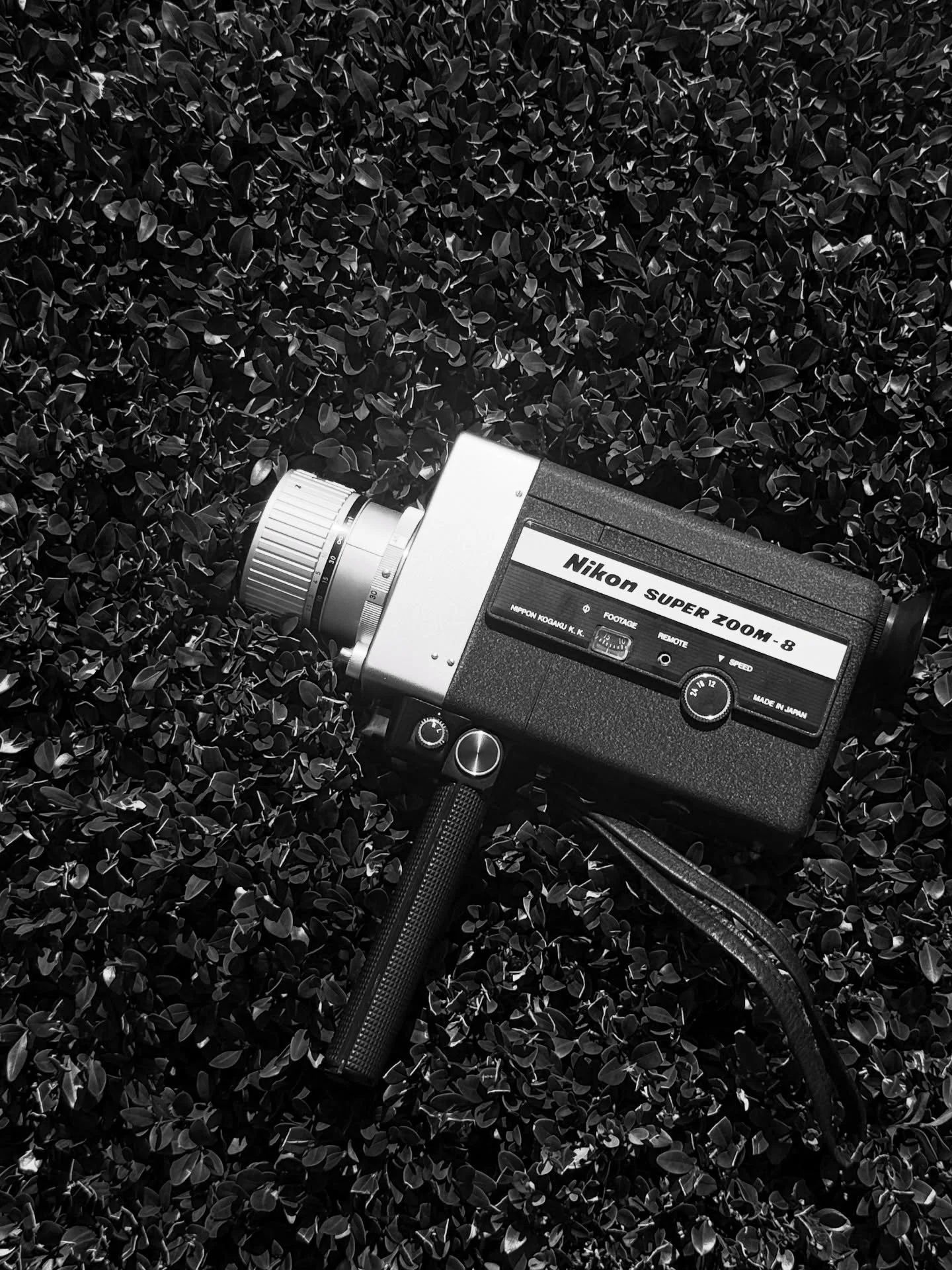
Super 8 or film grain inserts: Shot on actual film stock or high-quality emulation, these inserts — anywhere from 30 seconds to two minutes of footage — add a texture digital video doesn't have. Used as transitions or a separate "memory reel" at the end of the film, they give the edit a quality that reads as personal and handmade rather than produced. The contrast between crisp digital and grainy film is part of the effect.
Split-screen getting ready: Both partners filmed getting ready simultaneously, cut side by side. Same music, same rhythm, separate worlds. When it lands, it conveys the parallel anticipation of two people who don't know what the other is feeling at the same moment — and then it ends the sequence when they see each other. Simple structure, strong emotional payoff.
What Cool Wedding Video Ideas Work for Any Venue?
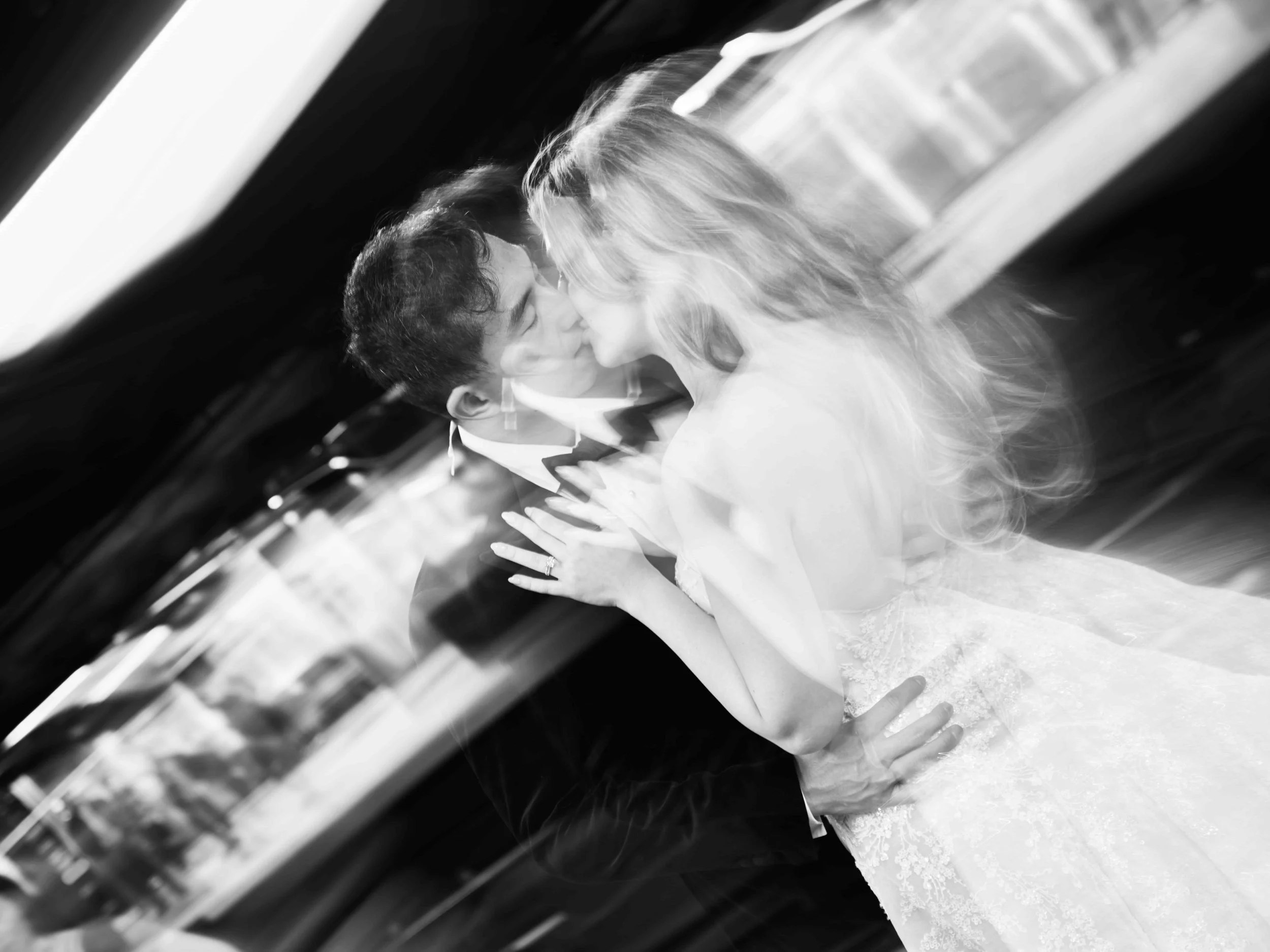
Some creative concepts require outdoor space, drone permits, or specific gear. These don't. They're structural and editorial decisions that work whether your wedding is in a Manhattan loft, a vineyard barn, or a hotel ballroom in downtown LA.
Open on a detail, not the timeline. Shoes, rings, a handwritten note, the back of a dress before the final button. The film opens in close-up — no wide establishing shot, no aerial reveal. Just specificity before scale. It works anywhere because it's an editorial choice, not a logistical one.
Build the ceremony sequence around audio, not visuals. Find the two or three sentences your officiant said that were actually specific to you — not the standard vows, the real ones. Build 90 seconds of cut around those words. The visuals serve the audio, not the other way around. It's a different kind of cool because it prioritizes what was said over what was seen.
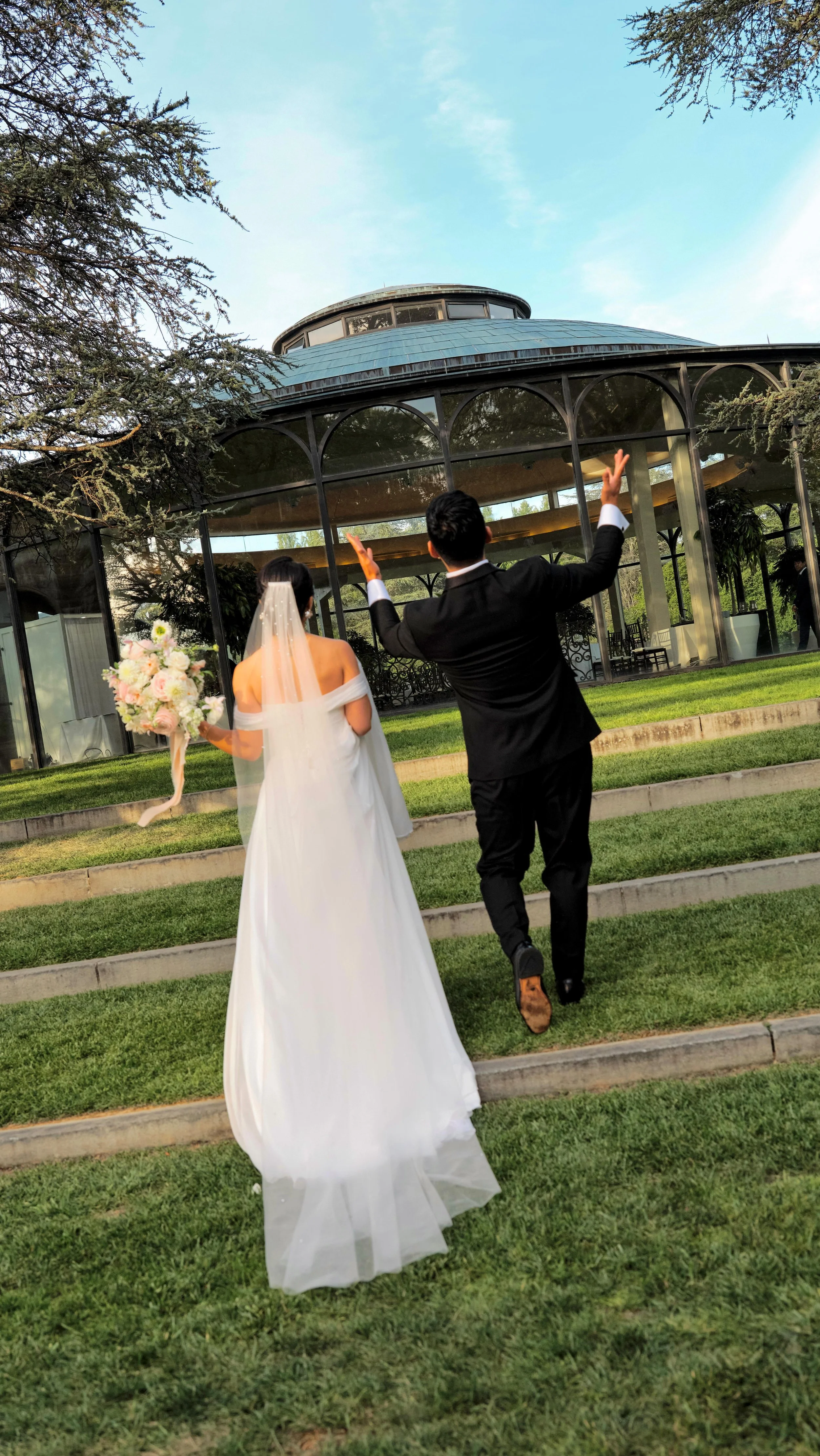
Use a second camera for reactions. A second shooter positioned for the reaction — not the action — captures what the primary camera misses: the crowd's response when you walked in, your partner's face in the five seconds before they saw you, the friend who held it together all day and then didn't. These are the frames people describe for years.
Commission a social cut as a separate deliverable. A 60–90 second vertical or square edit, cut harder and faster, built specifically for Instagram and Reels. Different music, different pacing, different emotional logic than the main film. It lets you share the day without the share replacing the film.
Design a guest video message sequence. A styled video booth — part of the reception decor, not a separate setup — where guests leave short messages to the couple throughout the night. The footage gets woven into a separate short or added as an epilogue. The result is a record of the people who were there that most films don't capture at all.
How Do You Tell Your Videographer What You Actually Want?
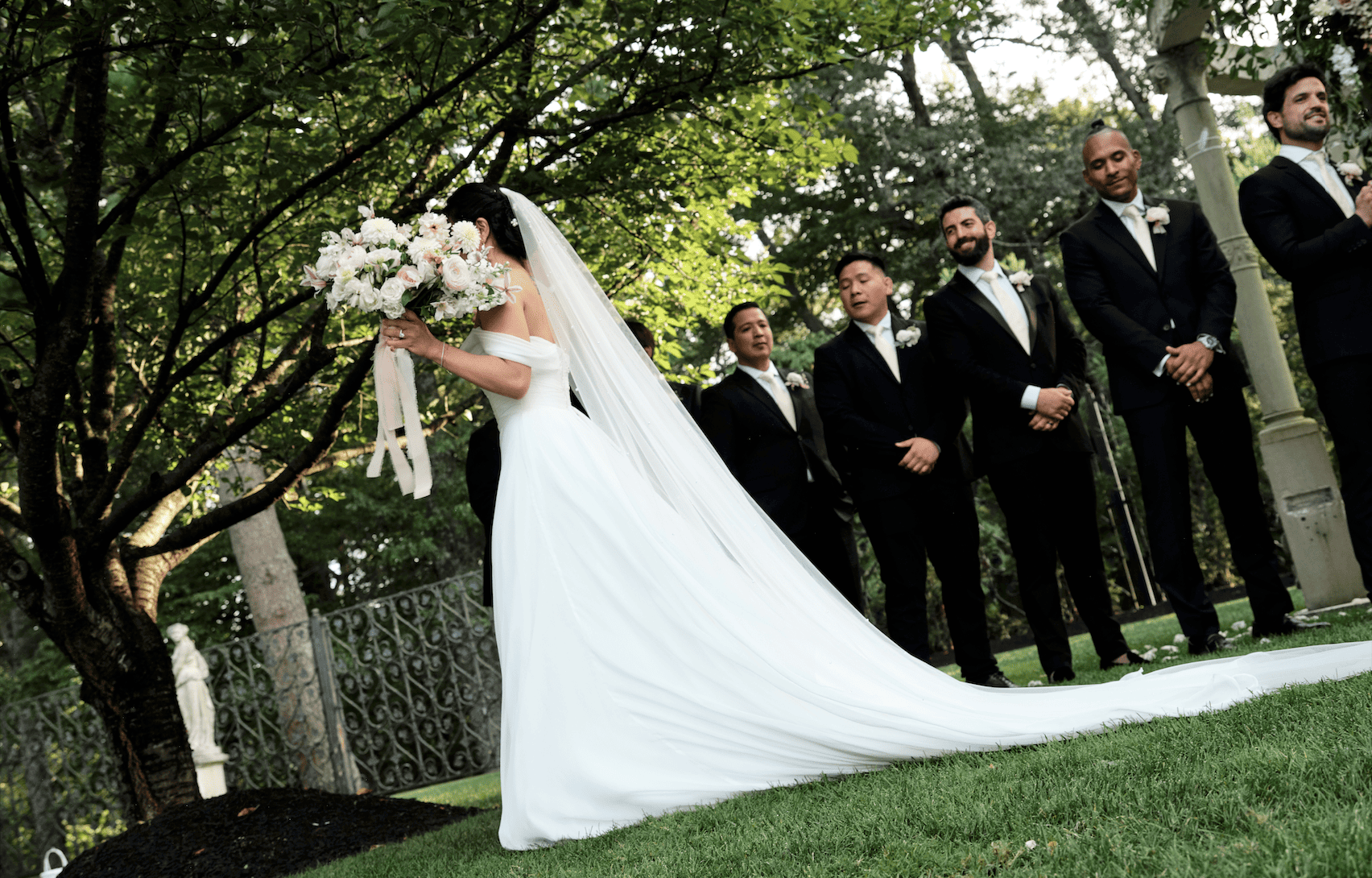
The most useful preparation before a consultation with your filmmaker isn't a Pinterest board. It's answering three questions about the film you actually want to watch.
What films have made you feel something? Not wedding films — any films. The answer tells your filmmaker what emotional register you're looking for: slow and meditative, propulsive and kinetic, funny and irreverent. It's more useful than color palette references and twice as specific.
What do you want to remember about the day that a photograph can't hold? Sound. Movement. The way the room shifted when the doors opened. The laugh you can't explain to someone who wasn't there. Identifying these moments tells your filmmaker where to linger — where to stop covering and start looking.
What are you not interested in seeing? Every couple has an answer. Long speeches cut in full. Forced staged portraits. The moments that felt performative rather than real. Saying what you don't want is as directorial as saying what you do — and it's often more clarifying.
A filmmaker who can't respond to those three questions with a genuine point of view is probably doing coverage. That's a useful thing to find out before you book.
What Is the Difference Between Wedding Coverage and a Wedding Film?
Coverage documents what happened. A film makes the viewer feel what happened. The distinction is directorial intention, and it shows in every decision from the shot list to the final cut.
Coverage-oriented videography operates on inclusion: capture everything, deliver everything, let the client decide what matters. It's comprehensive and safe. The output is often technically correct and emotionally inert.
Film-oriented wedding videography operates on exclusion: the filmmaker decides what to include, how to sequence it, and what the film is actually about before the edit begins. Not every toast makes the cut. Not every bouquet toss. What makes the cut earns its place because it advances the story — the same logic applied to any film worth watching.
According to industry data from The Knot, couples are increasingly seeking videographers who distinguish themselves as filmmakers — not just as vendors who document the day but as collaborators who shape how the story gets told.
The difference matters most when you're watching it back in five years. Coverage shows you what happened. A film puts you back there.
At Arrakis Films shapes everything from how we approach the shooting day to how the final cut is structured. A wedding film that feels like "you" can only exist if someone was making editorial decisions on your behalf from the moment they arrived.
Who Is This For?

This is for couples who've seen enough standard wedding highlight reels to know they want something different — but haven't had the vocabulary to say exactly what that means yet.
For people planning weddings at venues that deserve a real film, not just documentation. For couples in New York and Los Angeles who've seen what the right filmmaker can do with those spaces and want that for their own day.
For anyone who's ever watched a wedding video and thought: this is beautiful, but it doesn't feel like those people — and decided they want their film to feel different.
If you're already thinking about tone, structure, and what makes a film memorable rather than just comprehensive, you're ready to work with a filmmaker.
about what your wedding film could look like.
Frequently Asked Questions
-
The non-linear edit is consistently the most effective creative departure from the standard highlight reel format. Instead of following the day's timeline, the film opens at an emotional peak and uses the rest of the footage as the story that leads there. It requires a filmmaker comfortable making structural decisions rather than just assembling footage, but the result is a film with genuine narrative shape. Pair it with voiceover narration and you have something most couples have never seen at a wedding.
-
According to WeddingWire, standard wedding videography in the US ranges from $1,500 to $4,000. Cinematic and film-style packages with distinct editorial approaches typically run $3,500 to $8,000+, depending on the market, edit length, and whether deliverables like social cuts or film inserts are included. In high-cost markets like NYC and LA, luxury film-focused packages often start at $5,000. The premium reflects editorial time and directorial skill, not just gear.
-
Yes — and you should. Any filmmaker worth working with will have a clear response to questions about structure, pacing, and the kinds of films they're inspired by. If they can't speak to their editorial philosophy in specific terms, that's useful information. Ask to see two or three films with different styles from their portfolio. The variety in their work (or lack of it) tells you whether they're directing or just covering.
-
Lead with environment and atmosphere rather than staged moments. Documentary-style filming — following the day as it unfolds rather than directing the couple into shots — tends to be more comfortable for people who feel self-conscious in front of a camera. Mockumentary-style guest interviews shift attention away from the couple during key parts of the edit. Voiceover narration recorded in a relaxed setting is often far more natural than an on-camera interview.
-
The main highlight film typically runs 8–15 minutes for most couples. Short-form edits (3–5 minutes) work well for storytelling-focused cuts where every second carries weight. Social cuts run 60–90 seconds. The right length depends on the structure — a non-linear edit with narration can be more compelling at 6 minutes than a standard highlight at 10. More footage isn't a better film. More intentional footage is.
-
Intimate weddings are often better suited to film than large productions — there's nowhere for inauthenticity to hide. Voiceover narration, close observation filming, and a single tightly edited short-form film tend to be more powerful than a full-length reel. The smaller guest list also makes guest message sequences more meaningful: there are fewer people, but each one matters more. Lean into the intimacy rather than trying to make the film look bigger than the day was.
-
Yes, and it's worth discussing as a separate deliverable rather than assuming it's included. A social cut is a distinct edit — different music, different pacing, different aspect ratio — not just a trimmed version of the highlight film. The best results come when it's planned from the start of the shoot rather than assembled from footage shot for a different format. Ask about this when you're reviewing the deliverables list with your filmmaker before booking.