The Best Fall Wedding Colors for 2026 — and How to Actually Use Them
We photograph and film weddings in New York and Los Angeles, and every fall we watch the same palette look different on three dates. A plum and champagne table glows at a September golden hour. By late November the sun is down before the ceremony ends, and that same table lives under tungsten bulbs. This guide gives you ten fall 2026 palettes with hex codes, and tells you which month each one is built for.
Quick Answer: The fall wedding colors for 2026 split into two directions. Muted earth tones (terracotta, sage, burnt cedar, mocha, champagne) suit September and early October daylight. Deeper jewel tones (plum, burgundy, forest green, teal) suit evening receptions and November, when New York sunset falls to 4:35 pm. The WGSN and Coloro forecast for autumn/winter 2026/27 names Transformative Teal, Wax Paper, Fresh Purple, Cocoa Powder and Green Glow. Build every palette on a warm neutral base with one clear accent.
In this article
- What are the fall wedding colors for 2026?
- What do the color forecasts say about fall 2026?
- The 10 best fall wedding color palettes for 2026
- Which colors suit a September, October or November wedding?
- How do fall colors look under candlelight and warm bulbs?
- Which fall colors photograph best, in photos and on film?
- Which fall flowers match your palette?
- Which fall wedding colors should you skip in 2026?
- What will fall 2027 wedding colors look like?
- How we shoot fall color so the photos and the film match
- Frequently asked questions
What are the fall wedding colors for 2026?
Fall 2026 wedding colors fall into two groups that work at different times of day. Earth tones like terracotta, sage, burnt cedar, mocha and champagne carry daylight ceremonies in September and October. Jewel tones like deep plum, burgundy, forest green and teal carry candlelit receptions and most of November. Most strong palettes borrow from both.
For years the question sounded like a choice: go earthy or go dramatic. On a real wedding day you get both whether you plan for it or not. A 4:00 pm ceremony in early October happens in sunlight. The dinner at 7:30 pm happens under the venue’s lamps. The palette that wins is the one that reads well in both rooms.
That is why we build fall palettes in three layers:
A base that covers the most surface: linens, the largest share of florals, often the bridesmaid dresses. In fall this is usually a warm neutral like champagne or cream.
An accent that carries the mood: plum, rust, teal, burgundy. It sits at roughly 20 to 30 percent of what the camera sees.
A metal or a dark anchor: gold, brass, copper, or a deep brown like cocoa or burnt cedar that gives the photographs their weight.
Green is the quiet constant of the season. In the 2025 Real Weddings Study cited by The Knot, 33 percent of couples used light green and 27 percent used dark green. In fall, greenery does the connective work between the base and the accent, so you rarely need to count it as a palette color.
What do the color forecasts say about fall 2026?
The most specific forecast for fall 2026 comes from WGSN and Coloro, who named five key colors for autumn/winter 2026/27: Transformative Teal, Wax Paper, Fresh Purple, Cocoa Powder and Green Glow. Pantone’s 2026 Color of the Year, Cloud Dancer, is a soft white that works as a base under any fall palette.
The two authorities publish on very different calendars, and that explains why wedding blogs disagree so much about “the” color of fall. WGSN and Coloro announced the A/W 26/27 key colors on October 7, 2024, almost two years before the season. Pantone announced PANTONE 11-4201 Cloud Dancer on December 4, 2025, ten months before it. Wedding blogs then name deep plum or terracotta as the fall trend, usually without a source.
Here is how the forecast colors translate to a wedding:
Transformative Teal, WGSN’s color of 2026, is a dark blue-green. It works as velvet, ink on stationery, bridesmaid dresses or glassware. Under warm light it deepens toward green.
Wax Paper is a creamy, slightly yellow off-white. It is the most useful color on the list for a wedding, because it replaces stark white in linens and florals and keeps skin tones warm.
Fresh Purple is saturated and royal. Use it as a flower or ribbon accent. Large areas of it cast color onto faces.
Cocoa Powder is a red-toned brown that continues the mocha and chocolate direction of recent seasons. It photographs as warmth.
Green Glow is a bright yellow-green. At a wedding it belongs in small details only, for a reason we explain in the photography section below.
Our reading: if your wedding is in fall 2026, the A/W 26/27 forecast describes your season. Cloud Dancer describes your year. Use Wax Paper or Cloud Dancer as the base and take the accent from the other four.
The 10 best fall wedding color palettes for 2026
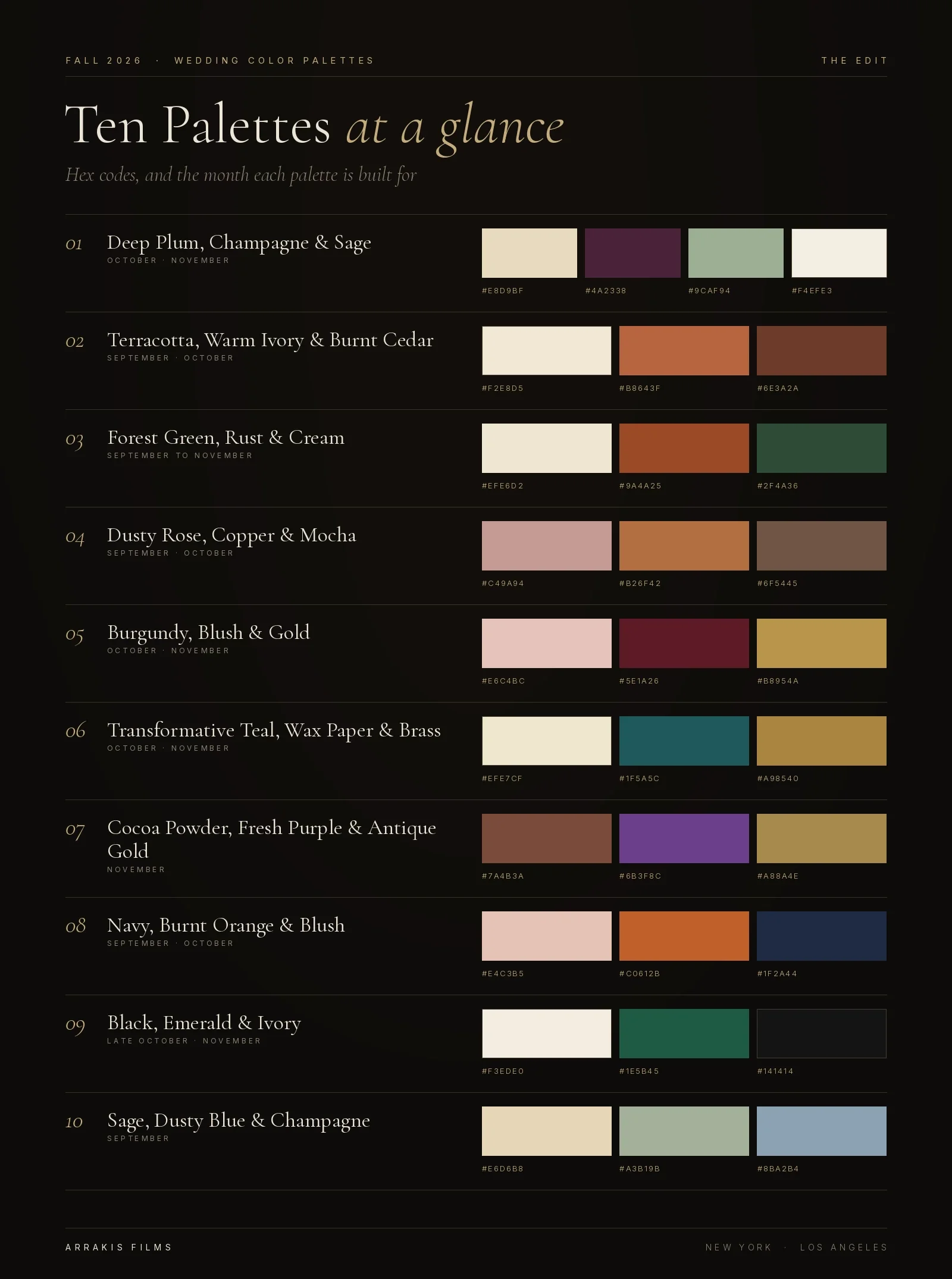
These ten palettes cover the two directions of fall 2026, from daylight September earth tones to November jewel tones. Each one lists hex codes, the months it suits, the light it needs and how it behaves on camera. The hex codes are our own interpretation, matched against fabric and flower samples we have photographed.
1. Deep Plum, Champagne and Sage
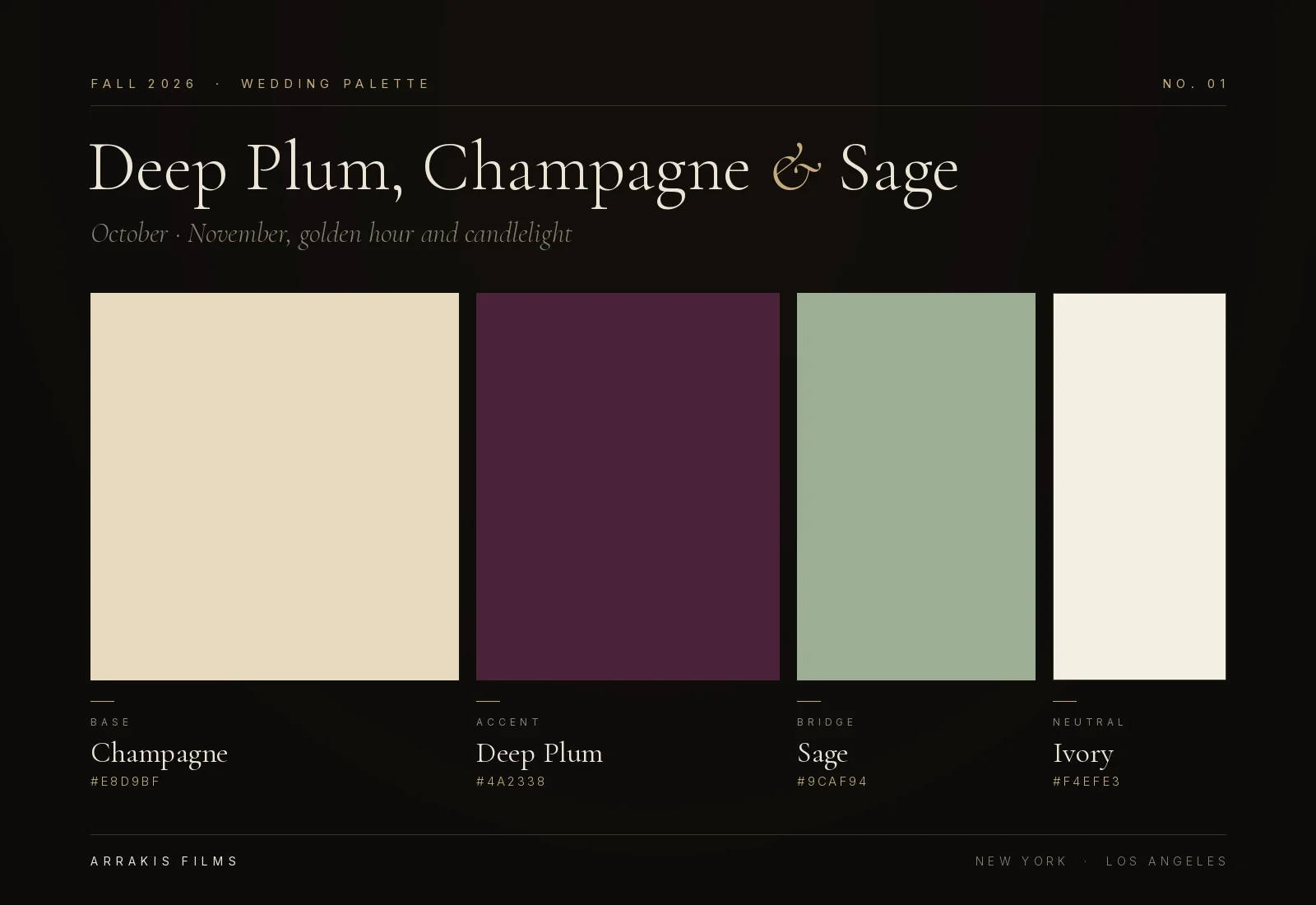
Hex: #4A2338 · #E8D9BF · #9CAF94 · #F4EFE3
Deep plum with grey in it, set over a warm champagne base. Sage bridges the two. This is the most flexible palette of the season because the plum reads as romance at night and the sage keeps it from going heavy in daylight. Plum bridesmaid dresses or suit accessories, champagne linens, sage and eucalyptus in the florals, ivory candles.
Months: October and November. Light: golden hour and candlelight. Best for: evening receptions in estates or lofts, and couples who want a fall palette that does not reference pumpkins. Photo and film note: plum holds its color under warm bulbs better than burgundy, which tends to go brown. Keep the plum off large flat surfaces near faces, so it does not tint skin in close portraits.
2. Terracotta, Warm Ivory and Burnt Cedar
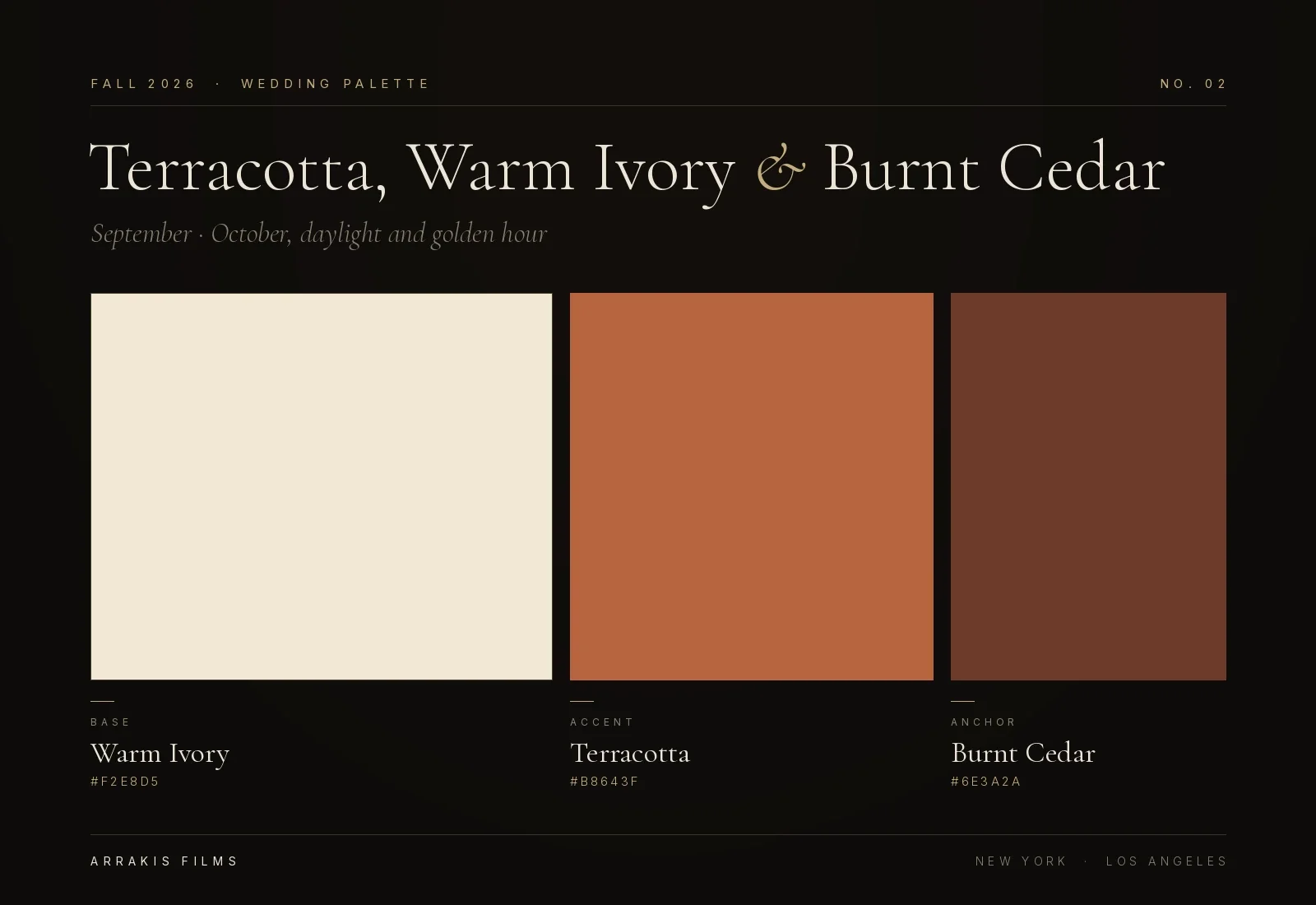
Hex: #B8643F · #F2E8D5 · #6E3A2A
A muted clay orange with the reddish brown of burnt cedar, softened by warm ivory in place of white. This is the palette of an outdoor October afternoon. Terracotta linen napkins and velvet ribbon, ivory florals with dried grasses, cedar-toned wood on the tables.
Months: September and October. Light: daylight and golden hour. Best for: vineyards, barns, gardens and semi-outdoor venues. Photo and film note: terracotta is the easiest fall color to photograph. It warms in golden light without oversaturating, and it renders softly on Super 8.
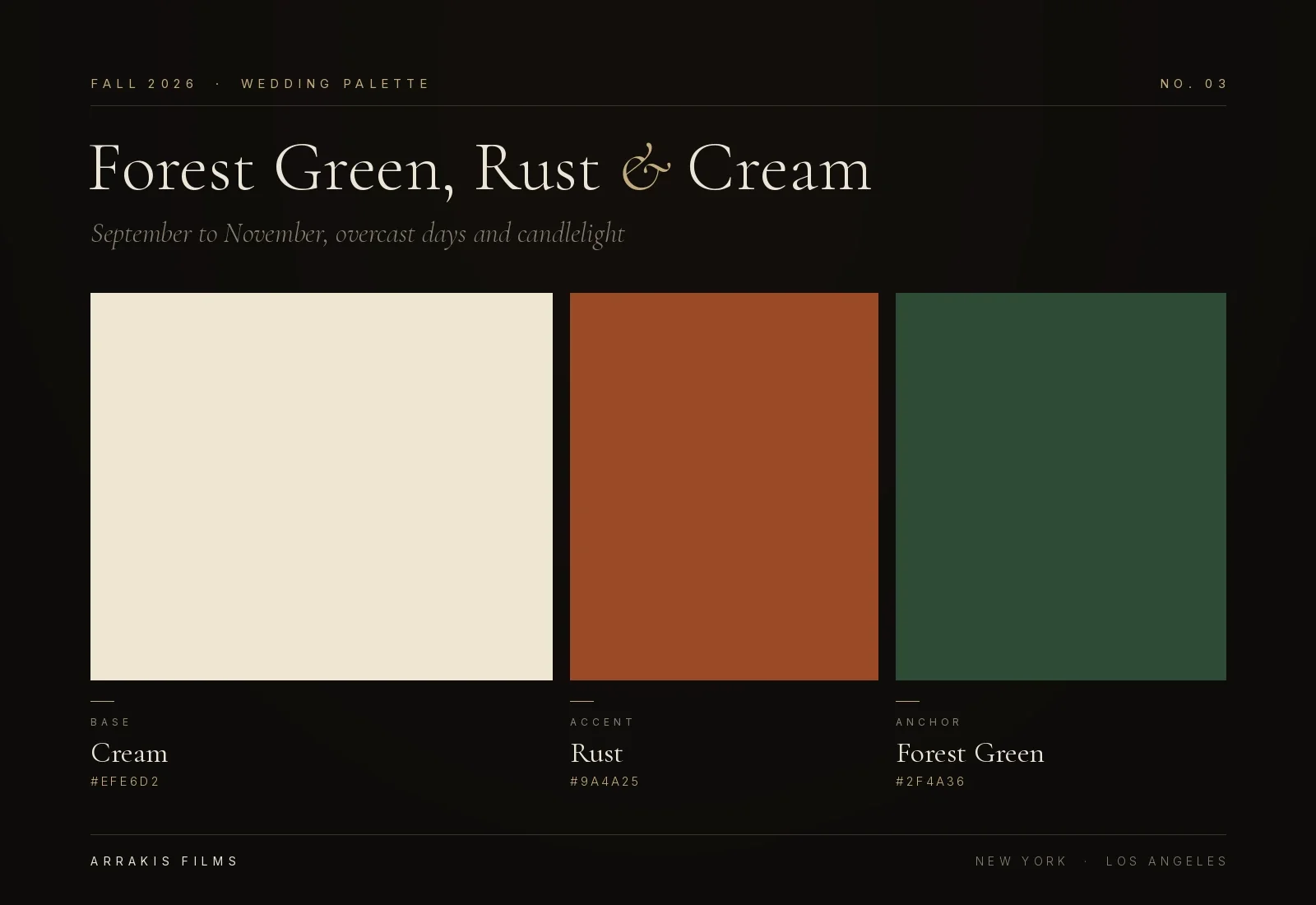
3. Forest Green, Rust and Cream
Hex: #2F4A36 · #9A4A25 · #EFE6D2
Deep forest green with rust, which is darker and browner than orange, grounded by cream. The contrast between green and rust is strong enough to hold together in any light.
Months: all fall. Light: overcast days and candlelight. Best for: wooded venues and Hudson Valley estates, for a nature-forward palette with an editorial edge. Photo and film note: forest green is one of the best colors for overcast days, when warm tones go flat. In a dark room it needs real lighting, or it merges into the shadows.
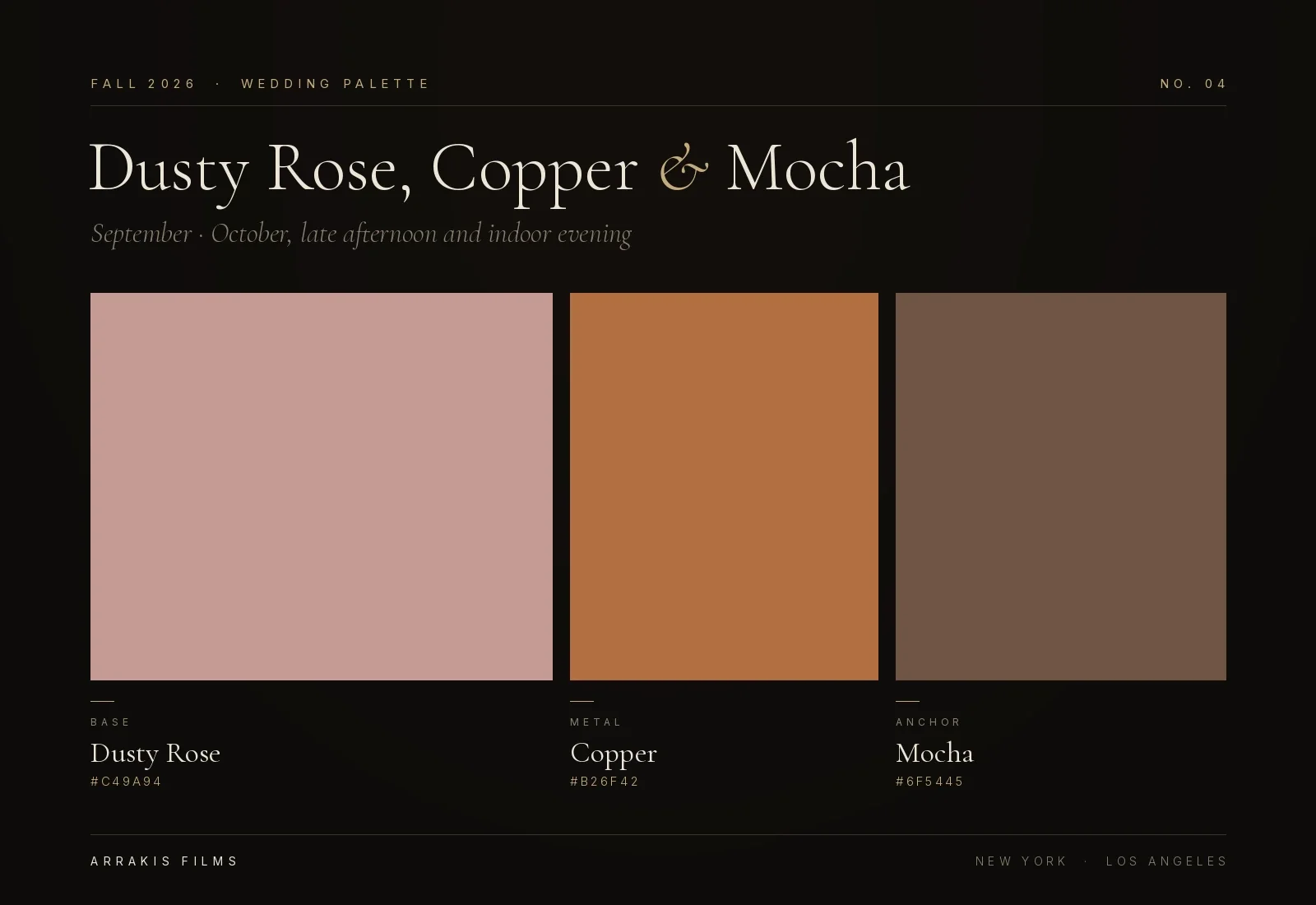
4. Dusty Rose, Copper and Mocha
Hex: #C49A94 · #B26F42 · #6F5445
A soft fall palette for couples who want warmth without darkness. Dusty rose is muted, far from summer blush. Copper gives shine, and mocha anchors it.
Months: September and October. Light: late afternoon and indoor evening. Best for: daytime ceremonies with an indoor dinner, and couples who find plum or burgundy too dark. Photo and film note: copper catches candlelight well. Under very warm bulbs it can turn brown, so pair it with at least some cool daylight in the room or a brighter metal.
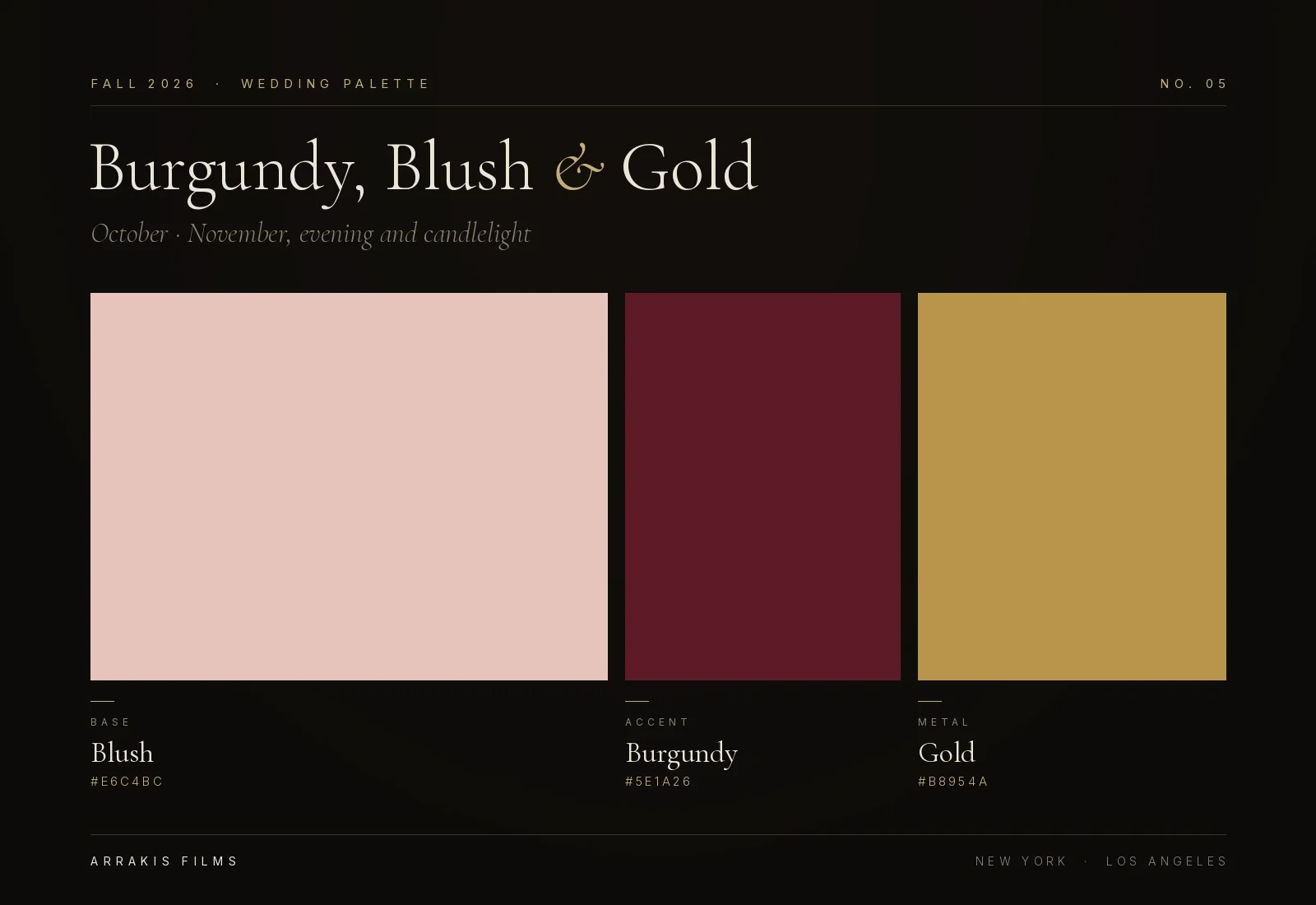
5. Burgundy, Blush and Gold (Updated)
Hex: #5E1A26 · #E6C4BC · #B8954A
Burgundy is still a fall color. The version that works in 2026 uses it as punctuation. Burgundy goes into floral accents and ribbon, blush takes the base, and warm gold sits in the tableware.
Months: October and November. Light: evening and candlelight. Best for: ballrooms and classic venues, for couples who love the traditional fall look and want it lighter. Photo and film note: burgundy absorbs light. Kept to about a quarter of the palette it reads rich. As the dominant color in a dim room it goes close to black on camera.
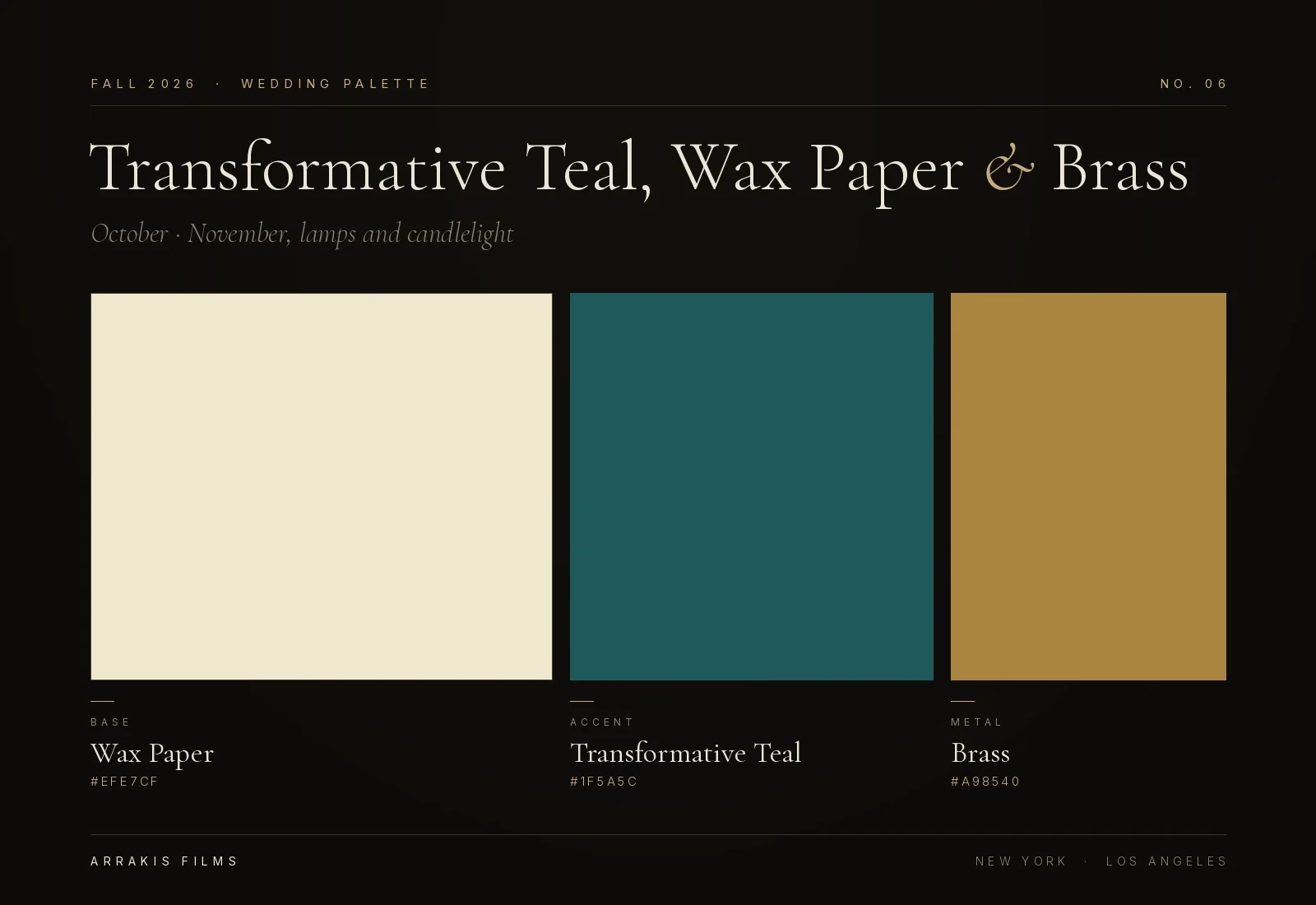
6. Transformative Teal, Wax Paper and Brass
Hex: #1F5A5C · #EFE7CF · #A98540
The forecast palette. WGSN’s 2026 color of the year over a creamy near-neutral, with brass for warmth. It answers the “fall wedding colors with blue” question without navy.
Months: October and November. Light: lamps and candlelight. Best for: city hotels and modern venues, for couples who want a palette their guests have not seen three times already. Photo and film note: teal shifts toward green under warm light, so choose your fabric under the venue’s actual bulbs. Velvet makes it look darker than satin in the same dye.
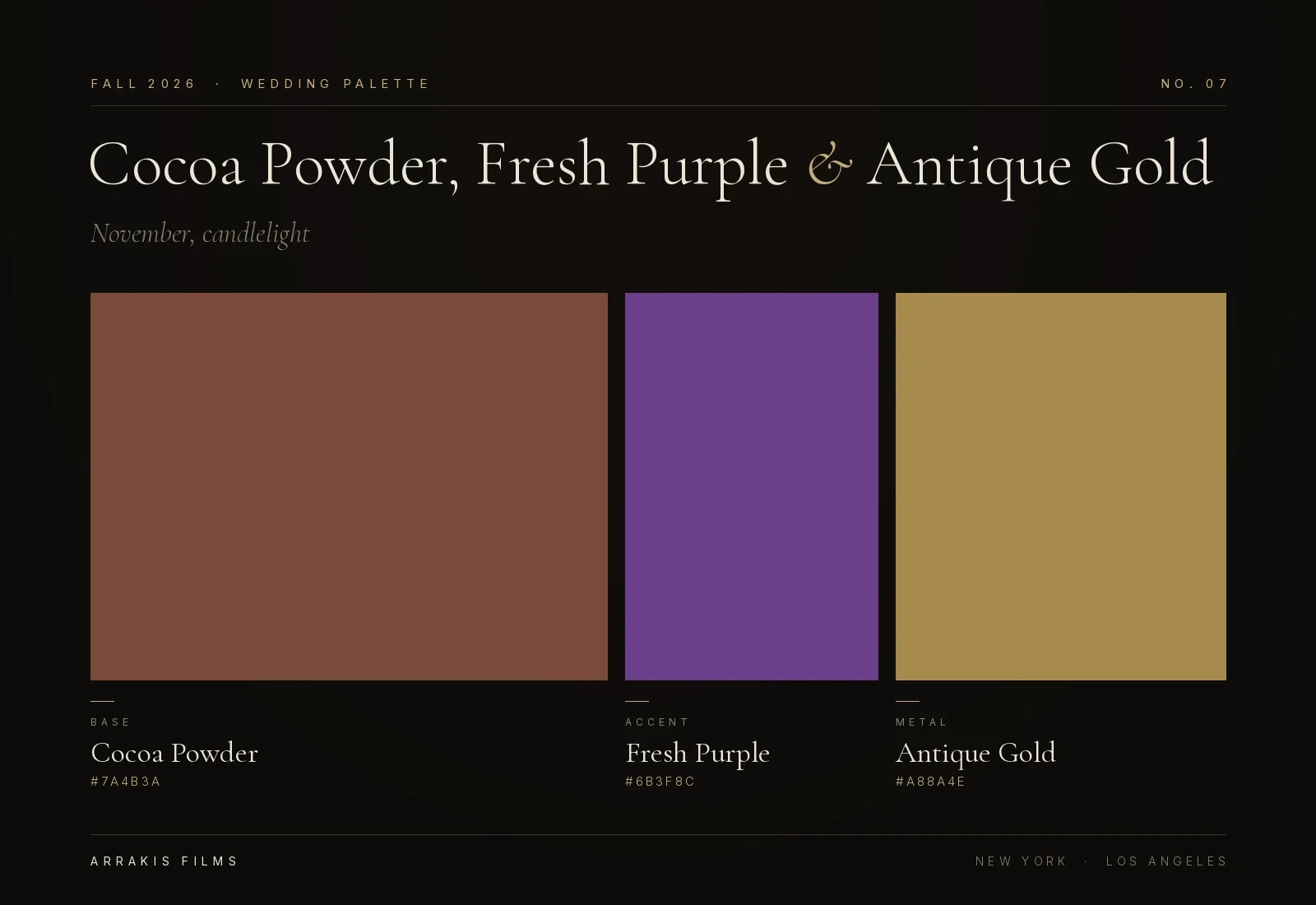
7. Cocoa Powder, Fresh Purple and Antique Gold
Hex: #7A4B3A · #6B3F8C · #A88A4E
Two more forecast colors in one palette. Red-toned cocoa carries the base, a saturated purple appears in flowers and ribbon only, and antique gold ties them together.
Months: November. Light: candlelight. Best for: intimate restaurant dinners and couples who like a darker, fashion-leaning table. Photo and film note: Fresh Purple has a high risk of casting color onto skin. Keep it out of bouquets held close to the face and away from the table directly in front of the couple.
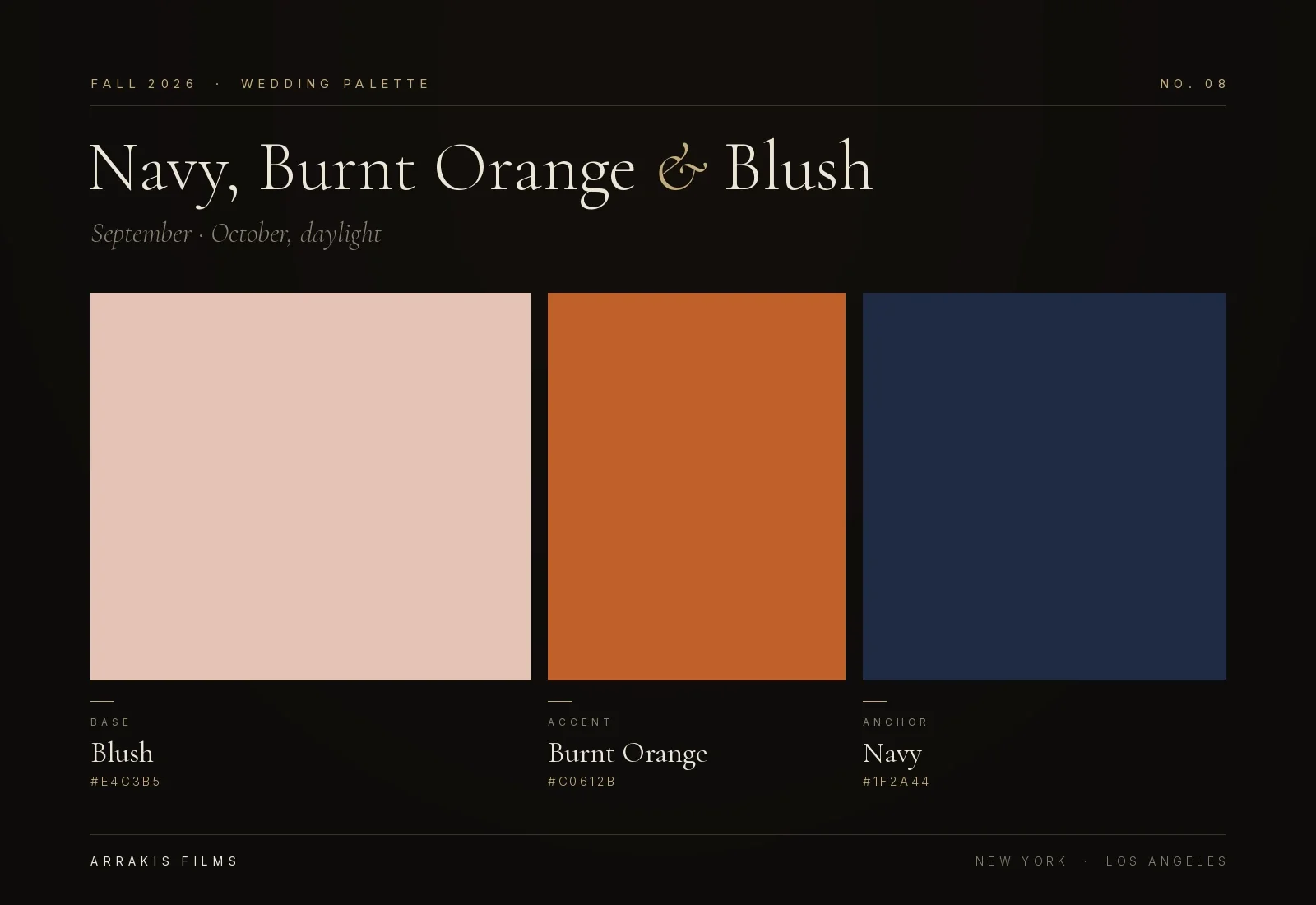
8. Navy, Burnt Orange and Blush
Hex: #1F2A44 · #C0612B · #E4C3B5
A classic fall pairing of complementary colors, softened by blush. Navy suits and bridesmaid dresses, burnt orange in the florals, blush in the linens.
Months: September and October. Light: daylight. Best for: outdoor and waterfront ceremonies, for couples who want blue in a fall palette. Photo and film note: bright burnt orange oversaturates on digital sensors in direct sun. Choose the muted version of the orange and it holds.
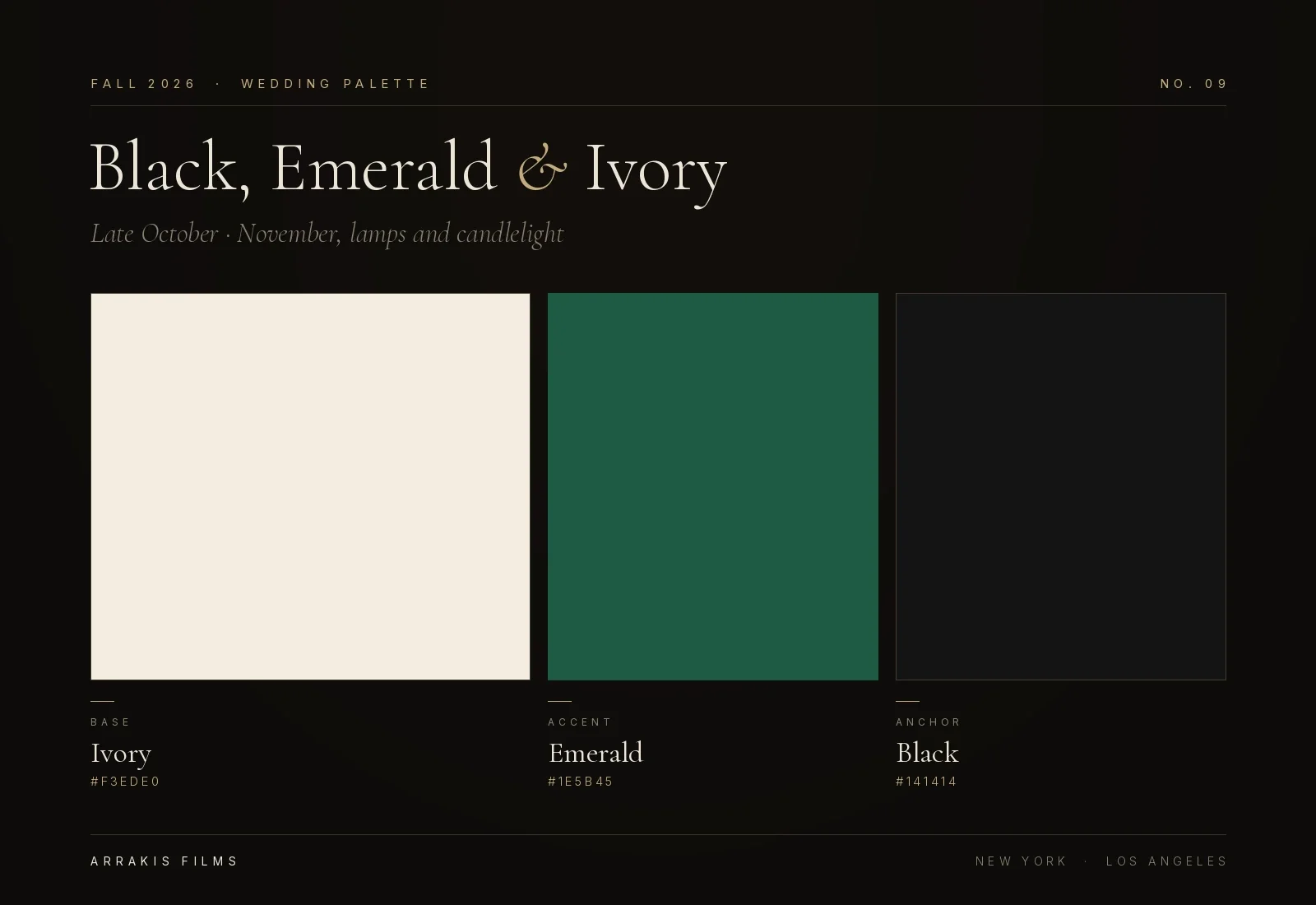
9. Black, Emerald and Ivory
Hex: #141414 · #1E5B45 · #F3EDE0
The formal November palette. Black tie, emerald in velvet or florals, ivory to keep the room from closing in. Zola puts black and emerald among its dark October tones, and the pairing carries even better into November.
Months: late October and November. Light: lamps and candlelight. Best for: black-tie weddings in ballrooms or city hotels. Photo and film note: black and deep emerald need the ivory, or the photographs lose detail in the darks. Plan for more light than you think the room needs.
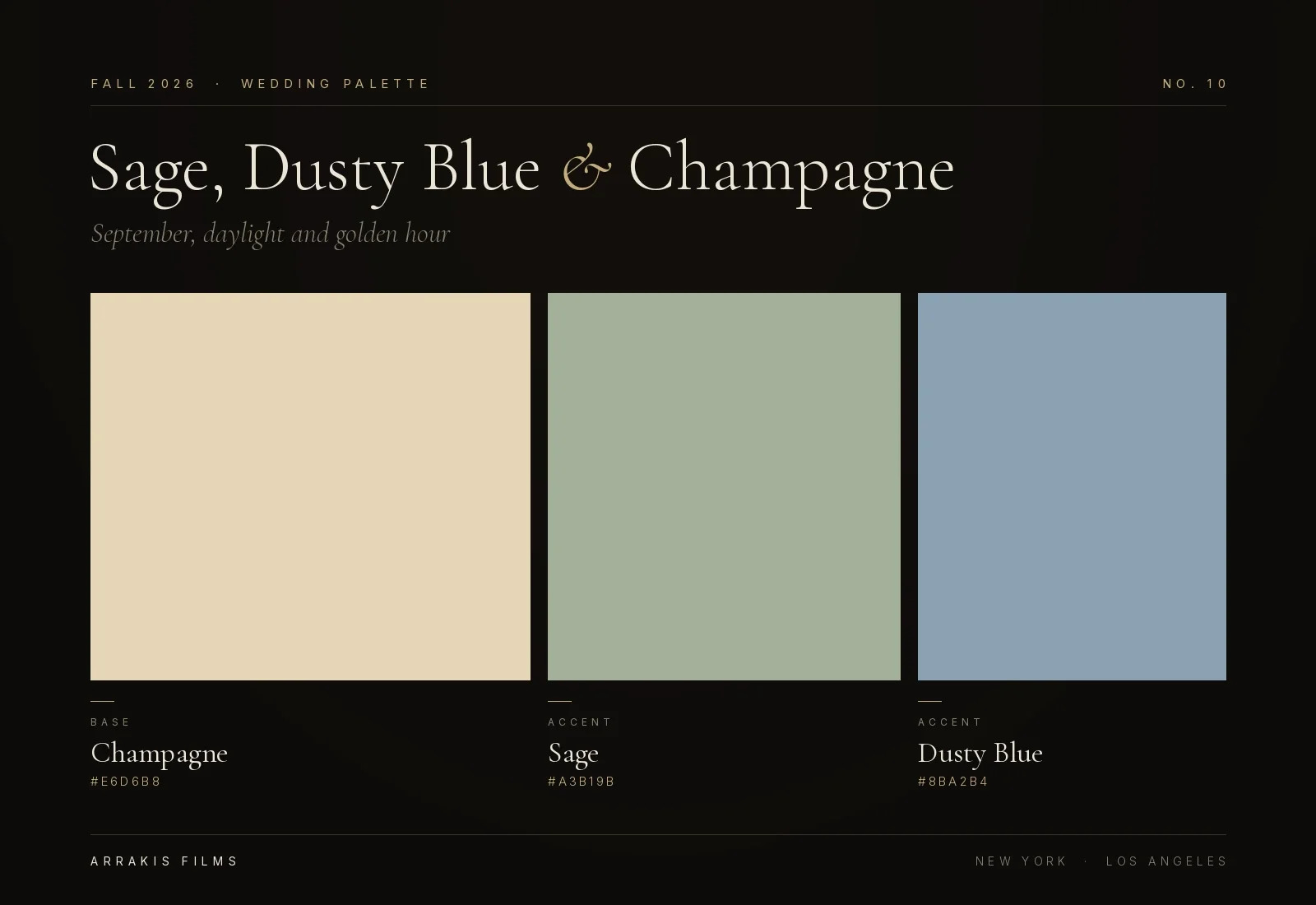
10. Sage, Dusty Blue and Champagne
Hex: #A3B19B · #8BA2B4 · #E6D6B8
The lightest palette on this list, built for the first weeks of fall, when the trees are still green and the evenings are long.
Months: September. Light: daylight and golden hour. Best for: early September garden ceremonies, especially for couples moving from a summer palette into fall. Photo and film note: muted blues and greens are easy on skin tones. The risk is flatness on overcast days, which a warm metal or deeper floral accent solves.
| Palette | Months | Light it needs | Best for |
|---|---|---|---|
| Deep Plum, Champagne and Sage | Oct, Nov | Golden hour, candlelight | Evening receptions, estates, lofts |
| Terracotta, Warm Ivory and Burnt Cedar | Sep, Oct | Daylight, golden hour | Vineyards, barns, gardens |
| Forest Green, Rust and Cream | Sep to Nov | Shade, overcast, candlelight | Wooded venues, Hudson Valley |
| Dusty Rose, Copper and Mocha | Sep, Oct | Late afternoon, indoor evening | Day ceremony with indoor dinner |
| Burgundy, Blush and Gold | Oct, Nov | Evening, candlelight | Ballrooms, classic venues |
| Transformative Teal, Wax Paper and Brass | Oct, Nov | Lamps, candlelight | City hotels, modern venues |
| Cocoa Powder, Fresh Purple and Antique Gold | Nov | Candlelight | Intimate dinners, restaurants |
| Navy, Burnt Orange and Blush | Sep, Oct | Daylight | Outdoor and waterfront ceremonies |
| Black, Emerald and Ivory | Late Oct, Nov | Lamps, candlelight | Black tie, ballrooms |
| Sage, Dusty Blue and Champagne | Sep | Daylight, golden hour | Garden ceremonies, early September |
Which colors suit a September, October or November wedding?
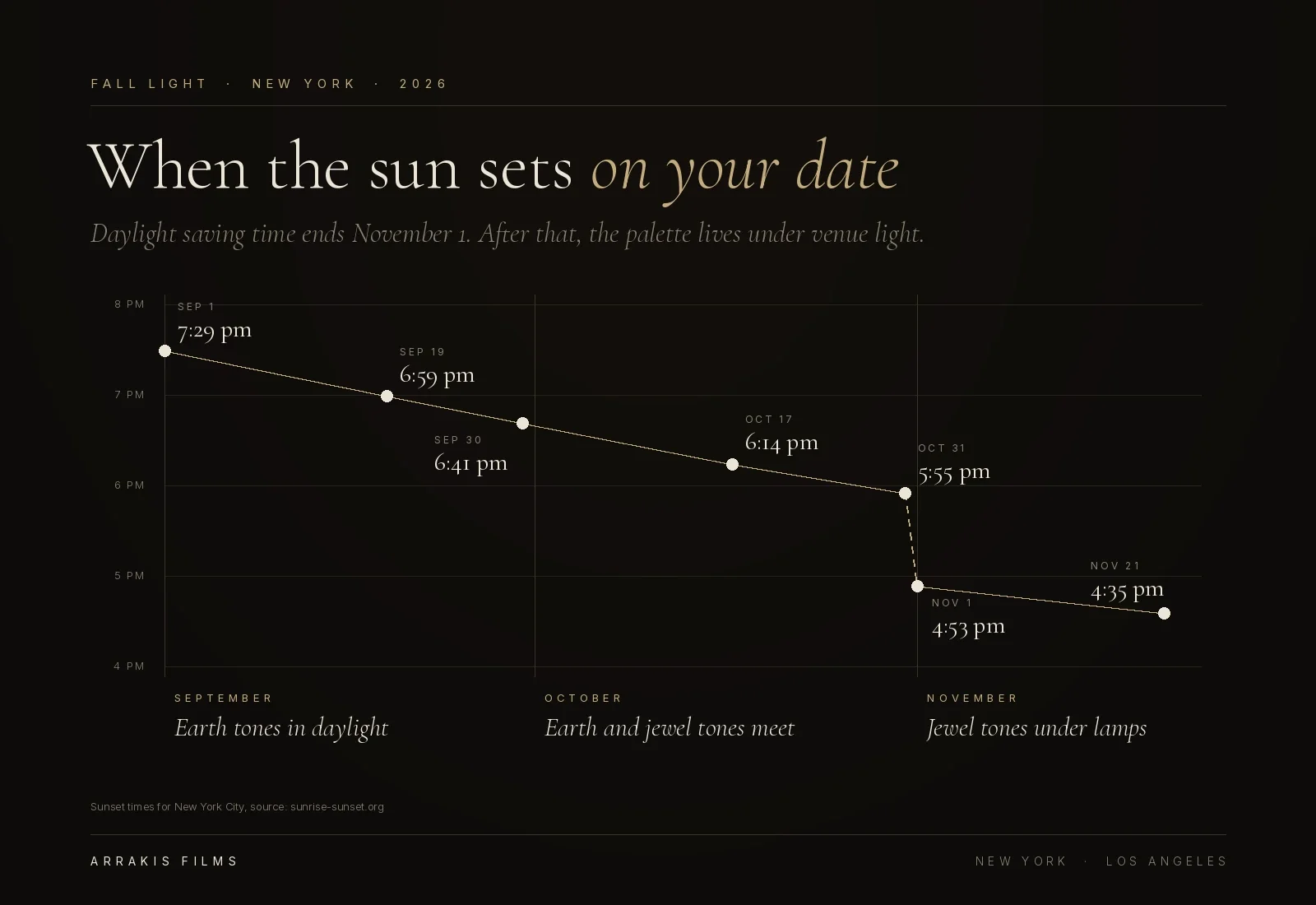
September suits lighter earth tones and greens, because ceremonies happen in daylight and trees are still green. October is the middle ground for terracotta, rust, plum and forest green. November suits jewel tones and dark neutrals, because daylight saving time ends November 1 and most of the day happens under lamps.
Fall is the busiest part of the wedding calendar. The Knot reports that fall has been the most popular season to marry since 2015, and three of the five most booked dates of 2026 are September 19, September 26 and October 10. Every one of those dates has different light.
September 2026 wedding colors
In September you are still working with long evenings. On September 19, 2026, the sun sets in New York at 6:59 pm, and on September 30 at 6:41 pm. A 5:00 pm ceremony and the portraits after it happen in daylight and golden hour.
Palettes that suit September: Sage, Dusty Blue and Champagne, Terracotta, Warm Ivory and Burnt Cedar, Navy, Burnt Orange and Blush, and Dusty Rose, Copper and Mocha. Keep the darkest tones for accents. The trees are still green in the Northeast in most of September, so a heavy autumn palette can look ahead of the trees in the portraits.
October 2026 wedding colors
October is the transition month and the most flexible one for color. On October 17 the sun sets in New York at 6:14 pm, and on October 31 at 5:55 pm. The ceremony still gets daylight, the reception does not. Zola calls October the most popular month to get married and suggests two directions for it: dark tones like black, navy and emerald, or autumn tones like olive, blush, berry and burgundy.
Palettes that suit October: Deep Plum, Champagne and Sage, Forest Green, Rust and Cream, Burgundy, Blush and Gold, and Transformative Teal, Wax Paper and Brass. Mid to late October is when foliage in the Northeast turns, so rust and terracotta start to match the trees behind the couple.
November 2026 wedding colors
November changes the arithmetic. Daylight saving time ends on November 1, 2026, and the New York sunset moves to 4:53 pm that day and 4:35 pm by November 21. A 4:30 pm ceremony in late November ends in the dark. Nearly everything you chose for the tables is seen under the venue’s lights.
Palettes that suit November: Black, Emerald and Ivory, Cocoa Powder, Fresh Purple and Antique Gold, Deep Plum, Champagne and Sage and Burgundy, Blush and Gold. Zola notes that November vendors and venues may price lower to match lower demand, which leaves more of the budget for lighting, and in November lighting is what makes a dark palette work. For weddings in December and later, see our [INTERNAL LINK: /arrakis-films-inspiration/winter-wedding-colors “winter wedding colors guide”].
New York fall and Los Angeles fall
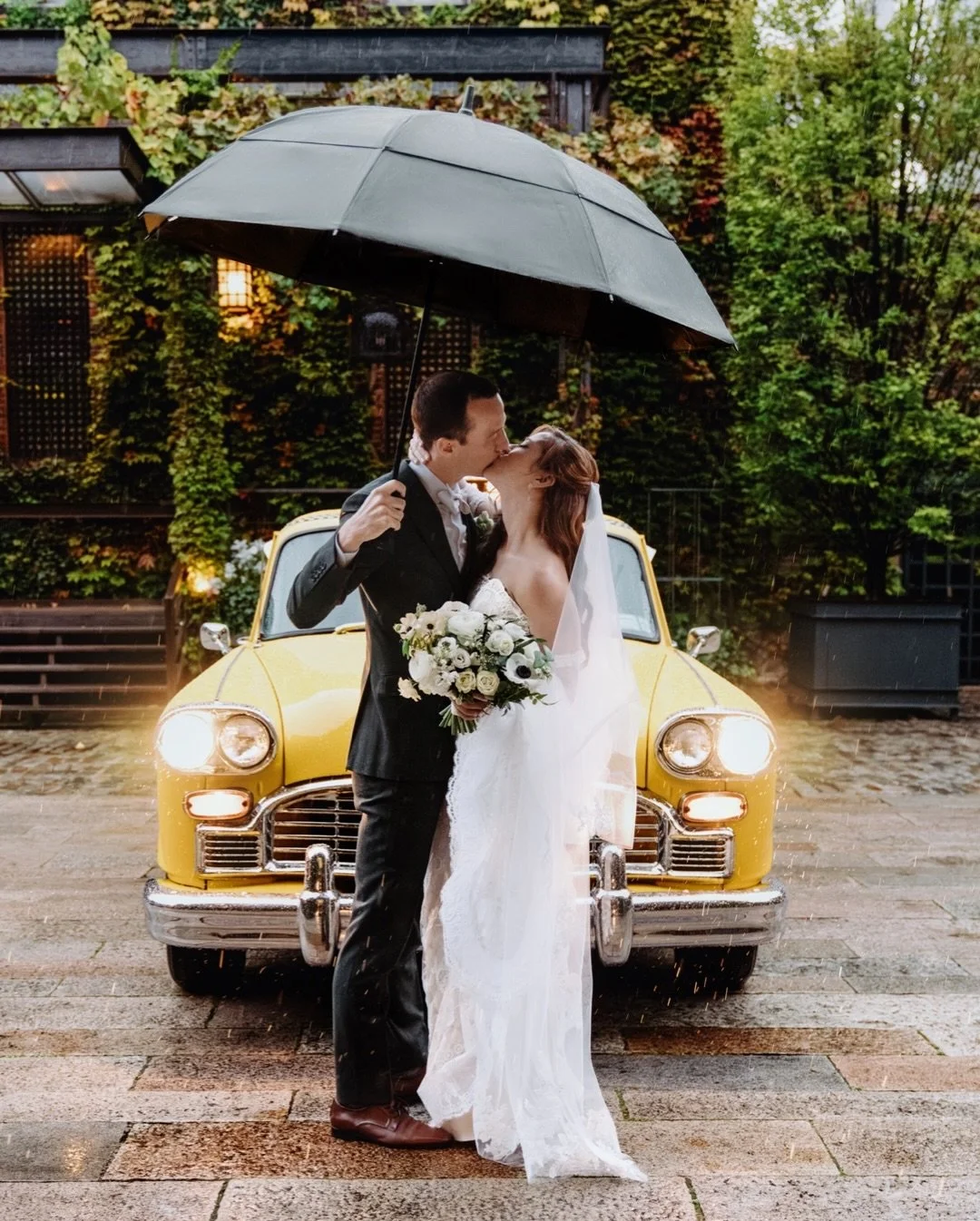
The same palette behaves differently in our two cities. In New York the trees join the palette in October: rust and amber leaves in the background of every outdoor portrait. In Los Angeles the greenery around most venues stays close to its summer color through November, so an orange-heavy palette reads as a styling choice. The trees behind the couple will not echo it. For Los Angeles fall weddings, plum, teal, cocoa and forest green usually sit more naturally in the frame.
How do fall colors look under candlelight and warm bulbs?
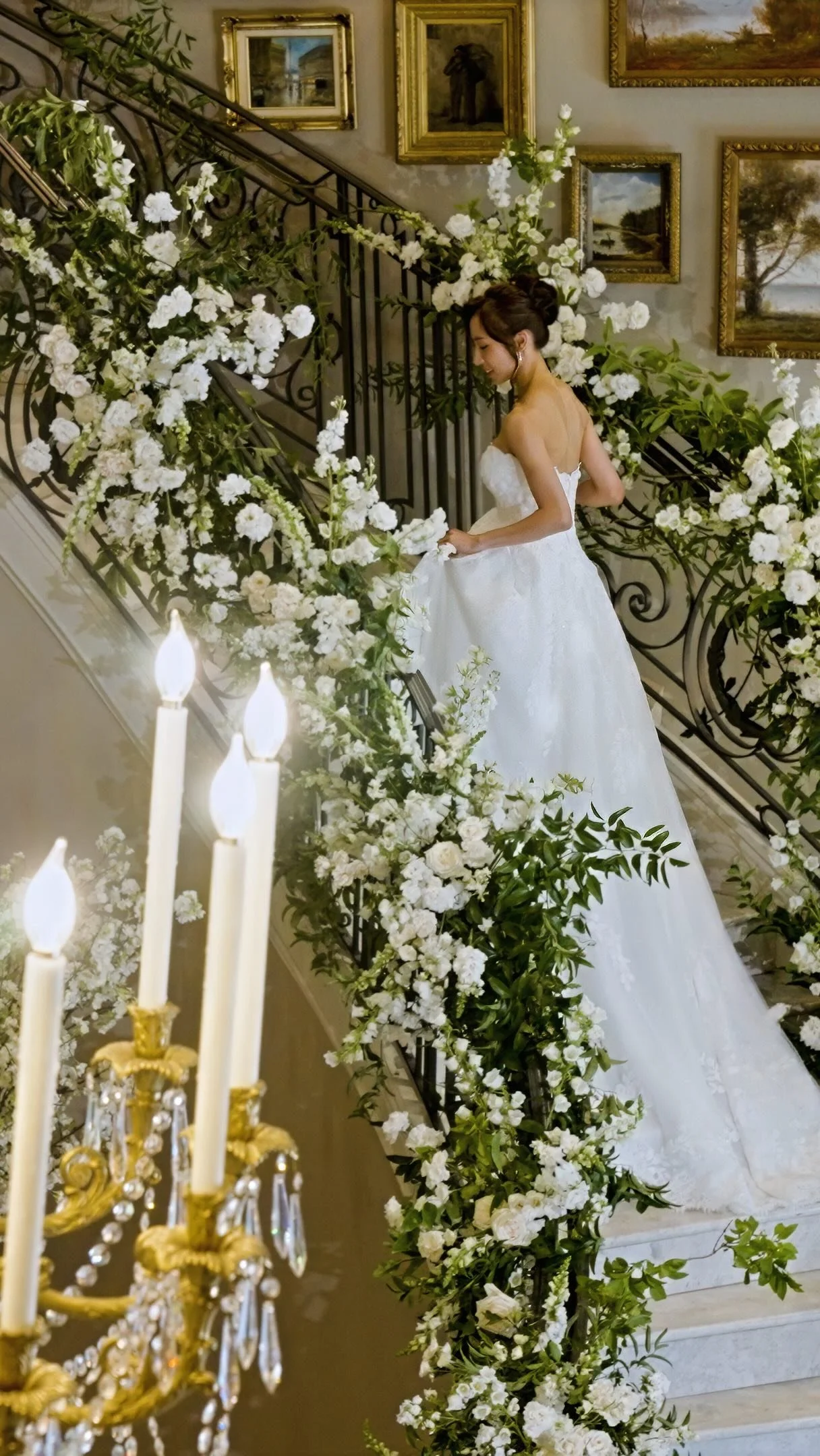
Warm venue lighting pushes every color toward yellow and orange. Reds and browns deepen, greens warm up, blues and teals shift toward green, and pure white turns cream. Plum, burgundy, cocoa and champagne hold up best under candles and tungsten bulbs, while cool greys and icy blues lose their color entirely.
Most palettes are chosen from photos taken in daylight or on a screen. A typical reception room is lit by bulbs around 2700K and by candles, which are warmer still. That difference is why a dusty blue napkin chosen at noon can look grey at dinner.
A few practical rules we give couples:
Check fabric samples under the venue’s actual lights, at the hour your reception starts. A swatch approved at a daytime tasting can look like a different color at 8:00 pm.
Velvet and satin in the same dye are two different colors on camera. Velvet absorbs light and reads darker. Satin reflects the candles and reads lighter and warmer.
Avoid cool white or blue uplighting with a warm fall palette. It greys the terracottas and makes skin look tired.
Give dark palettes more light. Burgundy and emerald need a brighter room than blush and champagne to keep their detail.
For the outdoor half of the day, our
golden hour wedding photos guide
explains how to time portraits around sunset.
Which fall colors photograph best, in photos and on film?
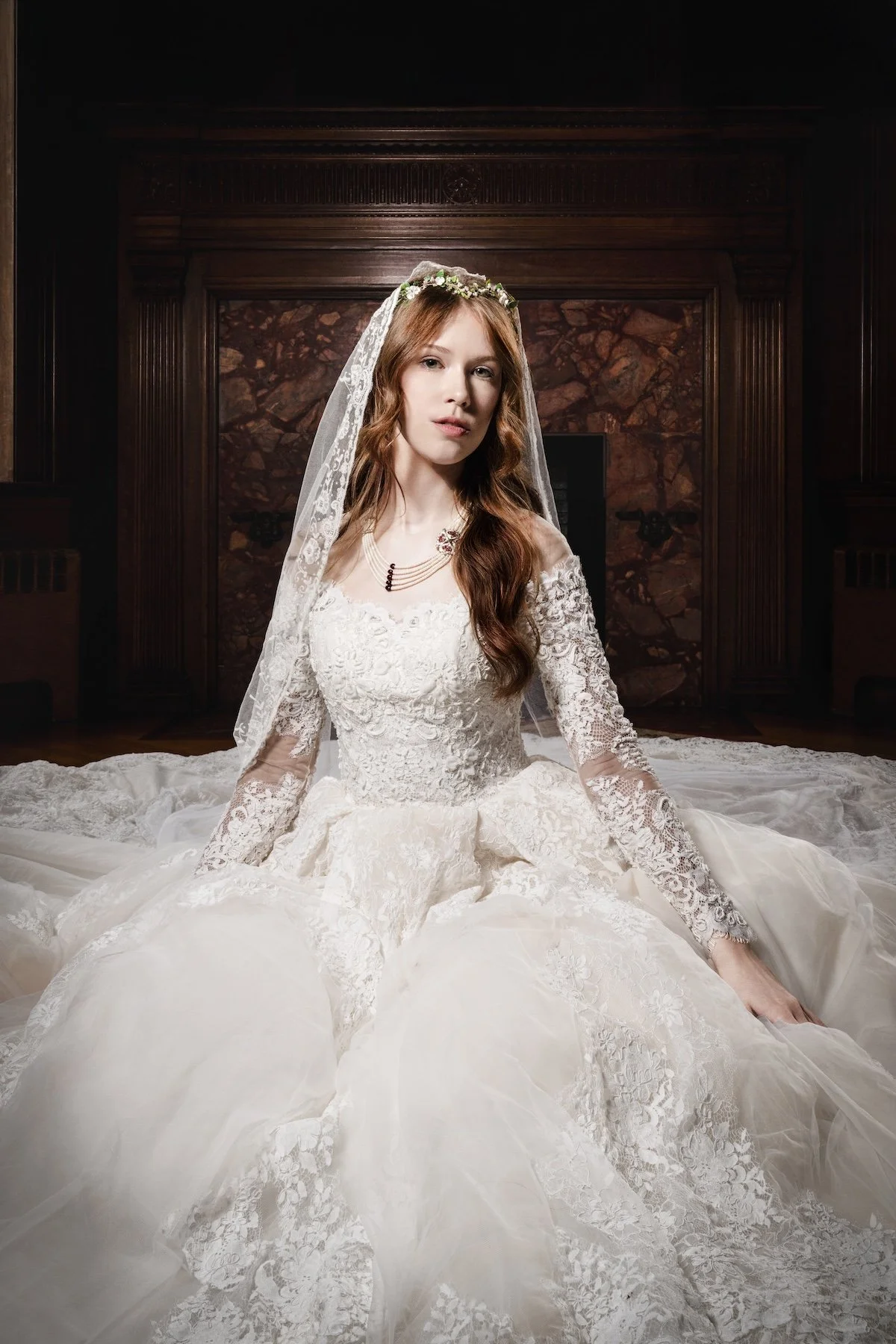
Muted warm tones photograph most reliably in fall: terracotta, rust, plum, burnt cedar and mocha glow in golden light and stay true on skin. Forest green and burgundy suit shade and overcast days. The colors that cause trouble on camera are the bright ones, yellow-green and pumpkin orange above all, because they cast color onto faces.
Here is what we watch for on a fall wedding day:
Skin cast. A saturated color near a face reflects onto it. Green Glow from the WGSN forecast is the clearest example: a bright yellow-green bridesmaid dress next to the couple turns cheeks green in close portraits. Fresh Purple and bright pumpkin orange do the same at a smaller scale. Keep these colors in flowers and ribbon.
Neutrals hold everything together. Champagne, ivory, cream and mocha keep a palette consistent across changing light, from a sunny ceremony to a candlelit dinner. A palette with a strong warm neutral looks good in imperfect light.
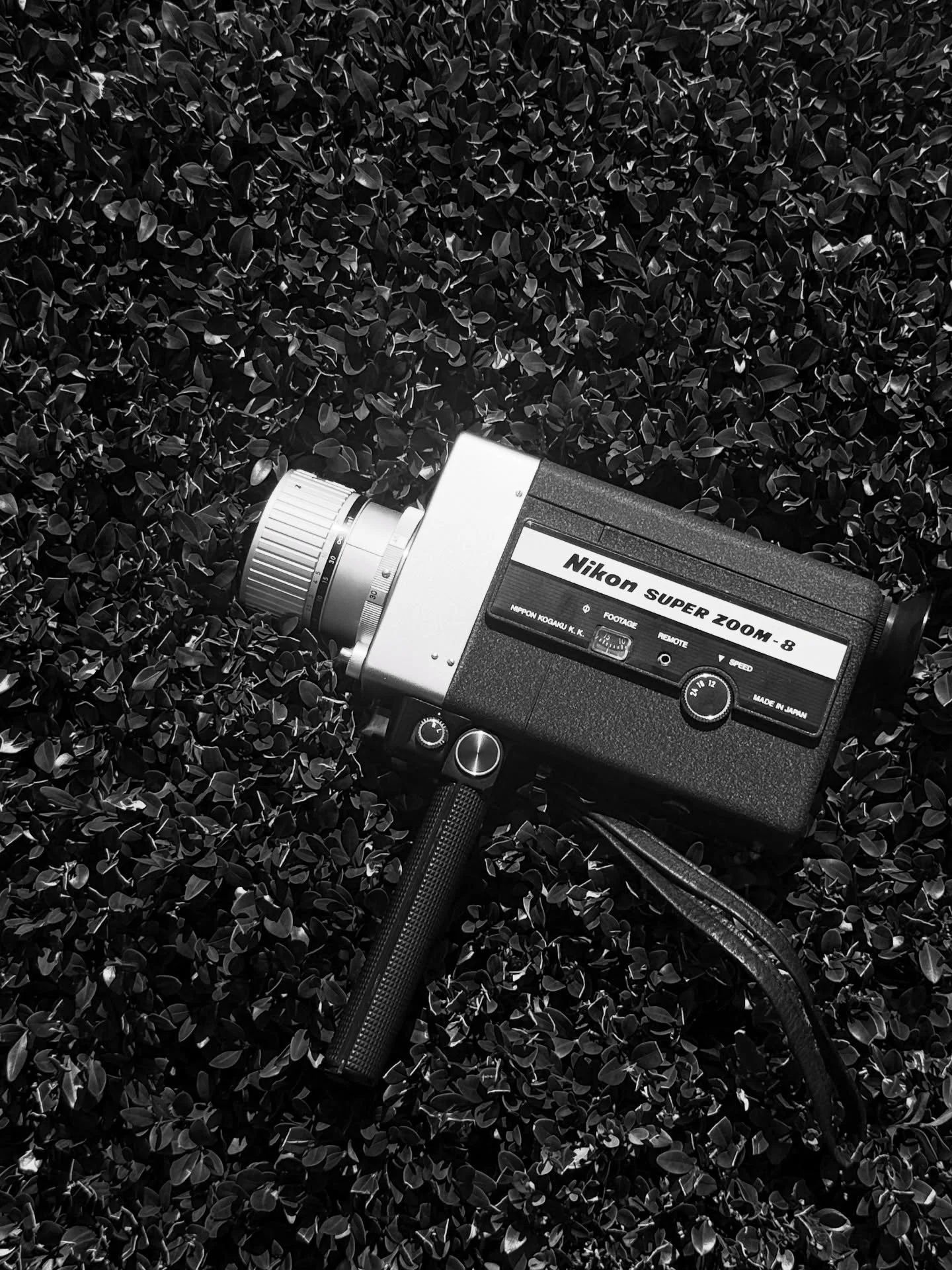
Film renders muted color differently. We shoot Super 8 film and Hasselblad 503 medium-format photographs. Film handles muted, complex tones like terracotta and plum with a softness that digital files do not have, and it handles pure saturated colors less gracefully. Super 8 and Hasselblad film are included in our ten-hour package and cost $900 as an add-on on the six and eight hour packages. If you are deciding between formats, read
Super 8 vs digital wedding film
Dark palettes need a plan. Black and emerald look luxurious in the room and muddy in a dark photograph. If your palette is dark, tell your photographer early, so the lighting plan accounts for it.
Which fall flowers match your palette?
Fall flowers that suit 2026 palettes include chrysanthemums, marigolds, asters, amaranthus, king protea and delphinium. Delphinium stays in season through October, chrysanthemums are among the most affordable fall blooms, and November adds marigold, aster and jasmine. Flowers in season cost less and look fresher than imported ones.
Zola’s seasonal guides give a practical starting point by month:
| Month | In season (Zola) | Palettes it serves |
|---|---|---|
| September | King protea, amaranthus, chrysanthemum, delphinium | Dusty Rose; Sage and Dusty Blue; Navy and Burnt Orange |
| October | Delphinium, magnolia, iris, roses | Deep Plum; Burgundy; Teal and Brass |
| November | Chrysanthemum, marigold, aster, jasmine | Terracotta; Cocoa and Fresh Purple; Black and Emerald |
Amaranthus carries pink, red and green, which makes it one of the few flowers that fits both the plum and the forest green palettes. Chrysanthemums come in almost every fall shade, and Zola notes them as an affordable bouquet addition.
Brief your florist with hex codes and photographs. “Burgundy” means something different to every florist, and a code or a printed swatch removes the guesswork.
Which fall wedding colors should you skip in 2026?
Skip bright pumpkin orange, stark white, all-grey palettes and palettes with more than three hero colors. Bright orange looks like seasonal decoration, stark white goes cold against warm fall tones, and grey loses its color under warm lights. Five competing colors look busy on film, where everything is moving.
Bright pumpkin orange. The earthy versions, rust and terracotta, work. The bright version reads as Halloween and oversaturates on camera.
Stark white as the base. Use Wax Paper, warm ivory, cream or Cloud Dancer. Pure white next to terracotta looks blue in photographs.
All-grey palettes. Grey reads cold in autumn and turns muddy under warm bulbs. For a muted palette, use mocha or warm greige.
Saturated jewel tones without a neutral. Electric burgundy or vivid emerald needs a large warm neutral around it.
More than three hero colors. Pick one base and one accent, then stop. Greenery and metal do not count.
What will fall 2027 wedding colors look like?
For fall 2027 weddings, the WGSN and Coloro forecast for autumn/winter 2027/28 names four key colors: Russet, a warm red-brown; Peaceful Lilac; Maize, a warm yellow; and Deep Green, positioned as an alternative to black. Russet and Deep Green continue the fall 2026 direction, and Peaceful Lilac is the new element.
If you got engaged this year and are planning for fall 2027, the A/W 27/28 key colors were published on September 17, 2025 with Coloro codes: Russet 013-30-24, Peaceful Lilac 135-78-11, Maize 036-65-23 and Deep Green 082-30-14. WGSN and Coloro have also named Luminous Blue as their Colour of the Year 2027. Pantone’s 2027 color is usually announced in early December.
A practical first pairing for fall 2027: Russet with Peaceful Lilac and an ivory base. Lilac cools the red-brown just enough, and both read warm under candlelight. We will update this guide with full 2027 palettes once the season is closer.
How we shoot fall color so the photos and the film match
We are one team for photography and film, so the palette you choose is planned once and matched across both. We ask for your palette and venue before the wedding, then set white balance and lighting so the photographs and the film show the same colors you picked.
In practice, that planning covers a few things. We look at the venue’s light at the hour of your ceremony and reception, and we tell you if a color will shift. We time portraits around the sunset for your date, which matters most in November. And we grade the photographs and the film together, so a plum dress is the same plum in both.
If you want film in the mix, Super 8 and Hasselblad 503 are included on our ten-hour package and are a $900 add-on on six and eight hours. You can see full inclusions on our wedding photo and film packages page, and fall weddings in both formats in our wedding photo gallery and wedding films
For the wider 2026 picture across all four seasons, including Pantone’s Cloud Dancer, see our 2026 wedding color trends
Planning a fall wedding in New York or Los Angeles?
Send us your date and your palette, and the venue if you have one. We will tell you how your colors will look at your ceremony time and in your reception room, and how we would photograph and film them.
Frequently asked questions
-
The most popular fall wedding colors for 2026 are deep plum, terracotta, sage, forest green, rust, burgundy and champagne. The WGSN and Coloro forecast for autumn/winter 2026/27 adds Transformative Teal, Wax Paper, Fresh Purple and Cocoa Powder. Earth tones suit daytime ceremonies, and jewel tones suit evening receptions and November dates.
-
Good October wedding colors are deep plum, rust, forest green, burgundy, terracotta and teal, balanced with champagne or cream. October is the transition month: ceremonies get daylight and receptions get lamps, so a palette needs one warm tone that glows at golden hour and one deep tone that holds under candlelight. Foliage in the Northeast joins the palette by late October.
-
November weddings suit jewel tones and dark neutrals: black, emerald, deep plum, burgundy, cocoa and antique gold, with ivory as the base. Daylight saving time ends November 1, and by November 21 the New York sunset is at 4:35 pm, so most of the wedding is seen under warm venue lighting. Plan for more light than a lighter palette would need.
-
Yes. Burgundy is still a fall wedding color in 2026, used as an accent. Paired with blush and warm gold, or with plum and champagne, it keeps its richness without taking over. As the dominant color in a dim room it absorbs light and reads close to black in photographs, so we suggest keeping it to about a quarter of the palette.
-
A fall wedding palette works best with three colors: a base, an accent and a metal or dark anchor. A fourth color can work if it is a neutral. Greenery does not count as a palette color. Five or more hero colors tend to look busy in photographs and on film.
-
Warm neutrals go best with fall colors: champagne, warm ivory, cream, WGSN’s Wax Paper and mocha. They support terracotta and plum without competing. Stark white goes cold next to warm autumn tones and can look blue in photographs. Pantone’s 2026 Cloud Dancer is soft enough to work as a base if you add a warm metal.