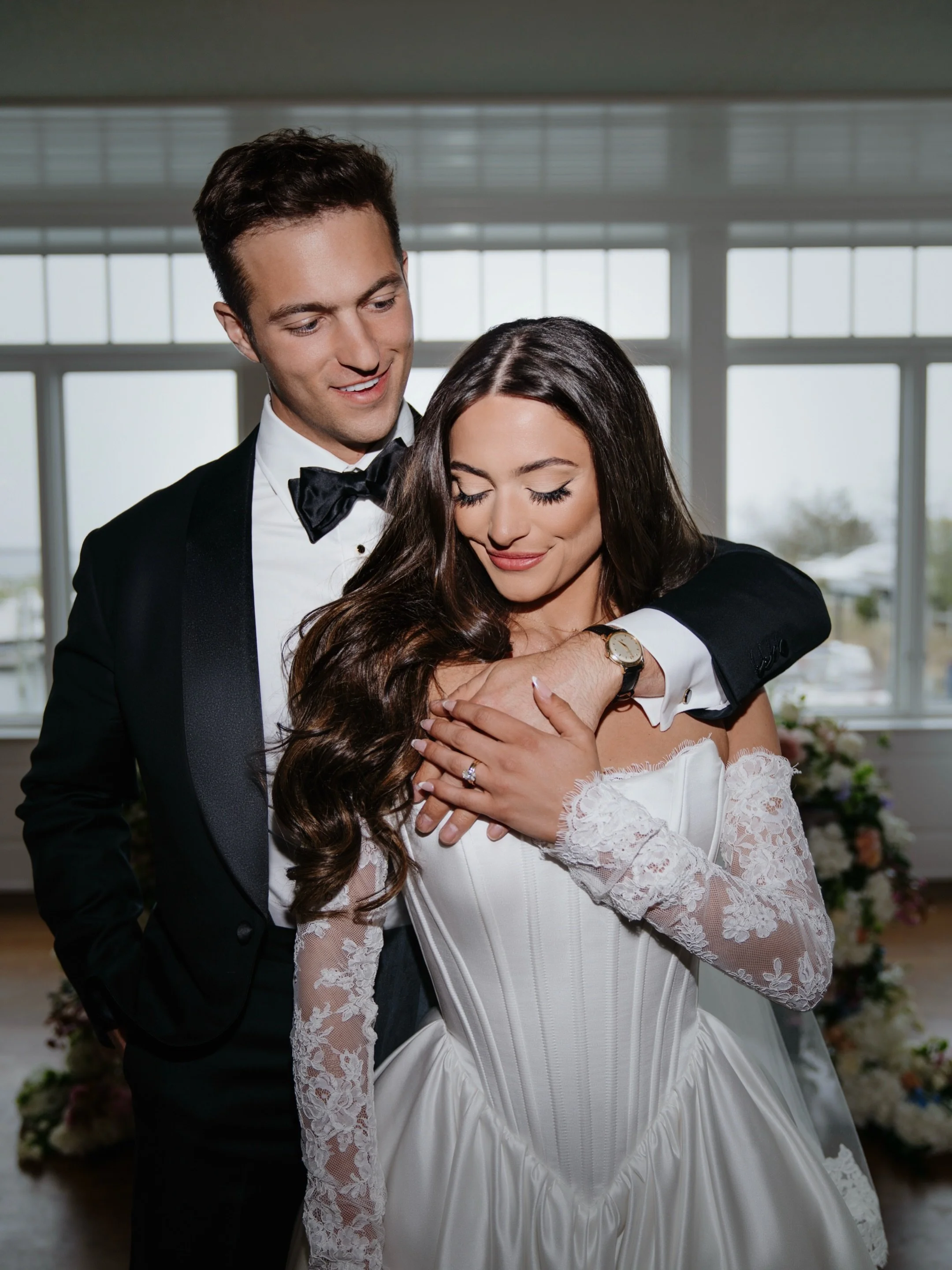
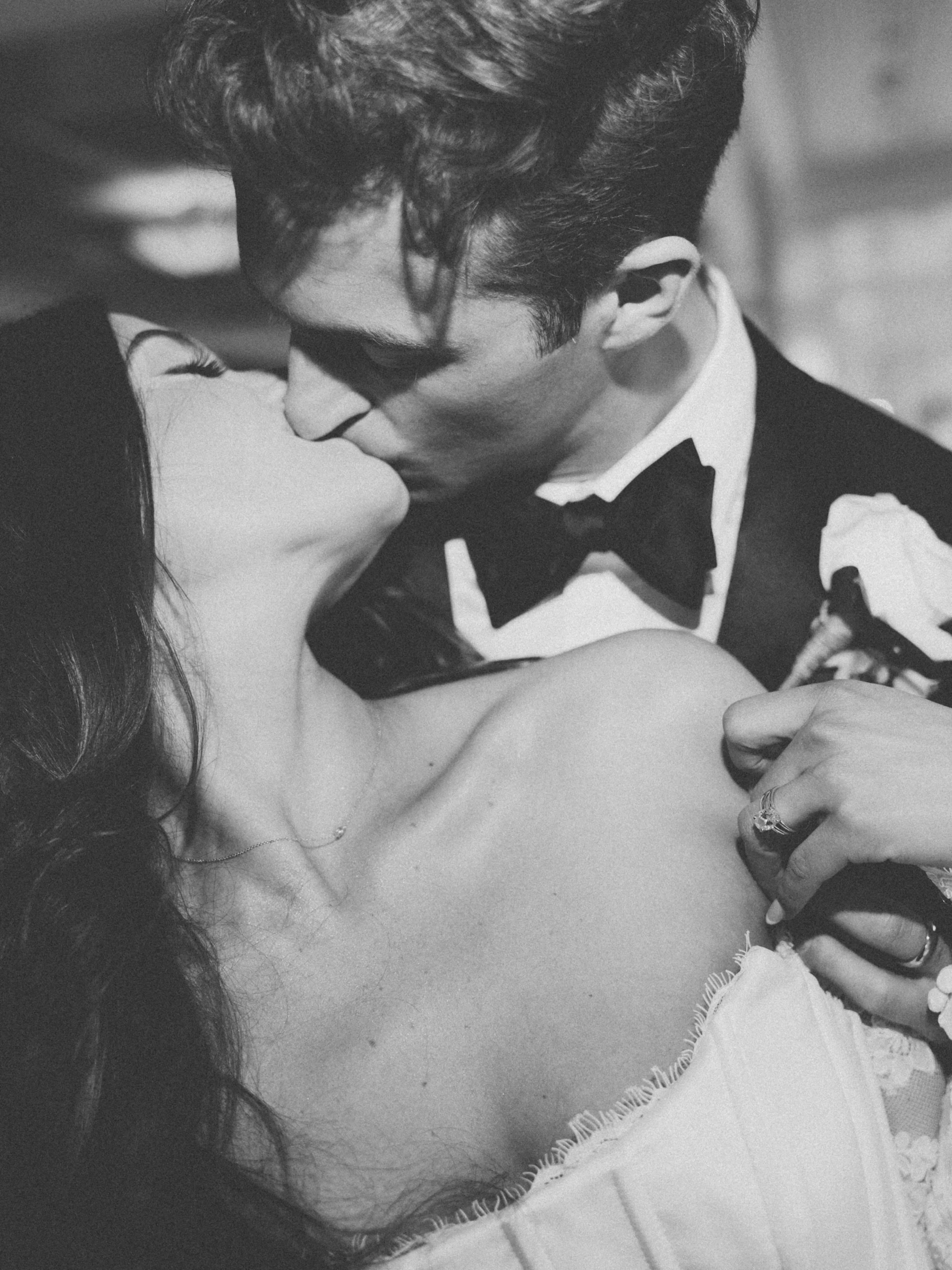
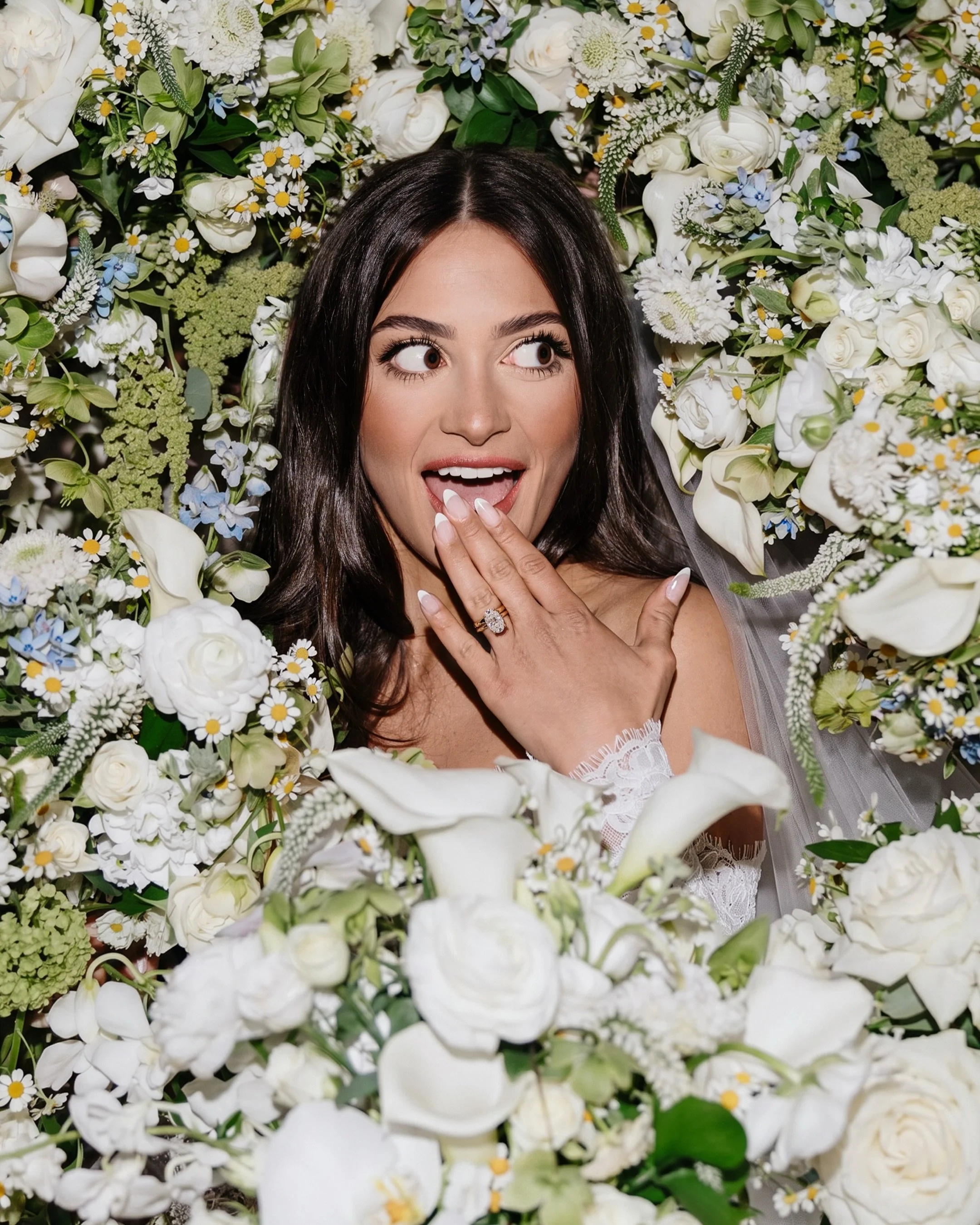
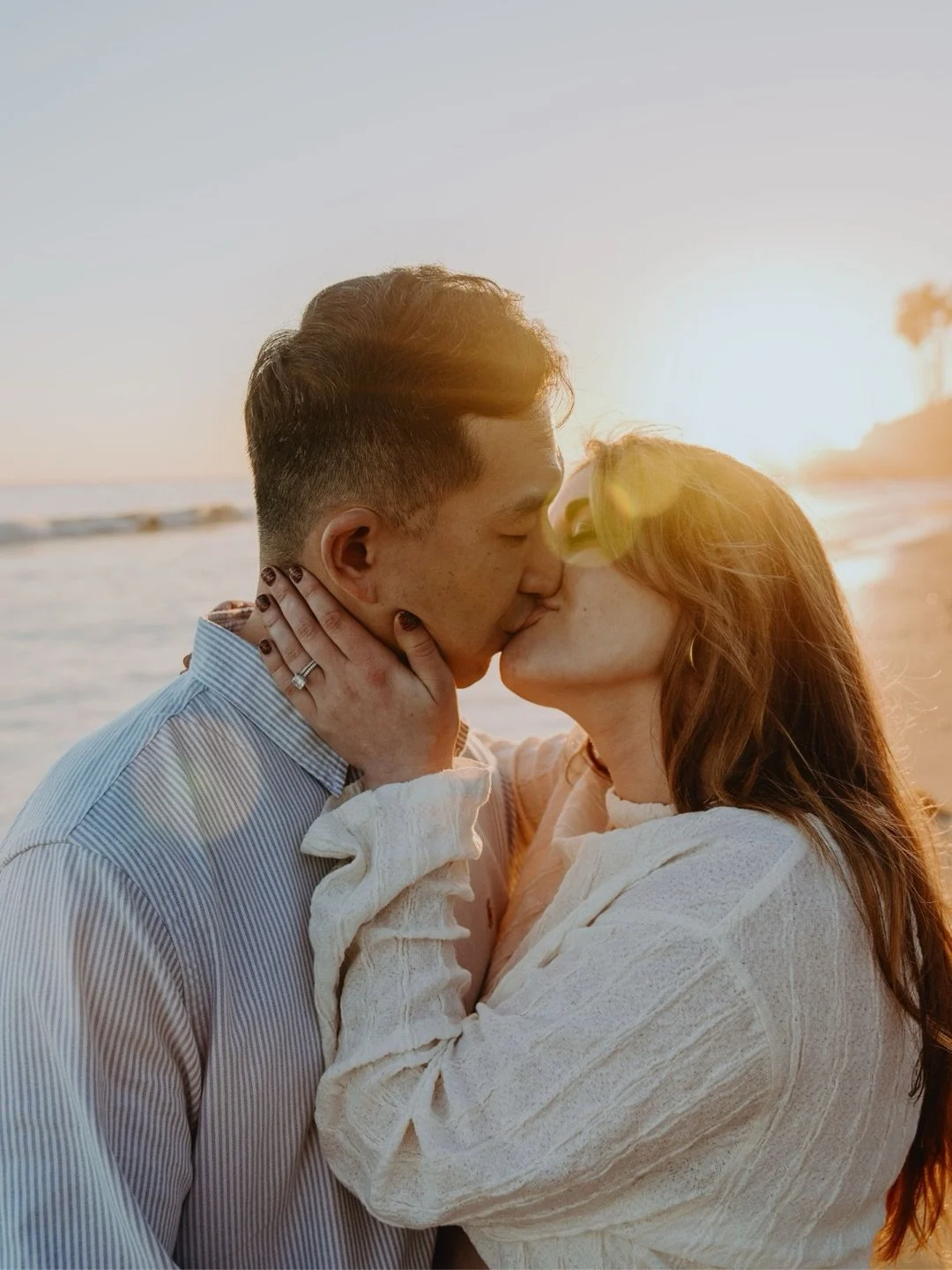
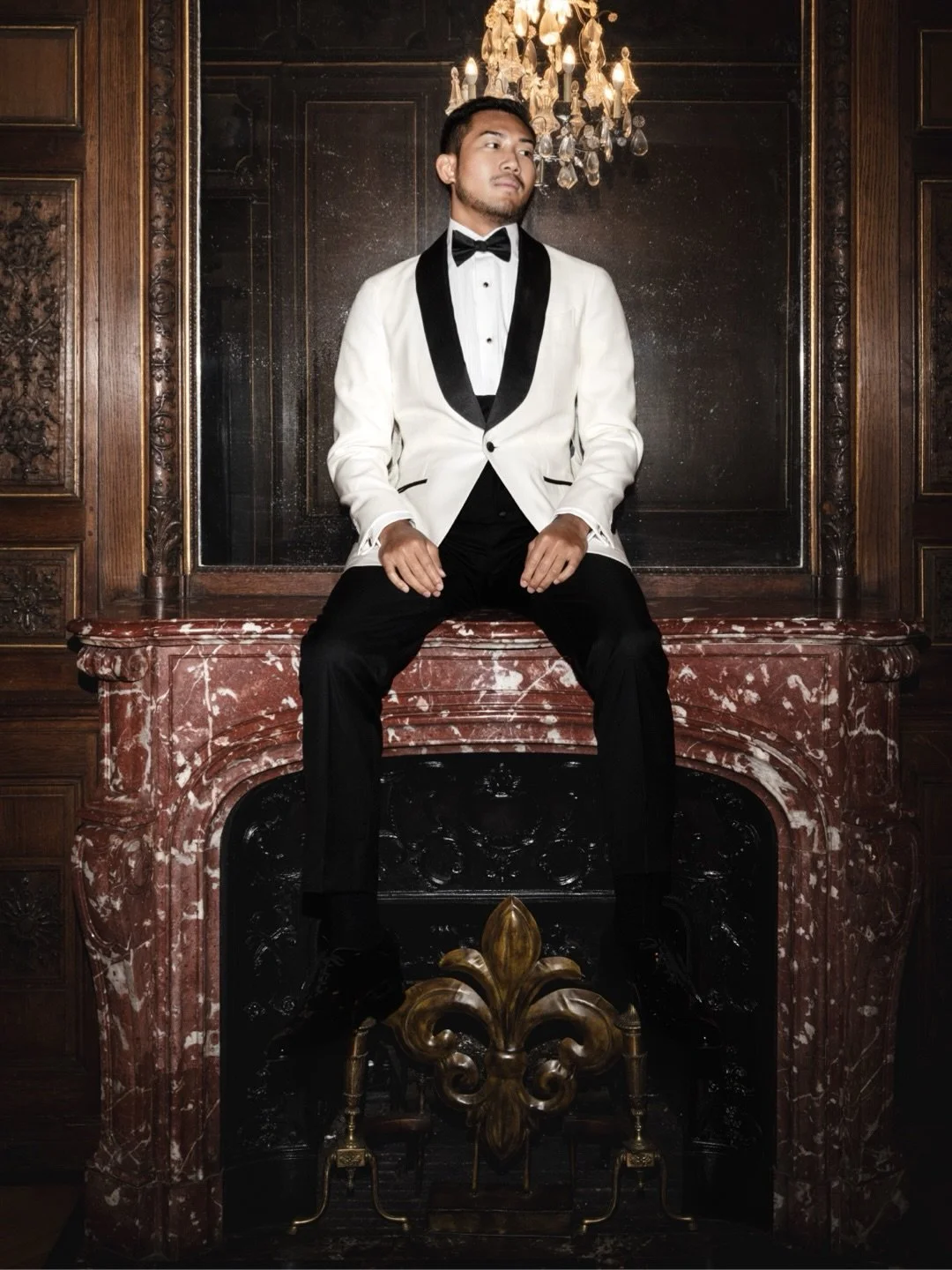
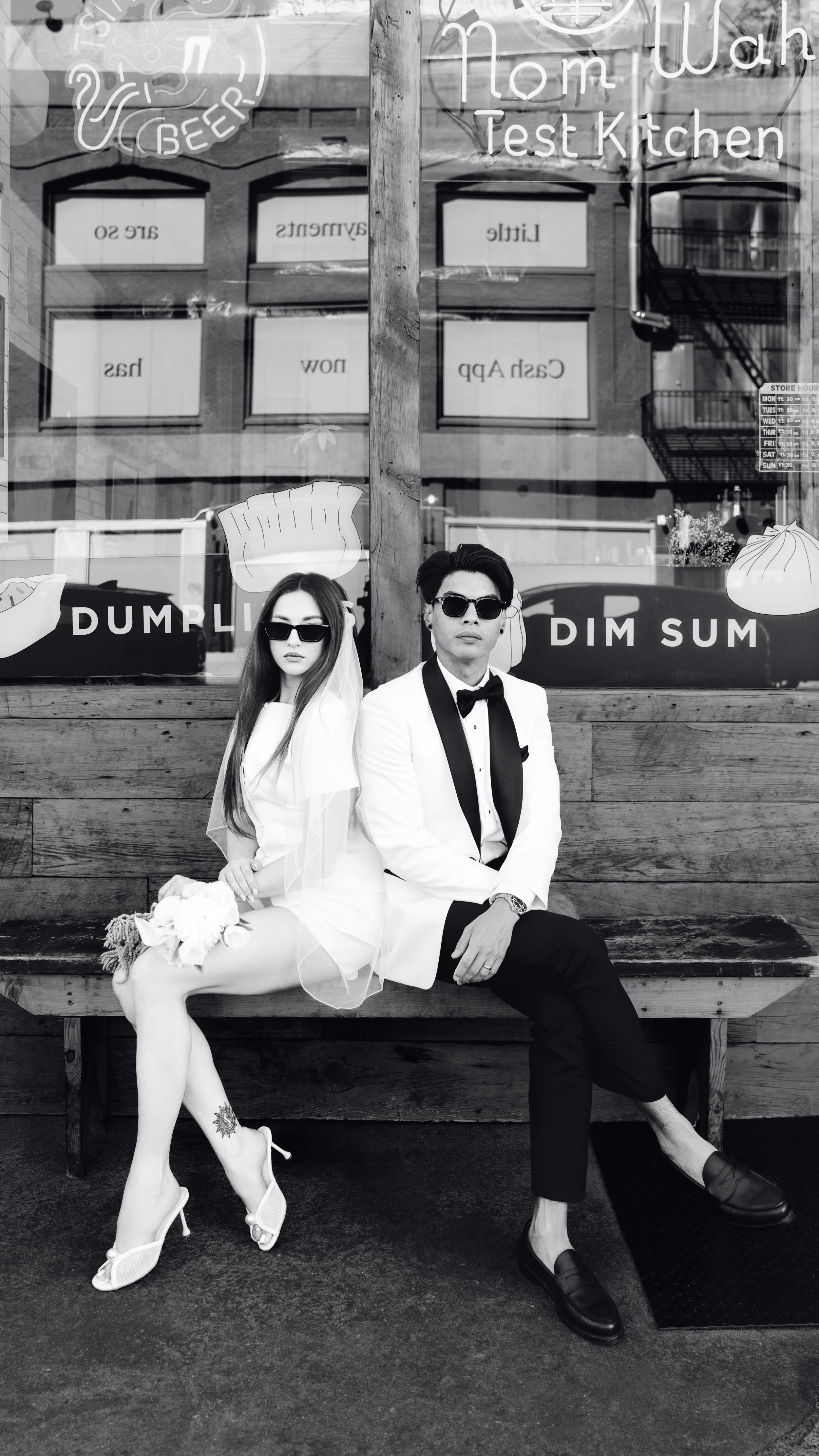
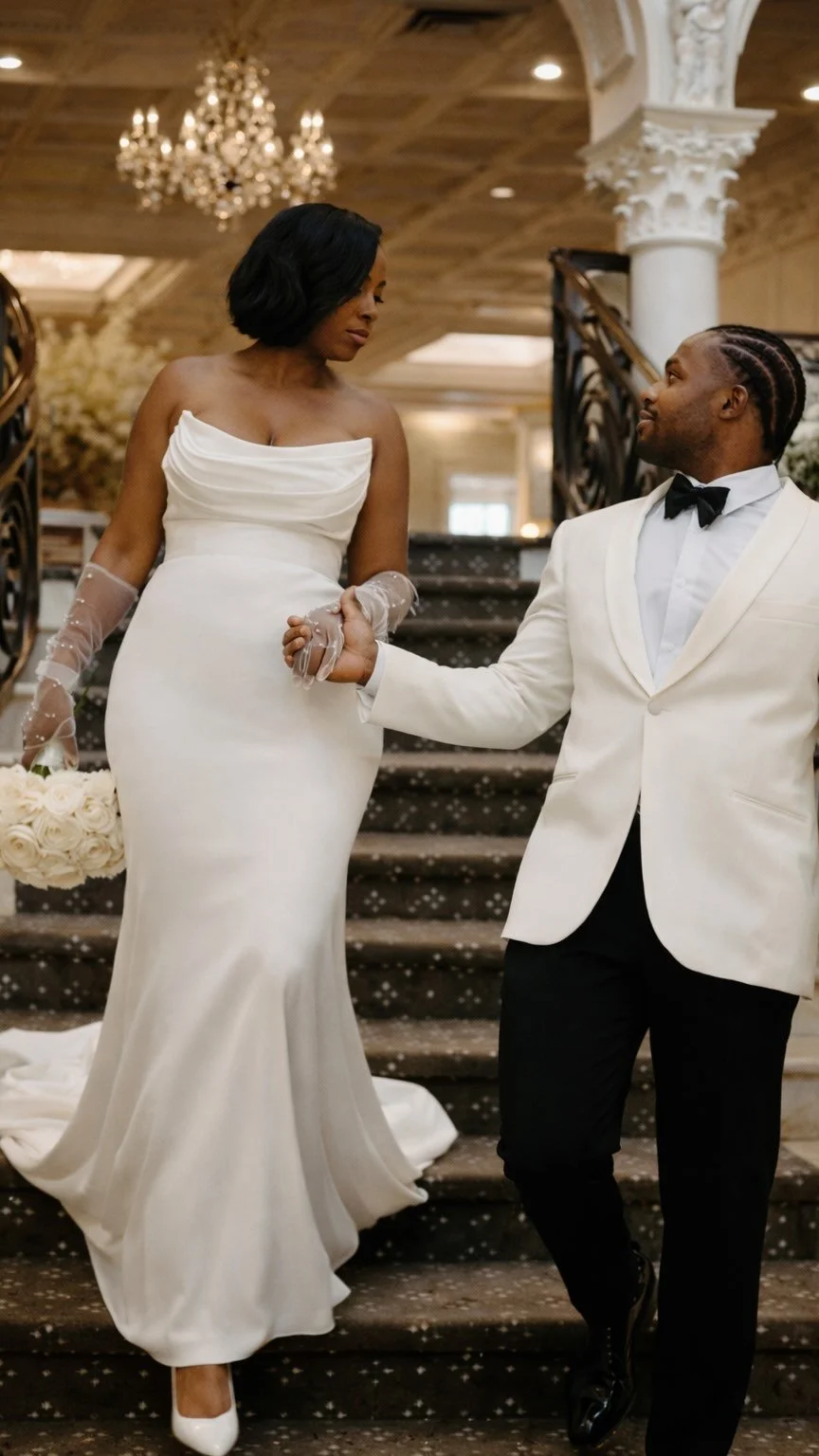
Film is back at weddings, mostly because couples are tired of photos that all look the same. A roll of 35mm gives you grain, soft highlights and colors that feel lived-in, and in exchange it costs more and asks for more patience than digital. We came to weddings from filmmaking and shoot medium-format film and Super 8 ourselves, so below is a plain account of what film does well at a wedding, where it struggles, and how it compares with the cinematic digital style many couples actually have in mind.
Quick Answer
35mm film wedding photography means shooting part or all of the day on rolls of 35mm film, 36 frames each, which a lab develops and scans after the wedding. Film gives visible grain, softer highlights and warmer skin tones than digital, but it needs good light, costs more per frame and can't be checked on the spot. Most couples who want film choose a hybrid day: digital for full coverage, film for portraits and a few planned moments.
What is 35mm film wedding photography?
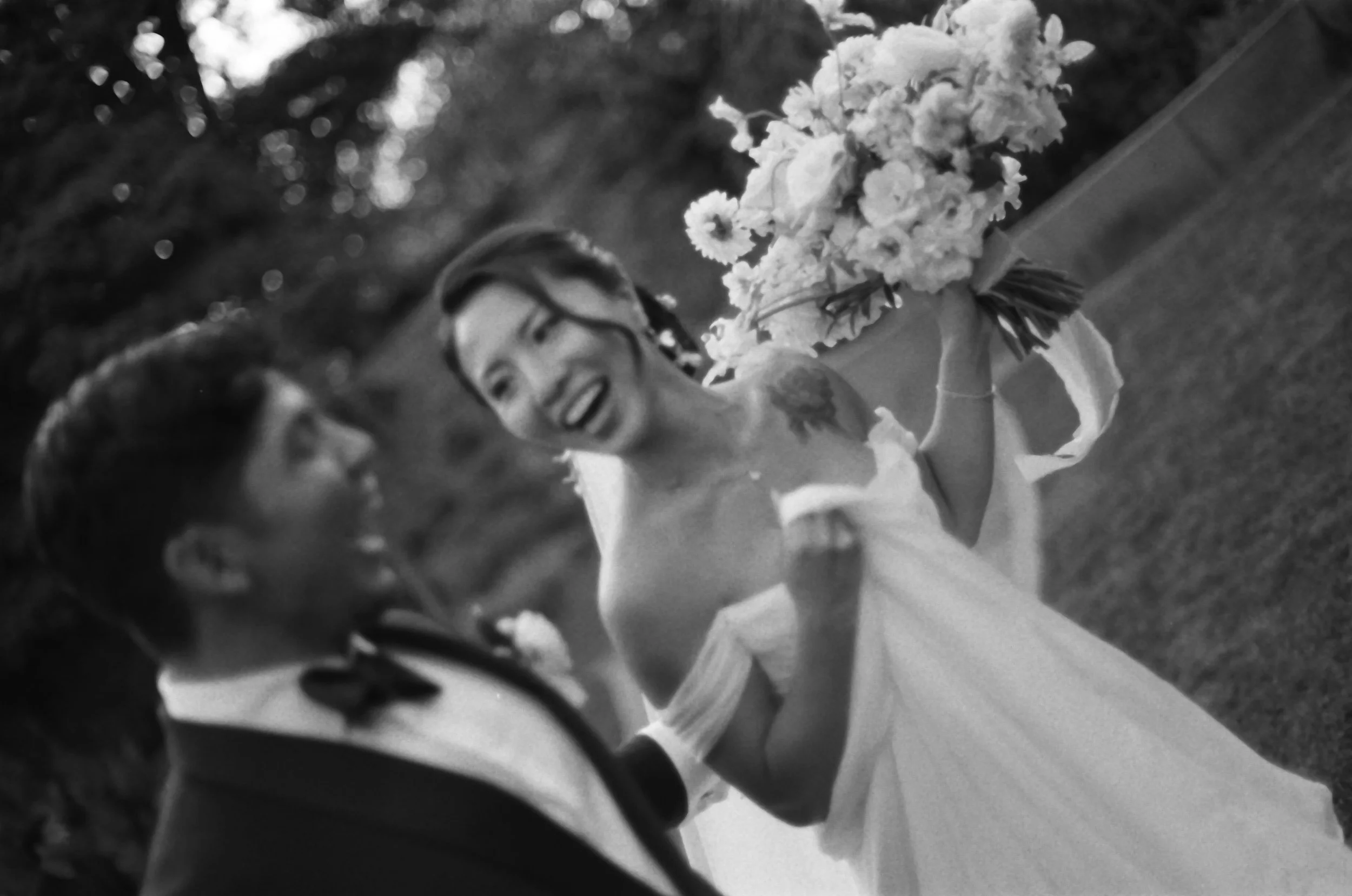
It is wedding photography shot on 35mm film instead of, or alongside, a digital camera. Each roll holds 36 frames. After the wedding the rolls go to a photo lab to be developed and scanned, and the scans are then edited and delivered as an online gallery, the same way digital images are. 35mm is the format most still photography used for decades. Its negatives are smaller than medium format, which makes the cameras faster to work with and the grain more visible.
What do film wedding photos look like?
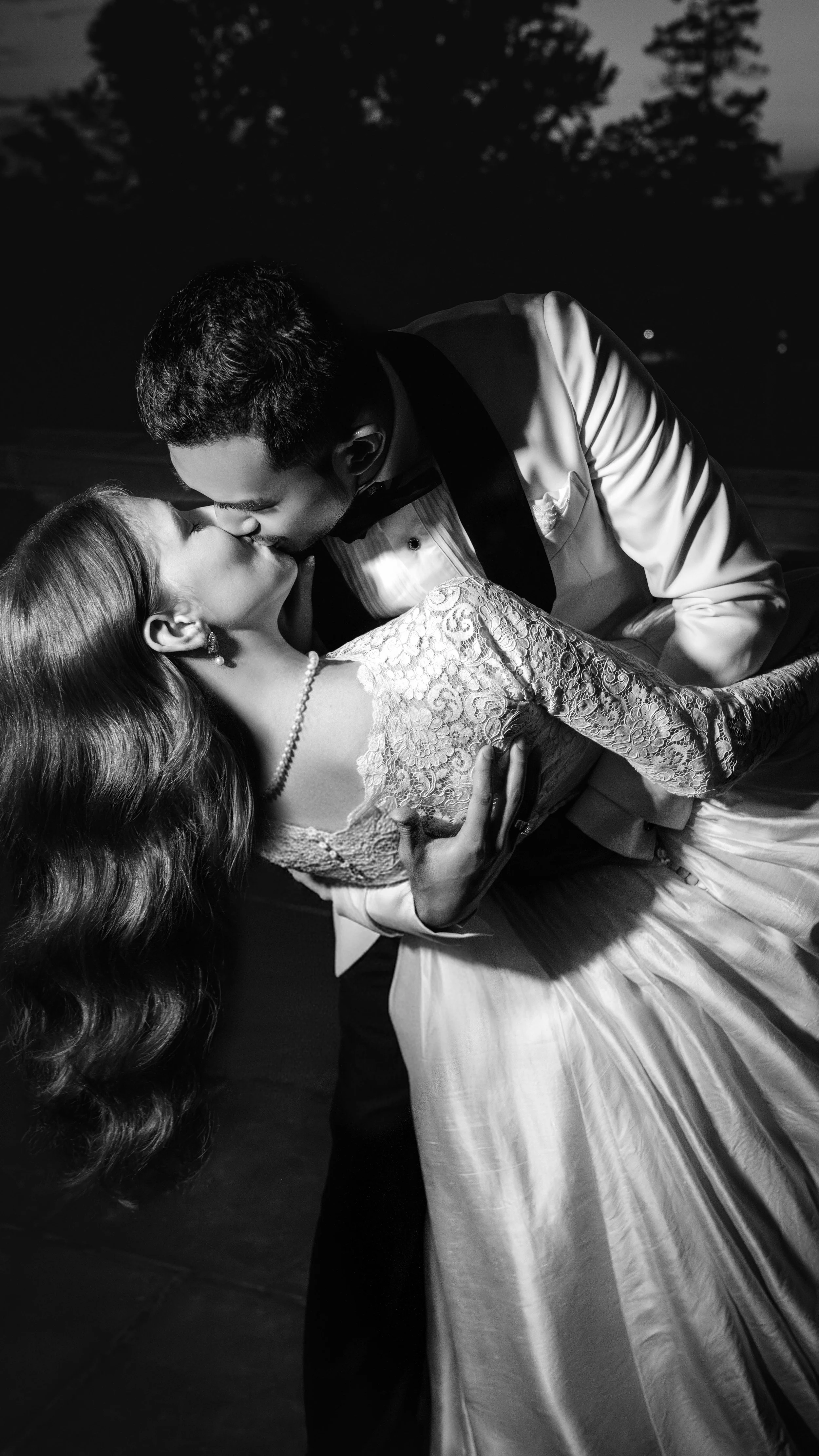
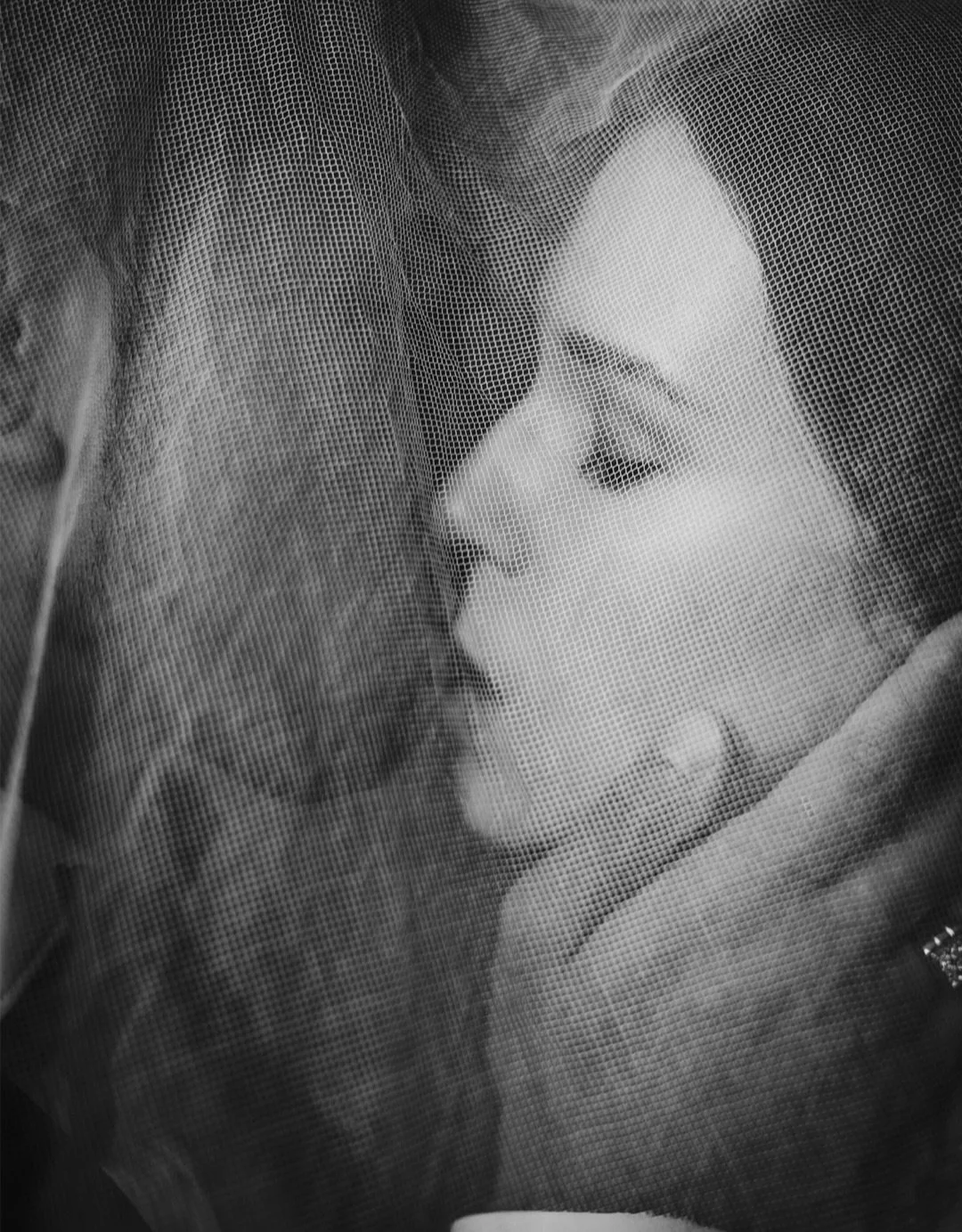
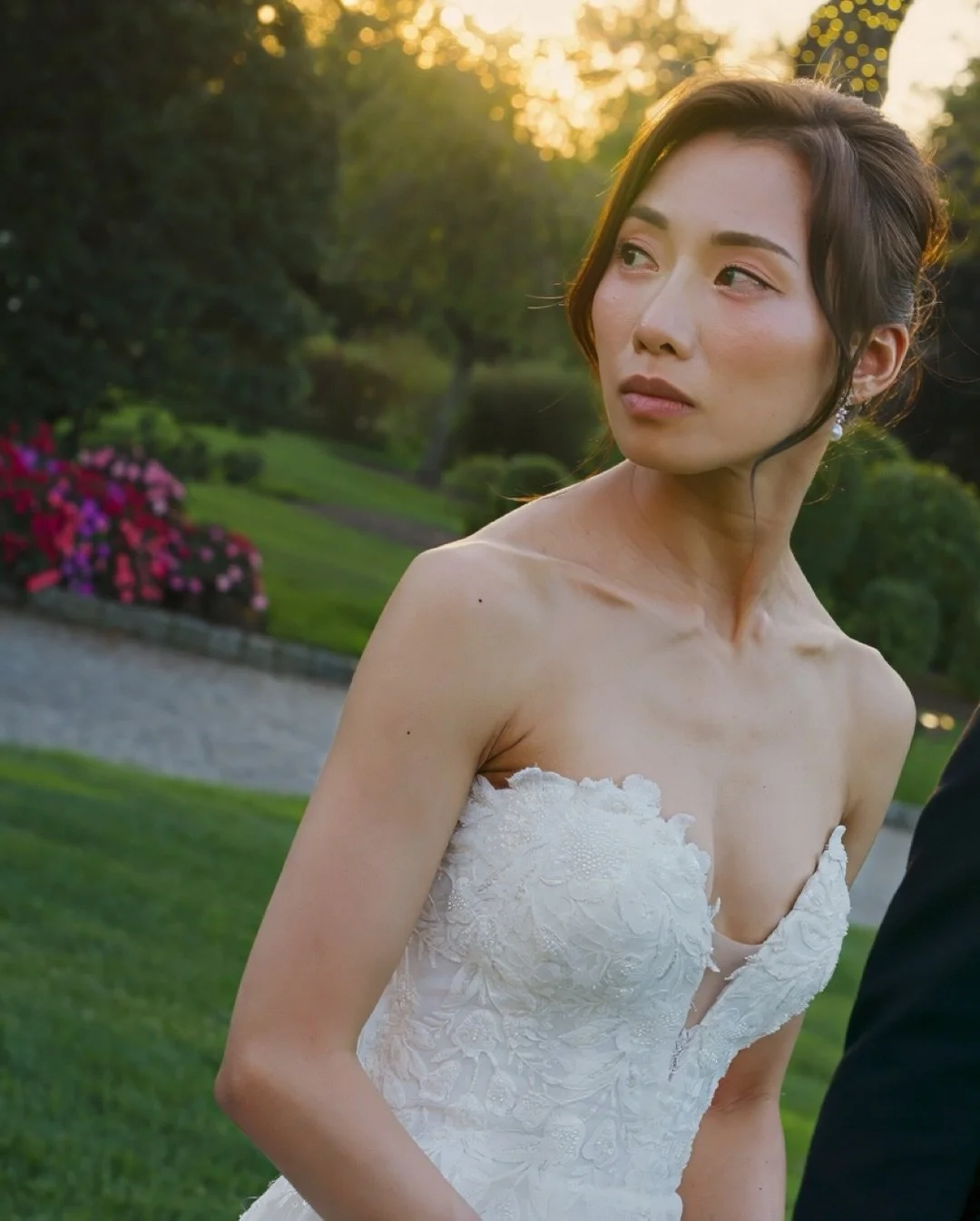
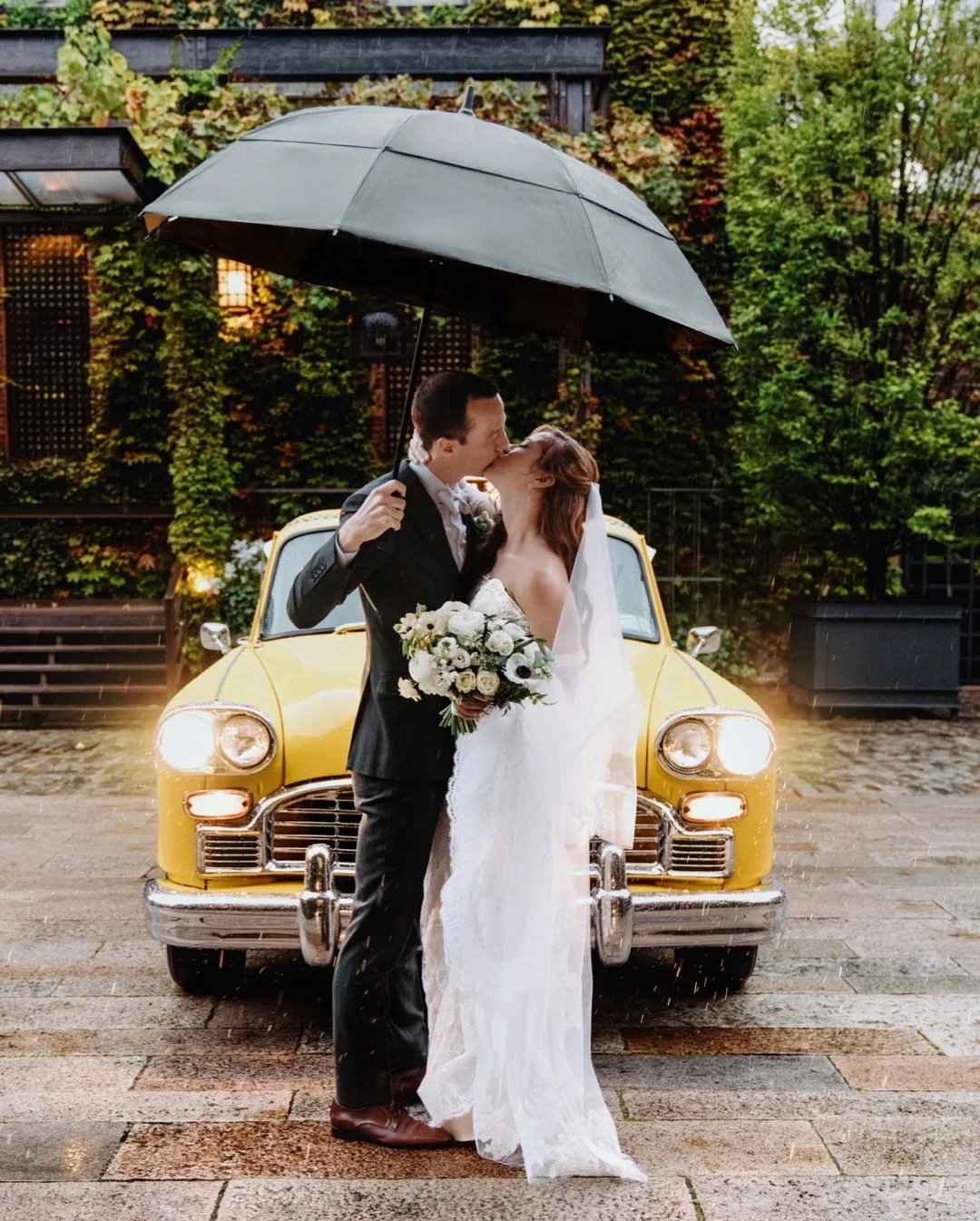
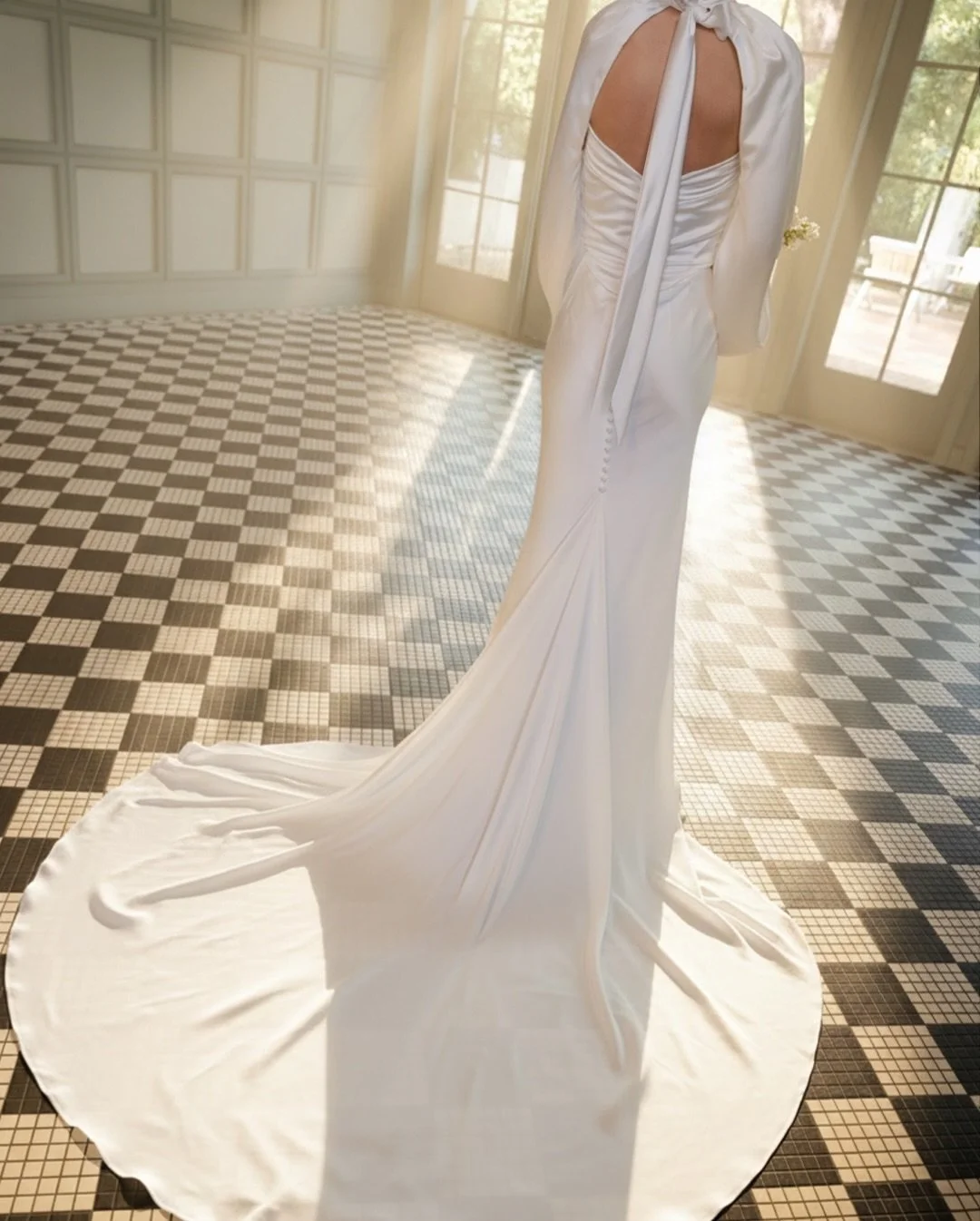
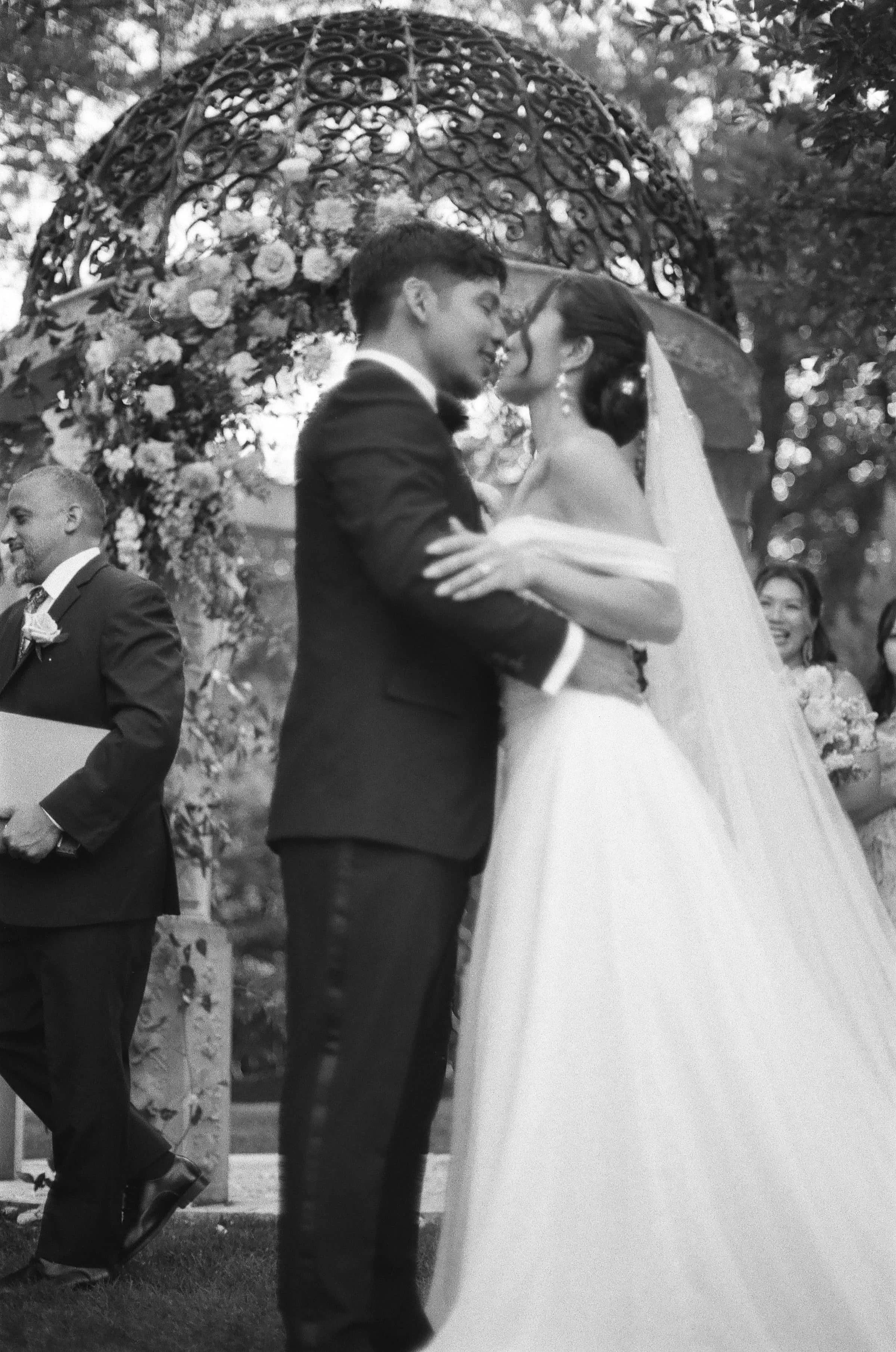
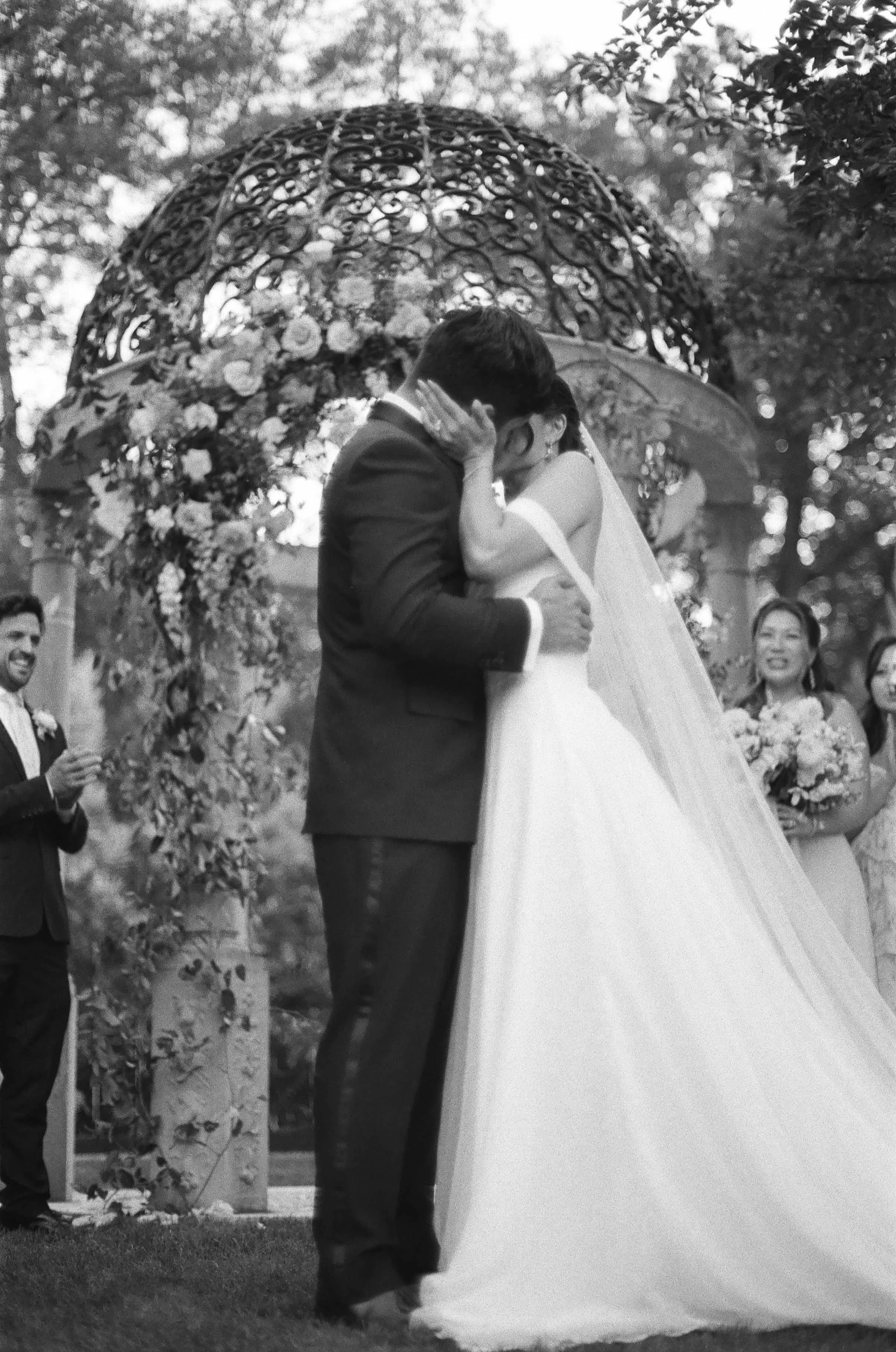
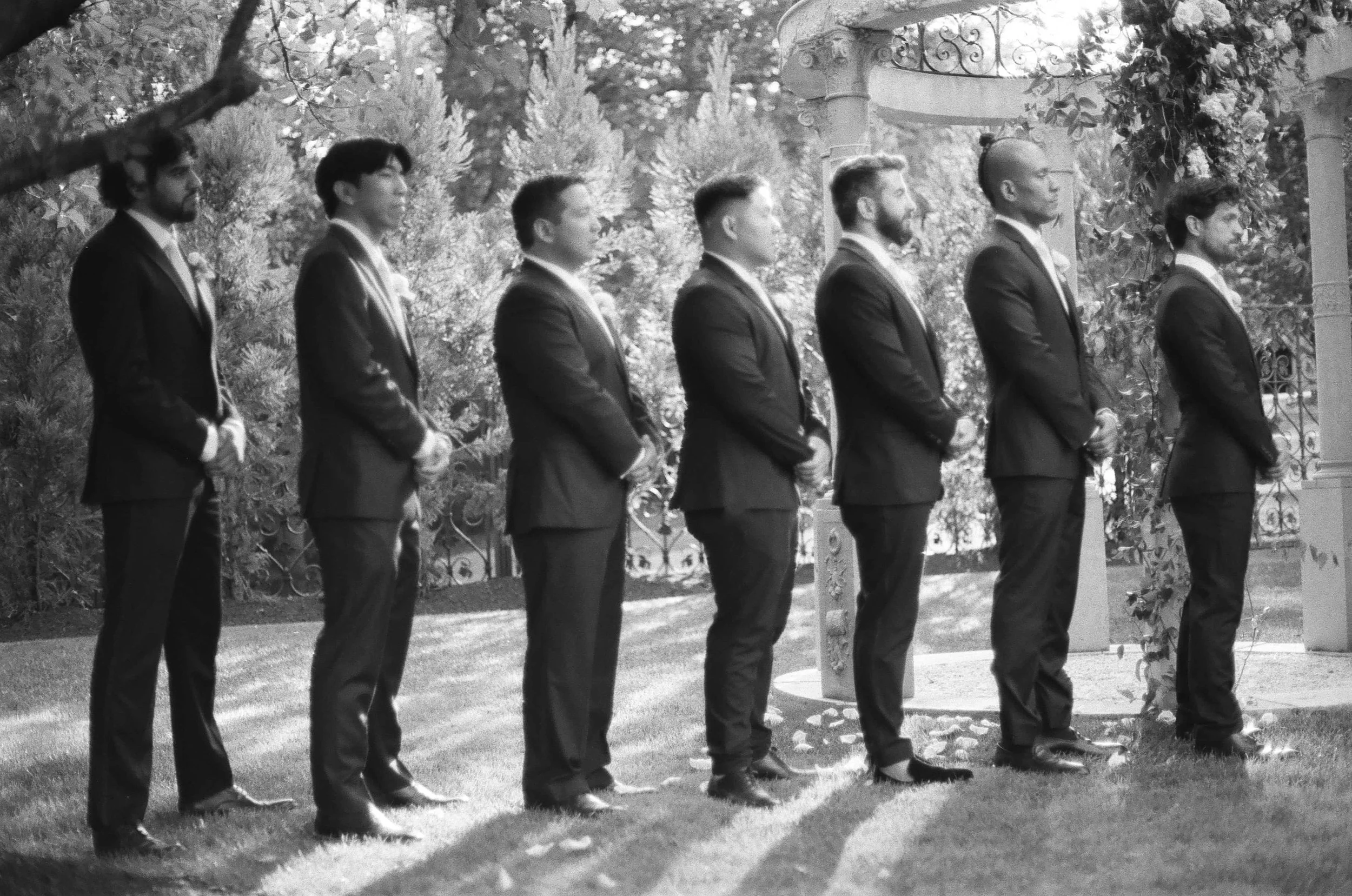
The first thing people notice is grain: a fine texture across the whole frame, stronger in the shadows and in low light. The second is how film handles bright areas. A white dress in full sun keeps its folds and lace instead of turning into a flat white shape, because film fades into highlights gradually where a digital sensor cuts off. Skin tones usually come out warmer and softer.
The film stock sets the rest. Kodak Portra 400 is the most common color film at weddings because it is kind to skin and copes with bright and shaded light in the same frame. Portra 800 helps later in the day. Ilford HP5 is a common black-and-white choice with strong grain and contrast.
Film also changes how the photographer works. With 36 frames a roll there are no bursts of twenty shots, so every frame is a decision. That is the part we like most about film: a limited supply forces you to concentrate on what matters, and the result has a texture no digital filter reproduces.
How does 35mm film compare with medium format and digital?
35mm and medium format are both film, but they behave differently at a wedding, and digital still does jobs neither of them can. Here are the three side by side.
| Factor | 35mm film | Medium format film (Hasselblad 503) | Digital (Sony A7R V) |
|---|---|---|---|
| Frames | 36 per roll | 12 square frames per roll | Thousands per card |
| Look | Visible grain, soft highlights, warm color | Finer grain, more detail, shallow depth of field | Clean, high resolution, any look in editing |
| Low light | Needs light or flash, ISO 400–800 film | Needs good light, slower to shoot | Handles dark reception rooms well |
| When you see results | After development and scanning | After development and scanning | Immediately |
| Best use at a wedding | Getting ready, candids, portraits on the move | Planned portraits and details | Ceremony, toasts, dancing, full coverage |
| Who it suits | Couples who love grain and a documentary feel | Couples who want a few heirloom portraits | Every wedding, as the base of coverage |
Medium format is the film we shoot. Our Hasselblad 503 makes square negatives on 120 film, twelve to a roll, which makes it a camera for slow, deliberate portraits rather than for chasing the ceremony.
What is cinematic wedding photography, and is it the same as film?
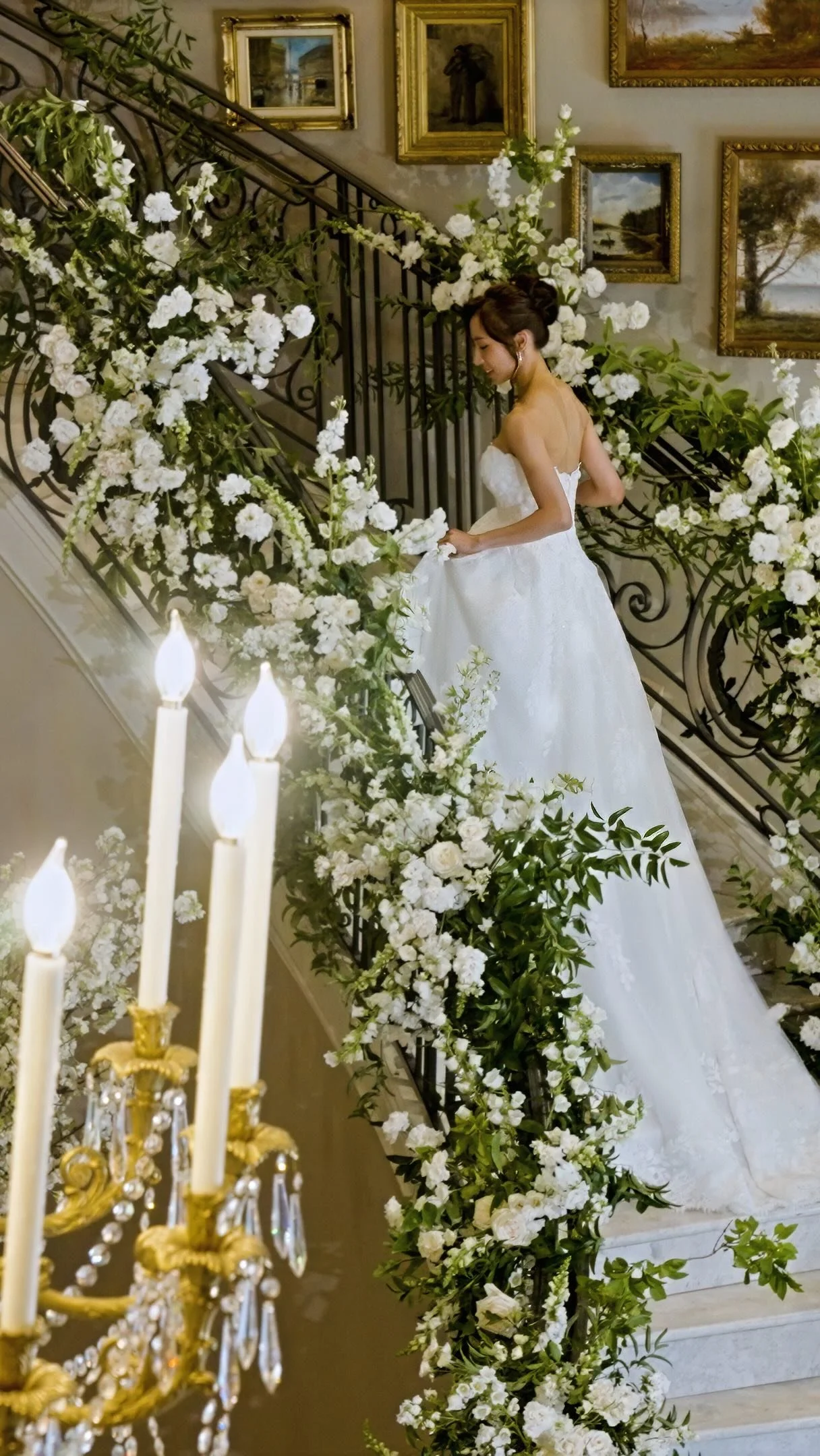
Cinematic wedding photography is a way of shooting, not a type of camera. The frames are composed and lit like stills from a movie: layers of foreground and background, a couple that is sometimes small inside a big scene, light used for mood, and a color grade that holds the whole gallery together. It can be shot on film, but most cinematic wedding photography is digital, edited to feel like film without film's limits in a dark room.
This is how we work by default. We came from film and fashion sets, so we build a frame the way an editorial shoot would, with light, pose and composition planned, while staying documentary at heart: the moments themselves are never staged. If that is the look you are picturing, film is optional. You can see it in our NYC wedding photography.
Who cinematic digital suits: couples who want the feel of film with full coverage of an evening reception, large guest counts and dark venues.
How much does film wedding photography cost?
Film adds cost in two places. Every roll has to be bought, developed and scanned, and the photographer spends more time on each frame and on handling the film. Photographers who shoot film usually build that into a higher tier or price it as an add-on, so a full wedding on film costs more than the same hours on digital.
For context, the average US couple paid $3,000 for a wedding photographer in 2025, according to The Knot 2026 Real Weddings Study, and full-day digital coverage in New York runs $3,500 to $6,000. Our digital packages start at $1,900, and film portraits are something we plan with you on the first call. The full breakdown is in our guide to how much a wedding photographer costs.
Who is film wedding photography for?
Film suits couples who already understand it and choose it on purpose. In our experience they don't need an explanation of grain or developing times; they come because they love how film looks and accept what comes with it.
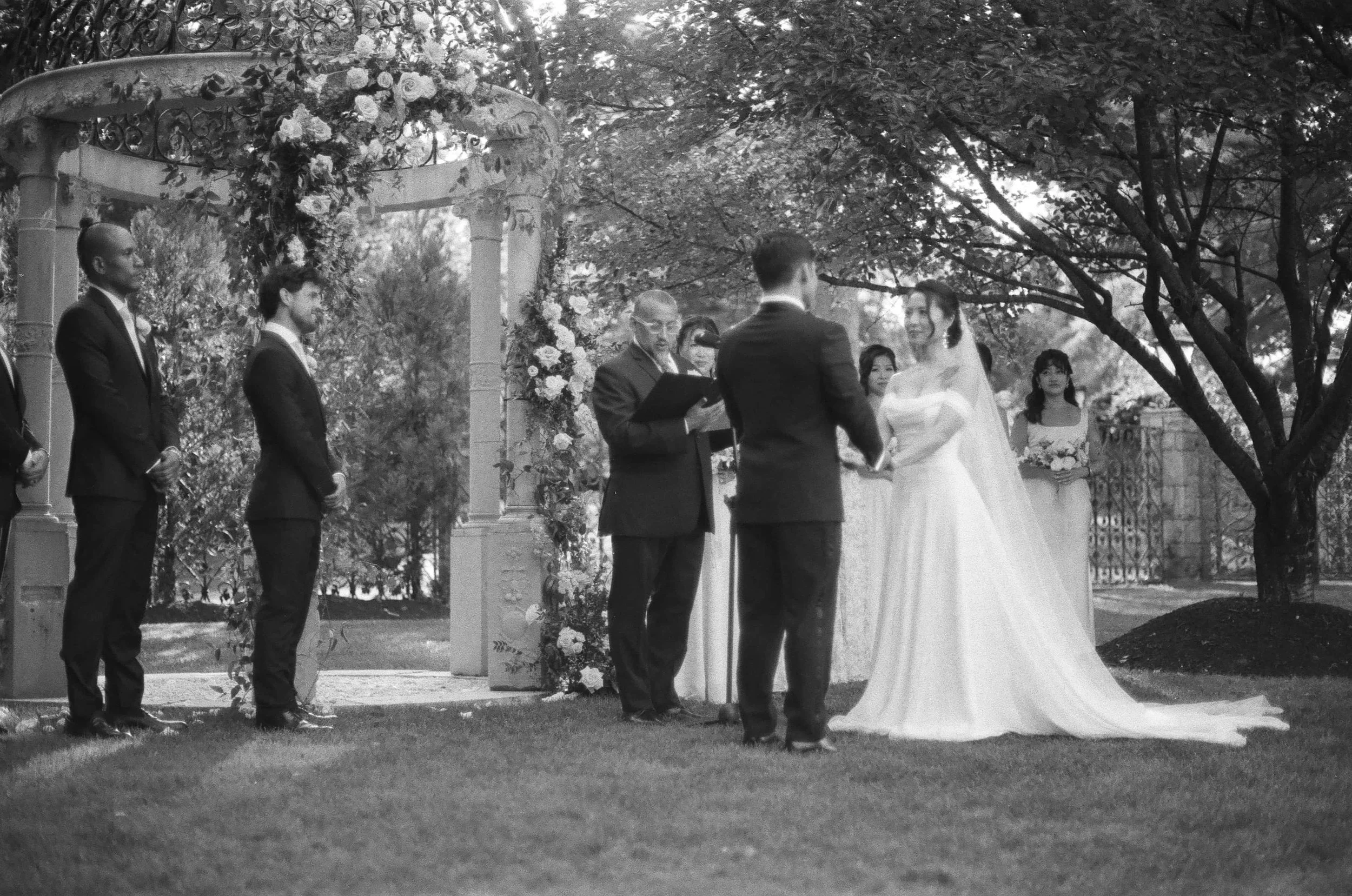
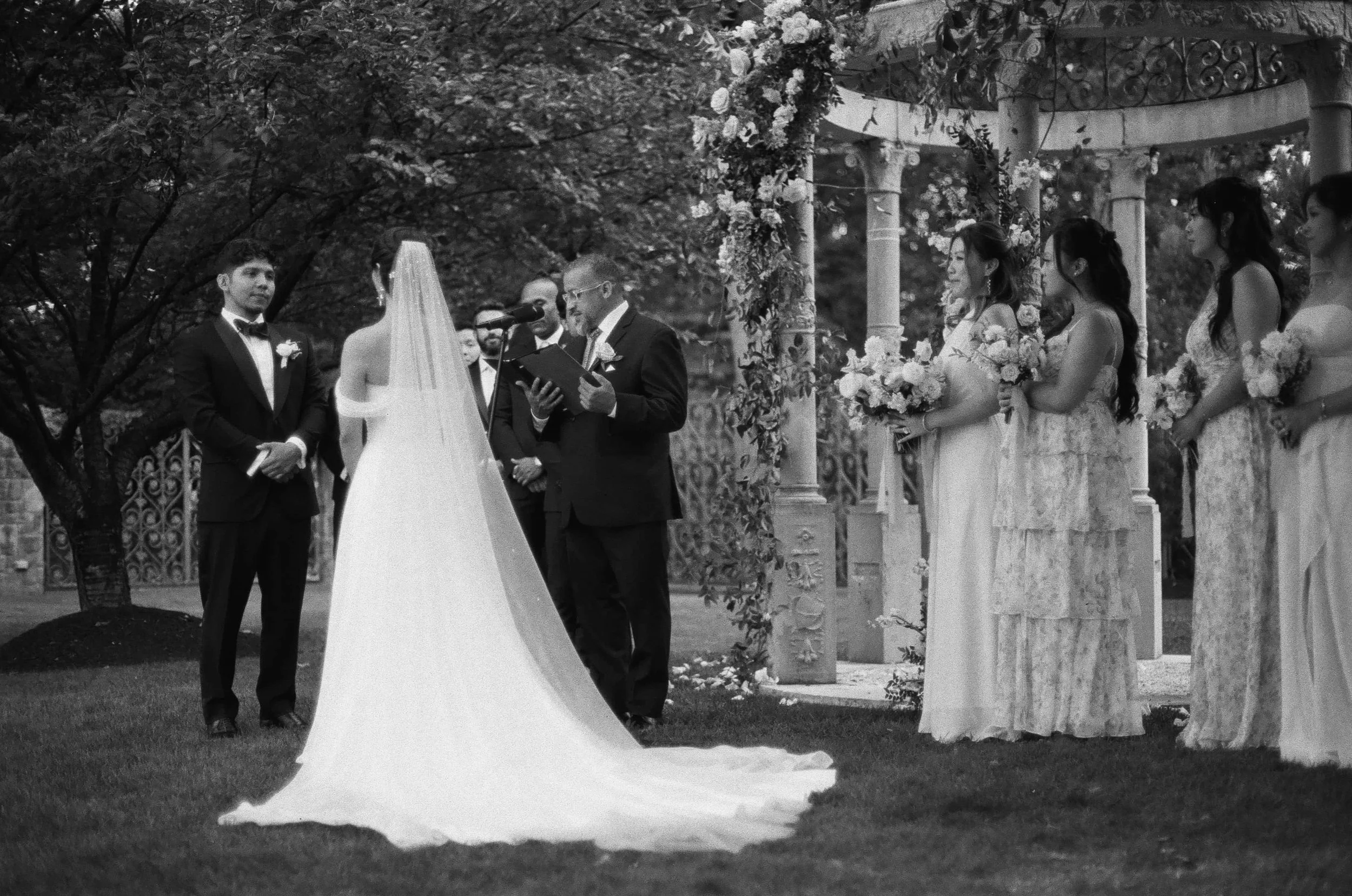
It works well for: daytime and outdoor weddings, elopements, getting-ready and portrait sessions in good light, and couples who are happy with fewer, more deliberate frames.
It is harder for: dark reception rooms, very large weddings where every guest needs to be photographed, and couples who want to see a preview the next morning.
How do you add film to your wedding day?
The easiest way is a hybrid day, with film planned around the light. These steps keep it simple:
Decide what film is for. Pick the parts of the day where you want the film look: portraits, getting ready, a walk after the ceremony.
Tell your photographer early. Film needs planning for rolls, light and timing, so raise it on the first call rather than the week before.
Put the film moments in daylight. A first look before the ceremony or portraits an hour before sunset give film the light it needs.
Keep digital for the ceremony and reception. Fast moments and dark rooms are where digital is safer.
Choose color or black and white. Decide whether the film set should be color, black and white or a mix, since that sets the film stock.
Ask when the film images arrive. Development and scanning add time, so the film set usually comes after the digital gallery.
What about Super 8 film for the wedding video?
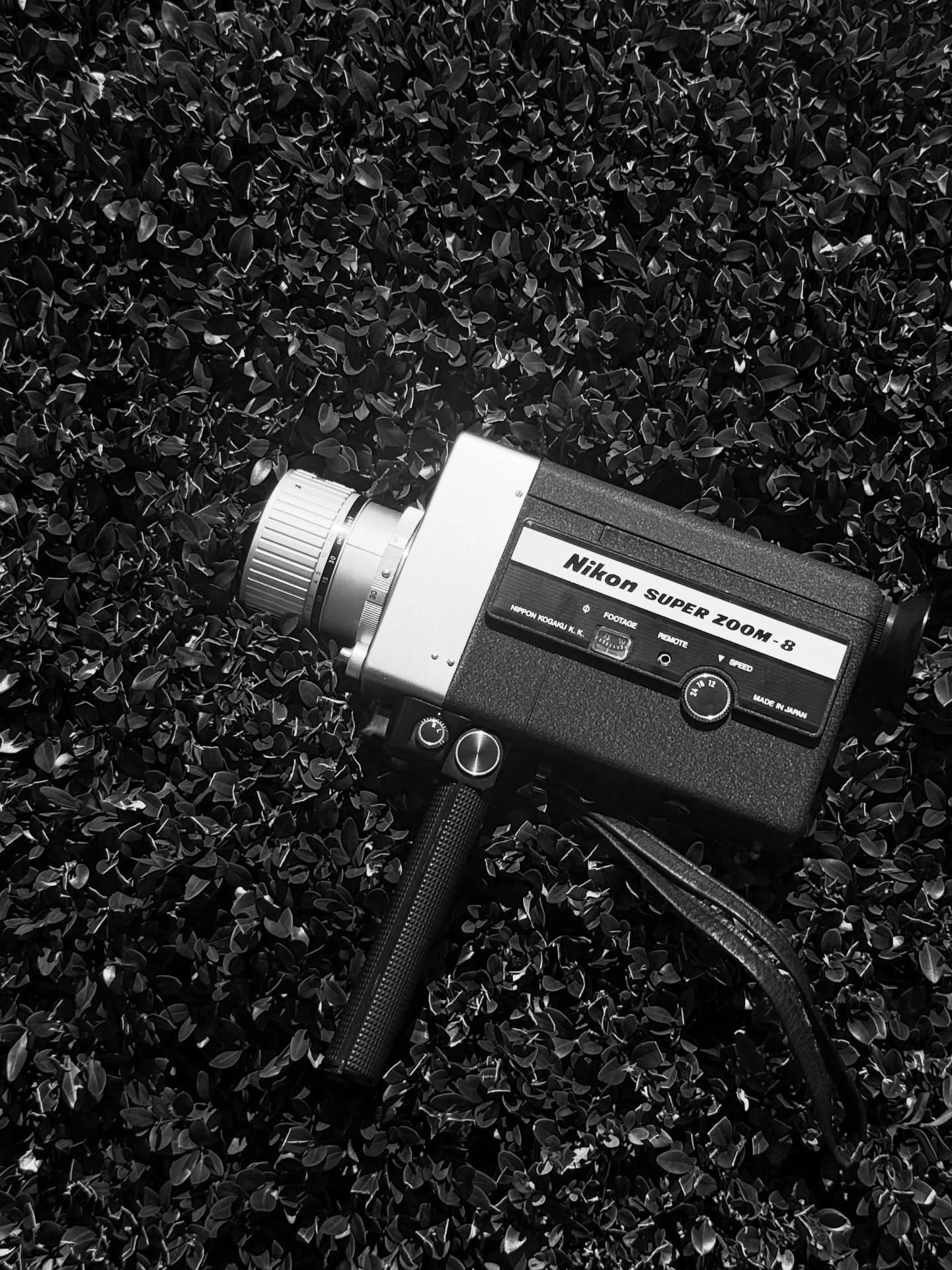
Super 8 does for video what 35mm does for photos. We shoot it on a Braun Nizo 3056 alongside the digital cameras. Each cartridge holds about three minutes, so it goes on moments we know are coming, and there is no screen to check what we got. After the wedding the film is developed and colored at a specialist lab, which is a different process from grading digital footage. Like still film, it wants light; in a darker room we add our own, and that light becomes part of the look.
Super 8 is included in our ten-hour video package and can be added to any other. In the final film it sits next to the digital footage as its own texture, warm and slightly unsteady.
Thinking about film for your wedding?
Tell us about your date, venue and the parts of the day you want on film. We'll tell you honestly where film will work and where digital will serve you better.
Frequently asked questions
-
It is wedding photography shot on 35mm film, the classic still-film format, with 36 frames per roll. The rolls are developed and scanned by a lab after the wedding and delivered as a gallery. Couples choose it for the grain, soft highlights and warm skin tones, and usually combine it with digital for full coverage.
-
Usually, yes. Each roll has to be bought, developed and scanned, and shooting film takes more of the photographer's time per frame. Photographers who offer film typically include it in higher packages or charge it as an add-on. A hybrid day, with film only for portraits and planned moments, keeps the extra cost down.
-
Yes, some photographers shoot entire weddings on film, but most couples choose a mix. Dark receptions, quick moments like the ring exchange and large family groups are easier and safer on digital. A hybrid day keeps film for the portraits and moments where it looks best, and digital makes sure nothing is missed.
-
Longer than digital. The rolls have to be developed and scanned at a lab before editing starts, so film images usually arrive after the digital gallery. Ask your photographer for written delivery dates for both. Our digital galleries arrive within a month of the wedding.
-
Kodak Portra 400 is the most common color choice for weddings: it renders skin well and copes with bright and shaded light in the same frame. Portra 800 helps indoors and later in the day. For black and white, Ilford HP5 gives strong grain and contrast. Your photographer will usually pick stock to match the light of your day.
-
No. Cinematic describes the style: frames composed and lit like movie stills, with deliberate light and color grading. Film describes the medium. Cinematic photos can be shot on film or digital, and most are digital. If you want the mood without film's limits in dark venues, cinematic digital photography gets you most of the way.
-
It can, but it needs light. Film struggles in dim reception rooms, so photographers either use flash, add their own lighting or switch to digital for the evening. Daylight ceremonies and rooms with large windows are where film looks its best indoors. Plan the film portraits for the brightest part of the day.
About Arrakis Films
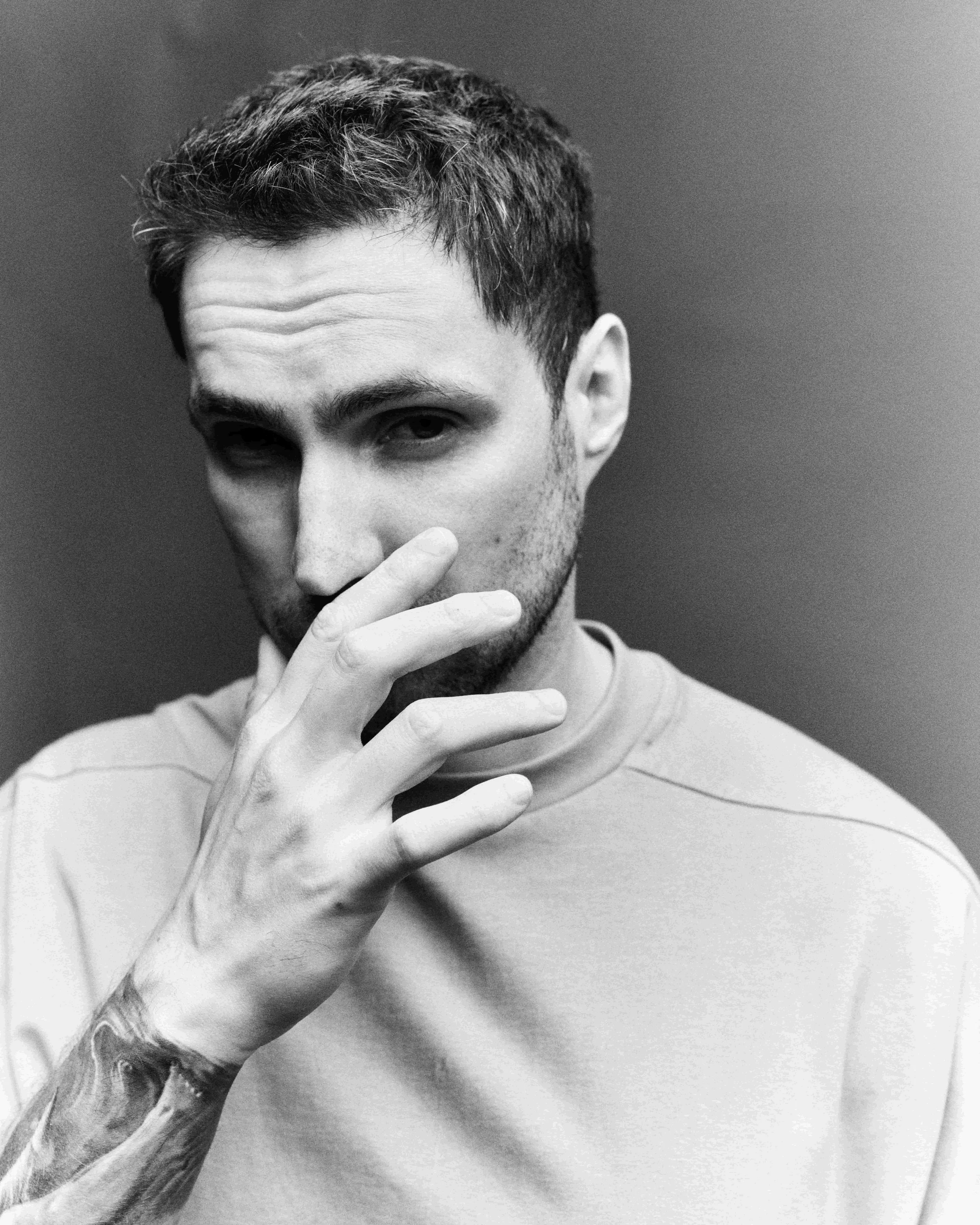

We are Andrew and Roma, a director and a producer who photograph and film weddings as a pair. We spent more than a decade in film, commercials and music videos before weddings, and our work has won awards at Venezia Shorts, the Seattle International Fashion Film Festival and the Prague International Film Awards, where we won for cinematography. We shoot digital on a Sony A7R V, medium-format film on a Hasselblad 503 and Super 8 on a Braun Nizo 3056.