

What Does a Wedding Videographer Actually Do — and Do You Really Need One?
Most couples spend months deciding on a venue, a dress, and a caterer — and leave the videographer question until three months before the wedding. Some skip it entirely to cut costs. This guide gives you an honest answer: what a wedding videographer actually does, how it differs from photography, and whether you need one for your specific wedding.
Quick Answer
A wedding videographer shoots the full day — typically 8–10 hours — and delivers a finished film: usually a 5–12 minute cinematic highlight plus a full ceremony recording. Unlike photography, video captures voice, movement, and atmosphere — your actual vows, the way your partner laughed during the first dance, the ambient sound of the room. Most couples who skipped a videographer regret it. Most who hired one don't.
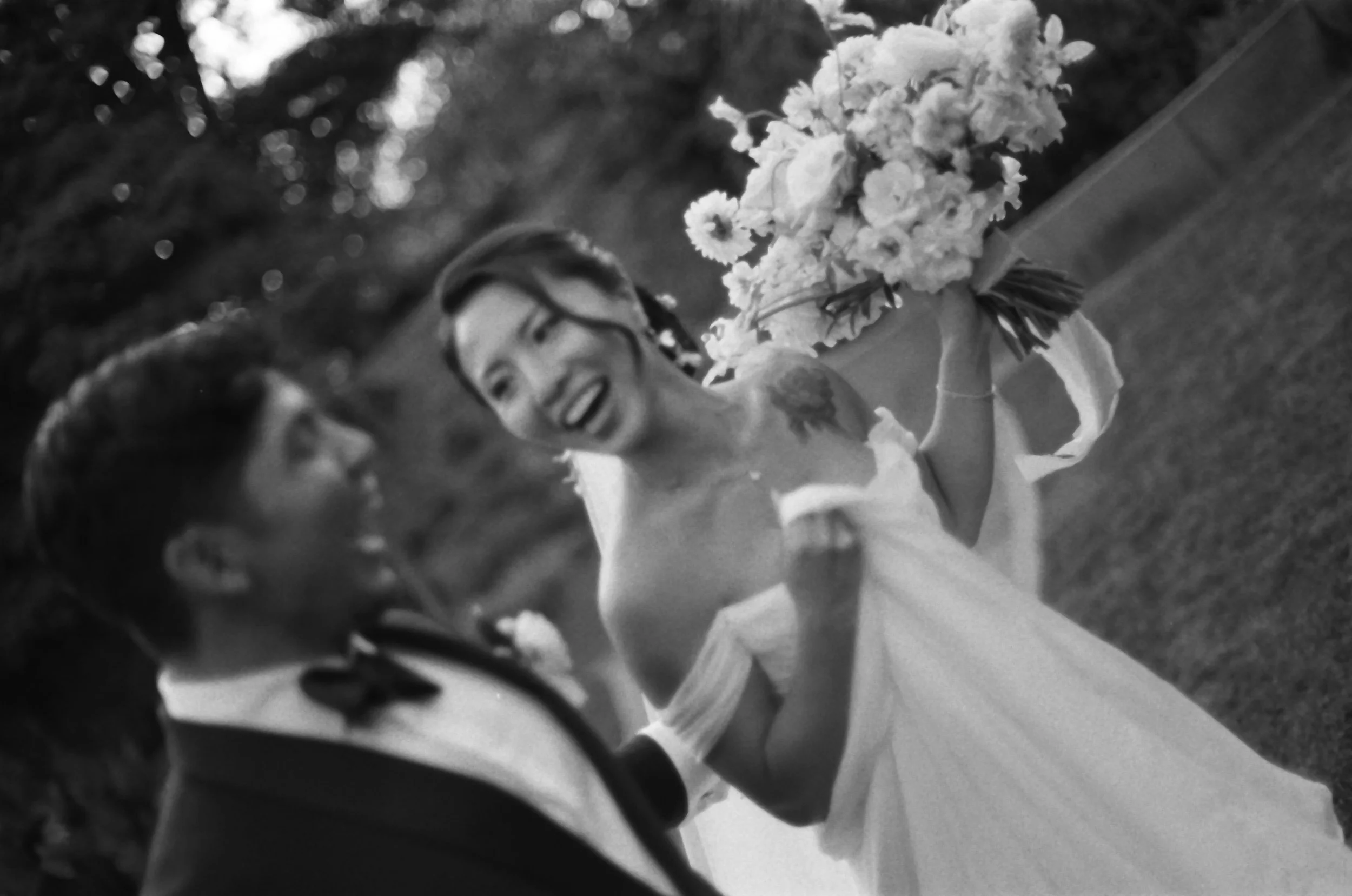
What Does a Wedding Videographer Actually Do?
A wedding videographer does considerably more than walk around with a camera. The work happens in three distinct phases — before, during, and after the wedding day — and the on-site hours are only a fraction of the total time invested in your film.
On the Wedding Day
On the day itself, a full-day videographer typically arrives during getting-ready coverage and stays through the reception — usually 8–10 hours on location. Here's what that looks like in practice:
Getting ready — detail shots, candid moments, emotional reactions
First look (if applicable) — captured from multiple angles simultaneously
Ceremony — wide shot, close-up coverage, and dedicated audio capture for vows and officiant
Portrait session — b-roll footage alongside the photographer's session
Cocktail hour — guest moments, venue details, ambient coverage
Reception — speeches, first dance, parent dances, open dancing
Most professional videographers use multiple cameras, a dedicated audio setup — wireless lavalier mics on the officiant and sometimes the couple — and supplemental lighting for dark venues. This is why the final film sounds as good as it looks.
After the Wedding
Post-production is where most of the work happens — and why turnaround takes 4–8 weeks. After the wedding, a videographer sorts through 6–12+ hours of raw footage, selects the best material, edits it to music, applies color grading, mixes the audio, and exports the final files. A 6-minute highlight film might represent 20–40 hours of editing work. This is not a fast process done correctly.
What's the Difference Between a Wedding Photographer and Videographer?
They capture fundamentally different things. Photography freezes a single frame — the expression, the composition, the detail. Video captures what happened in time. Here's how that plays out practically:
| Photographer | Videographer | |
|---|---|---|
| What it captures | Single frozen frame | Movement, sound, time |
| Your vows | Expression only | Full audio, your actual words |
| Atmosphere | Visual detail | Ambient sound + energy of the room |
| Deliverable | 600–1,000 edited photos | 5–90 min film |
| Rewatch experience | Browse at your pace | Watch like a film |
| Shareable format | Individual images | Video link |
| What you can't get otherwise | The look on your face | The sound of your voice |
The last row is the most important one. No photo can tell you what your partner's voice sounded like when they said their vows. No photo captures the way the room reacted to a speech. These are things only video preserves — and once the day is over, there's no way to go back.
🎬 Want to see what professional wedding videography actually looks like?
Browse Arrakis Films' wedding film portfolio — cinematic highlights, Super 8 reels, and full ceremony edits from NYC and LA weddings.
Do You Really Need a Videographer for Your Wedding?
Honest answer: not every couple does. But the data is consistent — couples who skipped a videographer regret it at a much higher rate than those who hired one. According to WeddingWire, video is one of the top three things couples wish they had spent more on.
That said, here's a balanced breakdown:
Reasons to Hire a Videographer
You want to hear your vows again — in your own voices, exactly as you said them
Someone important can't be there — a video lets family members who couldn't attend experience the day fully
Your wedding has a complex program — multiple venues, long ceremony, big reception with speeches worth keeping
You're investing in photography — if photos matter to you, video will too. They're the same instinct.
You want something to share — a 5-minute highlight film is the most shareable artifact of a wedding day
When You Might Skip It
Budget is genuinely stretched — if it's a choice between a good photographer and a mediocre videographer, choose the photographer
Micro-wedding or elopement with no guests — the case for video is weaker when there are no speeches, no crowd reactions, and the day is intentionally minimal
You genuinely don't watch video — some people simply don't. If you know this about yourself, it's a valid reason
What Should You Look for in a Wedding Videographer?
Not all videographers deliver the same product. When reviewing options, look for:
Consistent style across multiple weddings — one great highlight film doesn't tell you much. Look at 5–10 different weddings in their portfolio and check whether the quality is consistent or whether one standout piece is hiding weaker work.
Real audio in their samples — if every sample is just music over silent footage, ask to hear ceremony audio. Good videographers are proud of their sound work.
Clear contract terms — hours of coverage, exact deliverables, turnaround time, and what happens if they're sick on the day. Everything should be in writing.
Experience with your venue type — dark churches, outdoor ceremonies, rooftop venues all present different challenges. Ask specifically whether they've shot at your venue or a similar one.
Communication before booking — how quickly they respond, how clearly they answer questions, and whether they ask about your wedding or just send a price list tells you a lot about how the day will go.
Backup equipment — cameras fail. Cards corrupt. A professional videographer records to multiple cards simultaneously and carries backup bodies. Ask directly.
How Much Does a Wedding Videographer Cost?
Full-day wedding videography in NYC typically runs $3,000–$7,000; in LA, $2,800–$6,500. Elopement and short-coverage packages start around $1,500–$2,500 in both markets. Add-ons like Super 8 film, a second videographer, or a same-day edit are priced on top of the base package.
For a full breakdown of what drives pricing at each level and what's included — see our complete guide to wedding videography costs.
What Questions Should I Ask a Wedding Videographer Before Booking?
Before signing a contract, ask these directly:
Can I see a full ceremony edit — not just the highlight reel?
How do you handle audio — what microphones do you use, and how do you set them up?
What happens if you're sick or have an emergency on our wedding day?
What exactly is included — hours, deliverables, turnaround time, file format?
Have you shot at our venue before — or a venue with similar lighting conditions?
Do you coordinate with the photographer — and have you worked together before?
What's your backup plan for equipment failure?
Are travel or parking fees included in the price?
A videographer who answers these confidently and specifically — without being defensive — is one you can trust with the day.
FAQ
What does a wedding videographer do all day?
A full-day wedding videographer typically spends 8–10 hours on location, starting with getting-ready coverage and ending after the reception. They capture every major moment across multiple cameras, manage dedicated audio recording for the ceremony, and coordinate with the photographer and coordinator to ensure nothing is missed. After the wedding, they spend 20–40+ hours in post-production editing the final film.
Is it worth having a videographer at a wedding?
For most couples, yes. Video captures what photography can't — the sound of your vows, the energy of the room, the speeches in full. According to WeddingWire data, it's one of the most common things couples wish they had included. The exception is couples with a very tight budget who must choose between photo and video — in that case, photography is the higher-priority investment.
What's the difference between a wedding photographer and videographer?
A photographer captures single frozen frames — expressions, details, compositions. A videographer captures movement, sound, and time. Photography shows what things looked like; video shows what they felt like in the moment. They're complementary rather than interchangeable, and most couples who can afford both are glad they have both.
Do I need both a photographer and videographer?
Not necessarily — but most couples who have both are happy they did. If budget requires a choice, prioritize the photographer. If you're on the edge of being able to afford both, consider a shorter videography package — even 4–6 hours of coverage producing a highlight reel is meaningfully better than no video at all.
How long does it take to get the wedding video back?
Standard turnaround for a professionally edited wedding film is 4–8 weeks. Some videographers offer rush delivery for an additional fee. Turnaround depends on the editing workload, the length of the deliverable, and how busy the videographer's season is. Ask about this specifically before booking — it should be written into your contract.
What should I look for in a wedding videographer?
Consistent portfolio quality across multiple weddings, real ceremony audio in their samples, clear and transparent contracts, experience with your venue type, and strong communication before the booking call. Ask to see a full ceremony edit, not just a highlight reel — that's where you'll hear the audio quality and understand their real documentary capabilities.
How far in advance should I book a wedding videographer?
In NYC and LA, 12–18 months in advance for peak season dates (May–October). Off-season weddings can often be booked 6–9 months out. Good videographers book at the same pace as good photographers — the further out you are from the date, the more options you have.
Ready to talk about your wedding film?
Tell us your date, location, and what you're looking for — we'll come back within 24 hours with availability and a package recommendation.