How to Choose a Wedding Videographer in Los Angeles: A Step-by-Step Guide
A wedding film is the one vendor deliverable you can't reshoot and can't judge from a highlight reel. A 60-second reel is the best six seconds of ten different weddings — it proves a videographer can produce a beautiful moment, not that they can hold a story across your whole day or record your vows clearly enough to hear. Choosing well in Los Angeles means testing for exactly the things a reel hides.
This is the process, step by step: what to decide before you look, how to read a videographer's real work, and the questions that separate two quotes that look the same. Planning in New York instead? Our guide to choosing a wedding videographer in NYC covers the same ground.
In this article:
Quick answer
Choosing a wedding videographer in LA is a six-step process: decide the film style and coverage you want, set a budget against the $2,300 national average, shortlist by full films rather than reels, vet audio quality and backup gear, ask who's shooting and when you'll get the film, then confirm it all in the contract. Audio and delivery time separate most quotes.
What kind of wedding film do you actually want?
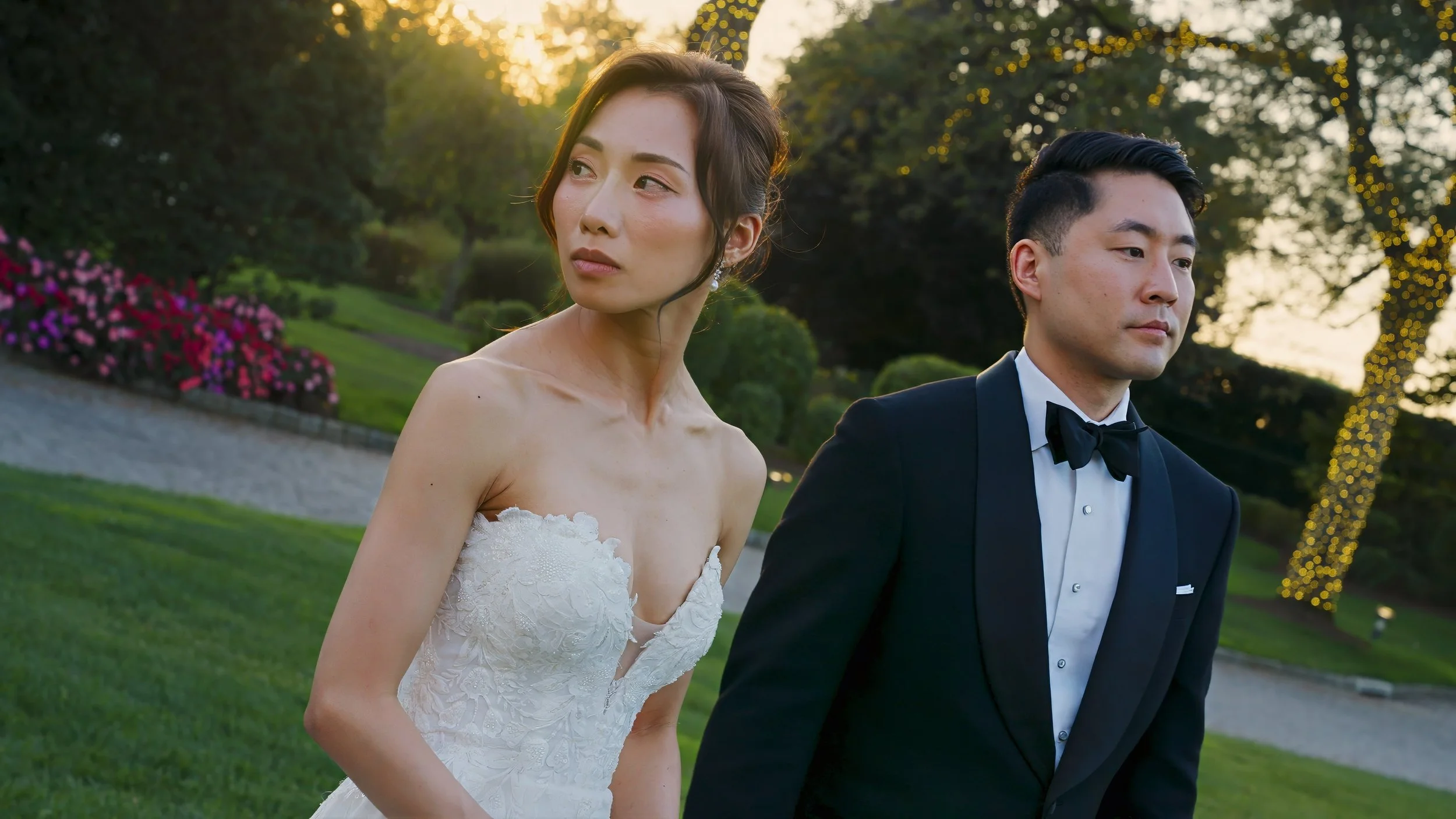
Start by deciding the style and length you want, because it shapes everything after. Wedding films split into documentary (following the day as it happens), cinematic (directed, styled, built like a short film), and hybrid. Separately, decide whether you want just a highlight film, or a highlight plus a full ceremony and speeches edit. These two choices set who you should even be looking at.
Documentary films stay out of the way and capture the day's real emotion; cinematic films add direction, styling and a more constructed edit; most studios, ours included, work in a hybrid with documentary at the core. The other decision is length and deliverables. A highlight film — a few minutes cut to music — is what couples actually rewatch. A full ceremony or speeches edit is a separate, unbroken record for the parts you'll want in full in twenty years, and for family who couldn't travel. Knowing which you want stops you comparing a highlight-only quote against a full-coverage one as though they're the same product.
How much should you budget for a wedding videographer in LA?
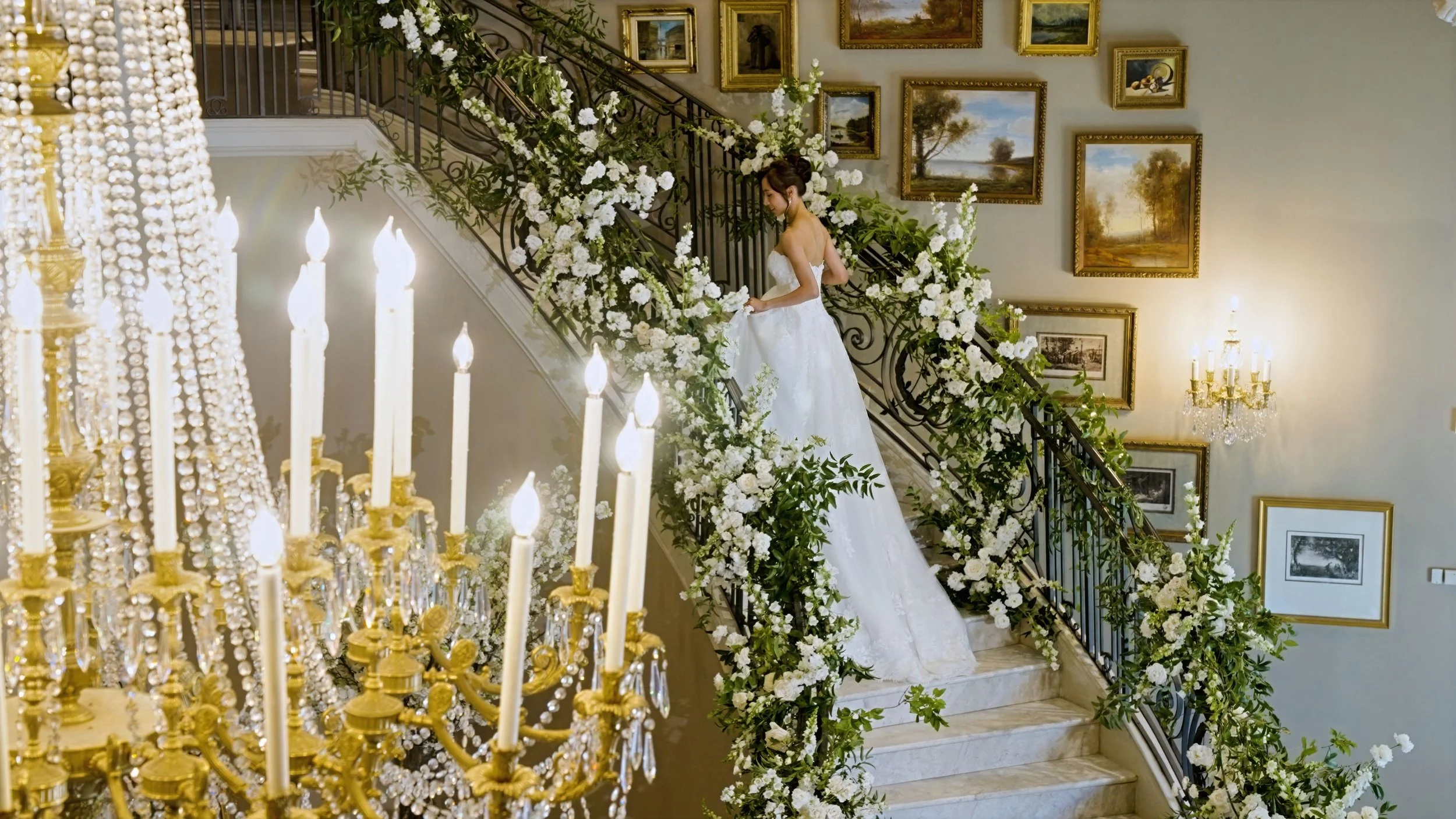
The national average is $2,300, according to The Knot's 2025 Real Weddings Study, with WeddingWire putting it lower at $1,799. Both pool every market and include short bookings. Full-day videography in Los Angeles realistically runs $2,500 to $5,500, and it's worth knowing that 19% of couples who skipped video later said they regretted it.
Read the national averages as a floor rather than a target for a full LA day — they include two-hour and half-day coverage from every corner of the country. In Los Angeles, distances between venues, film permits and competition with commercial production push full-day rates above the national number. Our own video packages run $1,900 for four-hour elopement coverage, $3,500 at six hours, $4,800 at eight with two videographers and drone, and $5,890 at ten with Super 8 added. Set your budget against the day you're actually planning, not the national average for all weddings everywhere.
How do you evaluate a videographer's work?
Ask to watch a full highlight film start to finish, not a showreel. A reel is a montage of best-of seconds; a full film shows whether they can hold a story for six or eight minutes, whether the pacing works, and — the thing reels always hide — whether the audio is clean. Watch two or three full films before you judge anyone.
The tell is almost always sound. A reel can be cut over music so you never hear a spoken word; a full film has to carry the vows and the speeches, and that's where weaker videographers fall apart — muffled vows, wind over the ceremony, toasts you can't make out. Also watch how the film handles the ordinary stretches between highlights, because a whole wedding isn't all peaks. If a videographer will only show you a tight reel and not a complete film, treat that as the answer to a question you didn't have to ask.
| What to check | What good looks like | Why it matters |
|---|---|---|
| Full films | Shows 2–3 complete highlight films | A reel hides pacing and audio |
| Ceremony audio | Wireless mics on the couple and officiant | Bad vows sound can't be fixed later |
| Backup gear | Two camera bodies, dual-card recording | There is no second take at a wedding |
| Delivery window | A date written into the contract | Peak-season backlogs stretch timelines |
| Who's shooting | A named shooter whose work you've seen | Big studios assign whoever is free |
Why does ceremony audio matter more than you think?
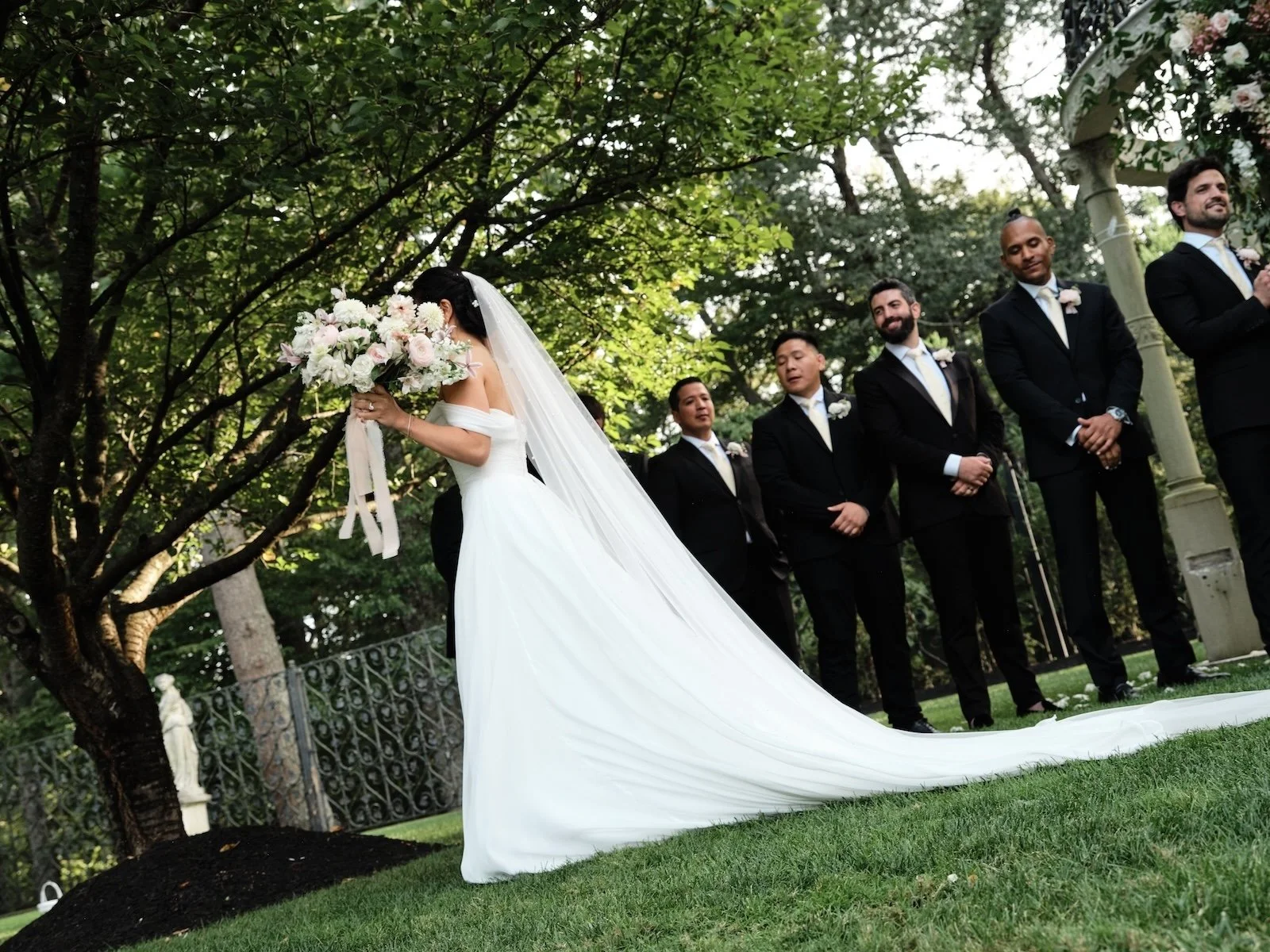
Audio is the single thing that separates a wedding film you rewatch from one you mute, and it's the hardest to fix after the fact. The vows in your own voice, the pause before the answer, the speech that got the room — none of it survives if it was recorded badly. Clean ceremony sound comes from wireless microphones on the couple and the officiant, not from the camera.
Video is the only vendor that captures sound, and at an outdoor LA wedding sound is under constant threat from wind, traffic and distance. A camera at the back of the aisle picks up all of that and little of your vows. The fix is small microphones on the people speaking, feeding clean audio straight to the recorder. There's no edit that rescues vows lost to wind, which is why this is the first technical question to ask any videographer. When you watch their full films, listen as much as you look.
How do you choose a wedding videographer in LA, step by step?
Work through it in order: define the film style and coverage, set a budget, shortlist by full films, vet audio and backup, ask who's shooting and when you'll get the film, then read the contract. In that sequence, the dozens of LA options narrow to a few you can compare like for like.
1. Decide style and coverage. Documentary, cinematic or hybrid; highlight only, or highlight plus full ceremony and speeches.
2. Set a budget against the market. The national average is $2,300; a full LA day runs $2,500 to $5,500.
3. Shortlist by full films, not reels. Watch two or three complete highlight films start to finish.
4. Vet audio and backup. Wireless mics on the couple and officiant, two camera bodies, dual-card recording.
5. Ask the practical questions. Who actually shoots your wedding, whether a second videographer is included, and the delivery window in writing.
6. Read the contract before signing. Hours, deliverables, delivery date, backup, and travel or permits for LA venues.
What should be in the contract before you book?
Before you sign, the contract should state the coverage hours, every deliverable and its length, the delivery window as a date rather than a vague promise, and what happens if equipment fails. For an LA wedding, it should also cover travel to out-of-town venues and who pulls any film permit for a beach or park.
Peak-season backlogs are what stretch delivery times, so a delivery window written into the contract is worth more than a number on a website — ours is photos within a month and films in four to six months, because every edit is done in house. Confirm who is actually shooting your wedding by name, not just the studio. And for LA specifically, get travel and permits in writing: a crew turned away at a county beach without a permit is coverage you paid for and lost. The contract is where the answers you liked in conversation become commitments. Desert elopements follow the same rule. We filmed an elopement in Joshua Tree, and the national park requires a special use permit for wedding ceremonies, so apply well before the date and build the shoot around the permit's conditions. Confirm in the contract who handles the application and who pays the fee.
Frequently asked questions
-
Full-day videography in LA runs $2,500 to $5,500 in 2026, against a national average of $2,300 (The Knot) and $1,799 (WeddingWire). Our own packages are $3,500 for six hours with one videographer, $4,800 for eight with two videographers and drone, and $5,890 for ten with Super 8 film. Elopement coverage starts at $1,900.
-
Ask to watch two or three full films, not a reel; how they record ceremony audio; who will actually shoot your wedding; what happens if a camera fails; whether a second videographer is included; and their delivery window in writing. Audio and delivery time are where two similar-looking quotes usually differ.
-
For a wedding under about 100 guests in one venue, one is usually enough. A second becomes worth it when getting ready happens in two places, when the ceremony has a wide aisle one camera can't cover, or when the timeline is tight enough that details and speeches overlap. It's included in our eight- and ten-hour packages.
-
It's the most important technical element and the hardest to fix afterwards. Clean vows and speeches come from wireless microphones on the couple and the officiant; sound recorded from the camera picks up wind and guests instead. When you watch a videographer's full films, listen to whether the spoken moments are clear — no edit rescues audio lost on the day.
-
Photos arrive within a month and films in four to six months. A ten-minute film takes 30 to 60 hours of editing on its own, and we do all of it in house rather than outsourcing, so nothing waits in a contractor's queue. The short trailer comes first. Whoever you book, get their delivery window written into the contract.
-
Most couples want both, weighted toward the highlight. The highlight film — a few minutes cut to music — is what gets rewatched. A full ceremony or speeches edit is an unbroken, real-time record for the parts you'll want in full years later and for family who couldn't attend. Deciding which you want keeps you from comparing unlike quotes.
About Arrakis Films
Arrakis Films is Andrew and Roma, an award-winning photo and film studio. Most of our weddings are in New York – The Plaza, Oheka Castle, The Skylark – and in California we filmed an elopement in Joshua Tree. Andrew directs and shoots, Roma produces, and they bring over a decade in cinema, commercial and music-video work — recognised at festivals including FFTG Awards, Venezia Shorts and the Seattle International Fashion Film Festival — to wedding films. They shoot documentary at the core with a cinematic eye, record ceremony audio properly, and edit every film themselves, which is why delivery is photos within a month and films in four to six.
Looking for a wedding videographer in LA?
Tell us your date, your venues and the moments that matter most, and we'll show you full films — not a reel — and talk through which coverage your day actually needs.