

Wedding Dress Trends for 2027: What the Runways Actually Showed
Quick answer: Bridal fashion for 2027 has moved to the waist. The Basque and drop waist was one of the defining silhouettes at Spring 2027 New York Bridal Fashion Week, alongside the halter neckline, peplums and hip volume, convertible two-piece looks, reworked lace, and color that is no longer white. Strapless returned, rebuilt on long-line corsetry, and embellishment shifted from all-over sparkle to hand-cut, three-dimensional work.
We photograph and film weddings across New York and Los Angeles, which means we see these dresses twice: on the runway, and then eighteen months later, moving through a real reception at 11pm. Both views are in this guide. The trends below come from the Spring 2027 collections shown in New York, cross-checked across runway coverage from THE WED, WWD, WhoWhatWear, The Knot, Inside Weddings, and European show reporting. The last sections cover what none of those recaps tell you, which is how each of these gowns behaves on camera.
In this article
- What are the biggest wedding dress trends for 2027?
- What changed since last season's collections?
- Why is the Basque and drop waist everywhere in 2027?
- Why is every 2027 collection adding volume at the hip?
- Is the mermaid silhouette coming back?
- Are two-piece sets and convertible gowns worth the money?
- How is lace being reworked for 2027?
- Which necklines are trending for 2027?
- Is white still the default wedding dress color?
- Which fabrics are defining 2027 wedding dresses?
- What does corsetry look like in 2027?
- What is the armor trend in 2027 bridal?
- Which embellishments read as couture, and which read as busy?
- What are brides wearing instead of a traditional veil?
- Which of these trends actually photograph and film well?
- When should you order a wedding dress for a 2027 wedding?
- How much does a wedding dress cost?
- Frequently asked questions
What are the biggest wedding dress trends for 2027?
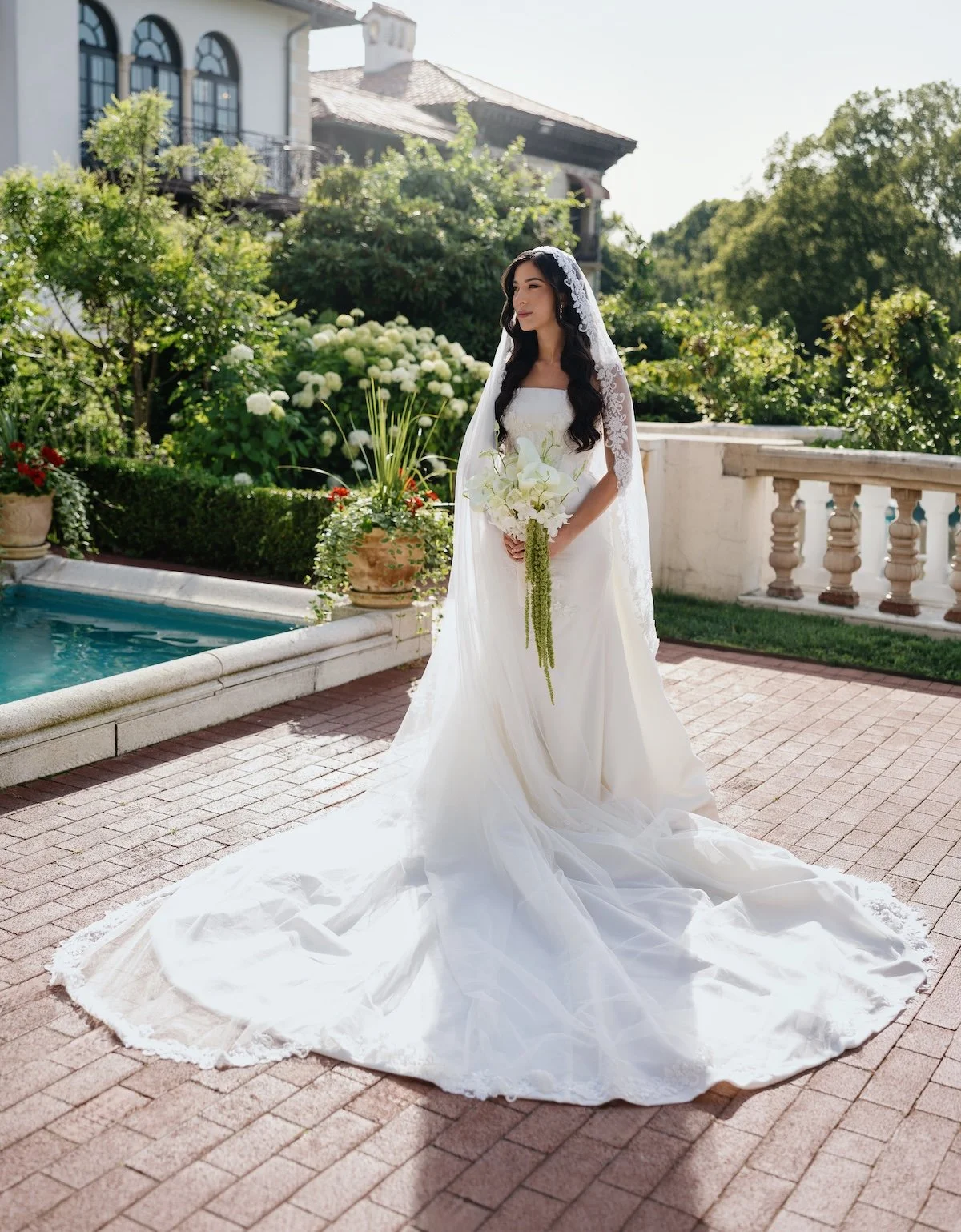
Fifteen trends appeared in three or more independent Spring 2027 runway recaps, which separates a real direction from one designer's experiment.
Basque and drop waistlines. Shown across the season by Eden Aharon, Danielle Frankel, Amsale, Costarellos, House of Gilles, and Galia Lahav.
Peplums and hip volume. Structured flares at the hip that rebuild the waist without a full ball gown.
Two-piece sets and convertible gowns. Separates, jackets, overskirts, and detachable sleeves built into one purchase.
Reworked lace. High necks, sleeveless bodices, and botanical patterns placed in unexpected spots.
Color that is not white. Blush, champagne, silver, butter yellow, dusty pink, and full black.
Long-line and exposed corsetry. Visible boning treated as the design, not as hidden structure.
Three-dimensional embellishment. Hand-cut organza, feathers, graphic florals, and beaded fringe.
Bows at both extremes. Micro bows at the strap or hip, and oversized statement bows at the back.
Reinvented strapless and satin minimalism. The 1990s slip dress, rebuilt with better internal structure.
Halter and high necklines. The breakout neckline of the season, replacing the sweetheart and the cat-eye.
The rebuilt mermaid. Fit and flare returned, where structured fabric builds the flare and ruffles do nothing.
Fabric as the headline. Mikado, duchess satin, and silk organza chosen for how they hold a shape on their own.
Metal and armor detailing. Chainmail, plating, and hardware worked into the bodice itself.
Feathers. Full skirts, trimmed edges, and hand-cut organza feathers across at least seven houses.
Black and monochrome. Black gowns and black-and-white contrast treated as a bridal category of its own.
What changed since last season's collections?
Two shapes that dominated bridal coverage a season ago lost almost all runway presence, and one moved from a minor reference to the structural basis of 2027. The Basque waist went from one option among many to the seam nearly every house built on. The cat-eye neckline and oversized statement jewelry, both pushed hard last season, did not appear in any major Spring 2027 recap.
Grew:
Basque and drop waists moved from a niche vintage reference to the foundation of entire collections.
Detachable overskirts and sleeves expanded into complete two-piece systems and designed bridal jackets.
Vintage references sharpened from general nostalgia into specific Victorian and Wuthering Heights styling.
Soft color widened from pastel into metallics, butter yellow, deep red, and black.
Minimalism stayed and gained a clearer reference point: 1990s slip dressing in heavy satin.
Lost ground:
The cat-eye neckline was displaced by high necks and reinvented strapless.
Oversized chunky jewelry gave way to sculpted headwear, mini veils, and hair pieces.
Sustainability as a headline trend became a baseline expectation. Designers still use upcycled and deadstock fabric, they just stopped running it as the story.
Who this is for: If you already bought your gown for a near-term date, almost nothing here makes it look dated. If you are shopping now, start with the Basque waist and two-piece sections below.
Why is the Basque and drop waist everywhere in 2027?
A Basque waist is a V-shaped or U-shaped seam that drops below the natural waist before the skirt begins. It elongates the torso, narrows the waist visually, and works on almost every body without requiring a corset. That combination of flattery and low commitment is why it recurred across the Spring 2027 collections, grouped by THE WED under statement hips alongside Eden Aharon, Noa Fineout, Noy Eliyahu, Margot, Danielle Frankel, Antonio Del Canto, Mariana Hardwick, Costarellos, Amsale, and House of Gilles.
The versions varied more than the name suggests. Justin Alexander Poeza, Galia Lahav, and Alon Livne showed antique-leaning Basque seams under structured bodices. Ouma, Markarian, and Viktor & Rolf pushed it into a curved, gently flaring shape closer to a soft peplum. Rivini, Mark Ingram, and Dany Tabet used it on both minimalist crepe and heavily embellished gowns. Studio Levana, Milla Nova, and Allure built full ball-gown skirts off the same seam.
The Knot described the dominant version as a Basque and drop-waist hybrid, which is accurate: the seam sits lower than a classic Basque and softer than a true 1920s drop waist.
Who this is for: Brides with a short torso, anyone who wants waist definition without boning, and anyone who has tried on empire waists and felt shapeless in them.
Why is every 2027 collection adding volume at the hip?
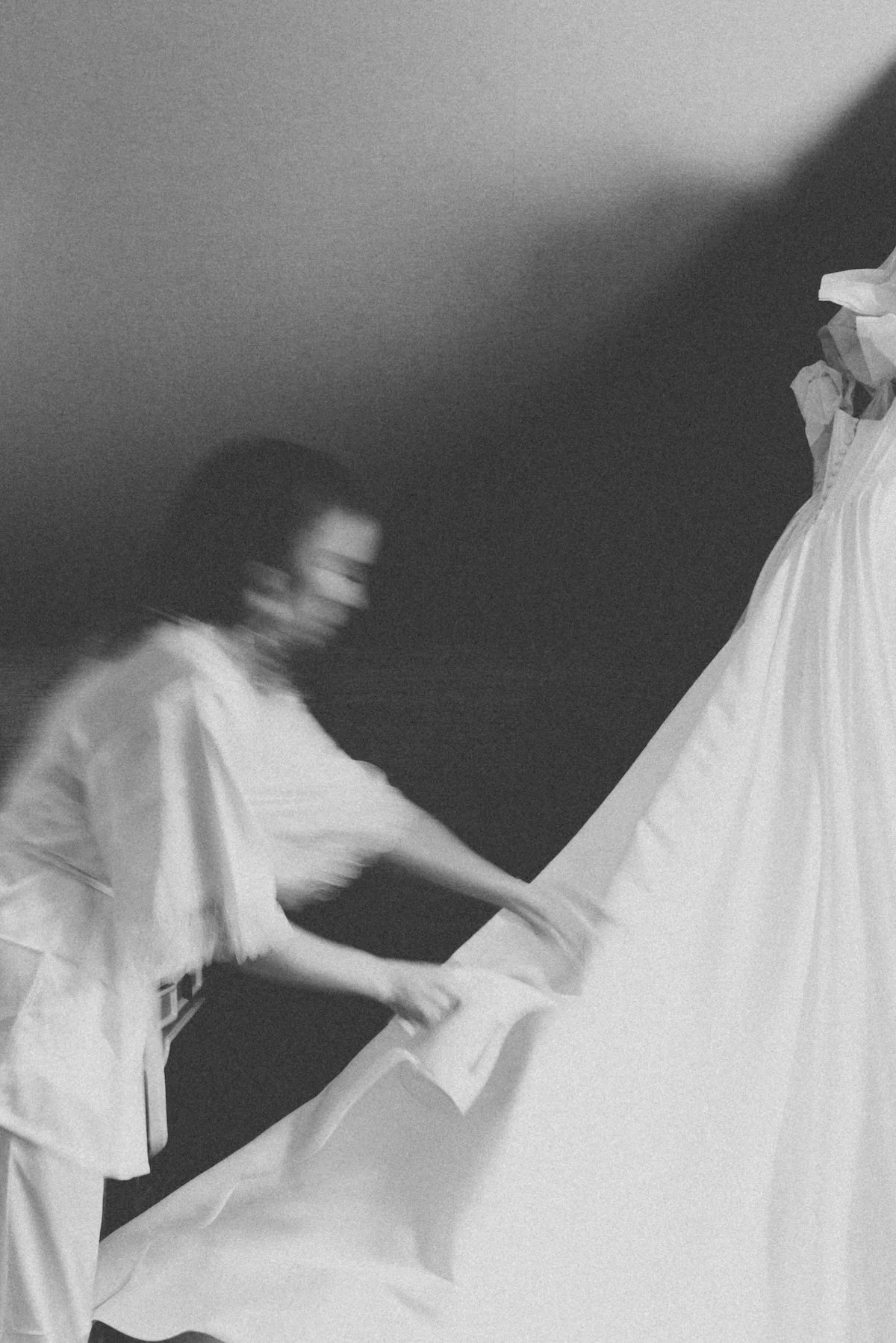
Hip volume is the structural answer to a decade of column dresses. Peplums, accentuated hip panels, and asymmetric high-low skirts all build an hourglass without adding a full ball gown skirt, which reads as more modern and moves far better through a crowded room.
Three approaches showed up:
Structured peplums. Rivini, Netta BenShabu, and Veronica Di Santo used sculpted draping and tailoring to build a defined flare at the waist. Georgia Young, Vagabond, and Antonio Gual showed dramatic versions with detachable overskirts.
Hip detailing. Justin Alexander Poeza, Lee Petra Grebenau, and Alon Livne added panels, bows, and gathered fabric at the hip in either matching or contrasting material.
Asymmetry and high-low skirts. Hayley Paige, Alyne, and Leah Da Gloria used diagonal draping and uneven hems for movement. Allure and Monique Lhuillier showed open skirts that split to reveal the leg.
Inside Weddings listed accentuated hips as its own trend, separate from peplums, which tells you how many different ways designers found to add width exactly at that point.
Who this is for: Straighter figures wanting curve, and brides who want drama from the side and the back, where most gowns give you only the front.
Is the mermaid silhouette coming back?
Yes, and it is the one early-2000s shape designers rebuilt instead of reviving unchanged. The 2027 mermaid fits through the bodice and hip and flares at or below the knee, but the flare is now built from structured fabric, not from ruffle volume, which is why it reads as couture and the old version read as prom.
THE WED filed it as a mermaid skirt revival and credited Yudashkin, Varca, Eden Aharon, and Harris Reed with the clearest runway versions, all built on added volume and movement through the skirt. Bridal market reporting adds Lazaro, Rivini, and Pronovias as the stocked versions reaching shops.
The practical difference from the 2000s version is the knee. The old mermaid locked the knees together and made stairs and dancing difficult. The current construction starts the flare higher and uses lighter skirt fabric, so you can actually walk in it.
Who this is for: Brides who want the silhouette to do the work and are willing to commit to a shape. This is the least forgiving cut on this list and the most dependent on alterations.
Are two-piece sets and convertible gowns worth the money?
Yes, if you actually want two looks and would otherwise buy a second dress. A convertible gown with a detachable overskirt, jacket, or sleeves typically costs less than two separate purchases and removes the twenty-minute mid-reception change. The trend is now standard enough that it appeared under four different names across the 2027 recaps.
What the collections showed:
Blazer and skirt sets. Markarian paired blazer-cut tops with miniskirts; Danielle Frankel and Ferrah showed cinch-waist peplum jackets over floor-length slim skirts.
Camisole and skirt sets. Alexandra Grecco and Lein showed embellished pencil skirts with matching camisoles, and drop-waist skirts with cropped billowy blouses.
Quick-change systems. Galia Lahav, Jaclyn WHYTE, and Sareh Nouri built detachable overskirts, corsets, and toppers into single gowns.
Two-in-one gowns. All Who Wander, Wona Concept, and Made with Love showed full transformations without a wardrobe change.
Bridal jackets. Markarian, Lein, Ferrah, and House of Gilles treated the jacket and the removable shawl as a designed piece in its own right.
One practical note from shooting these: the second look only reads as a second look if the two halves are visually different. A gown that loses a sheer overskirt and gains nothing looks the same in photographs. A gown that goes from covered to bare, or long to short, gives you a genuinely different set of images.
Who this is for: Brides with a long day, a ceremony with a dress code stricter than the reception, or a cold-weather wedding.
How is lace being reworked for 2027?
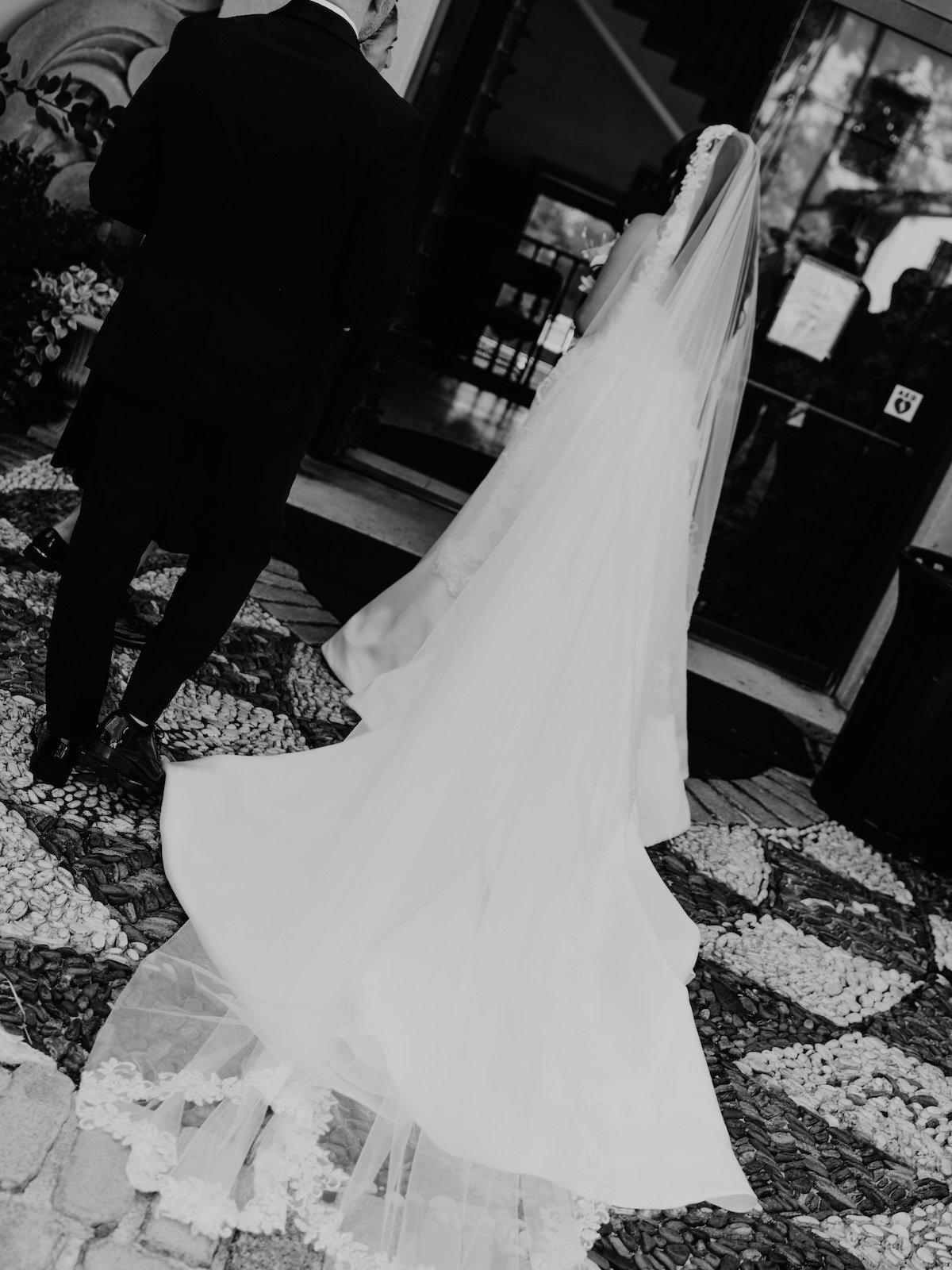
Lace stopped being an all-over surface and became a placement decision. The 2027 collections used it in three distinct ways: as a high-neck bodice, as a sleeveless structured panel, and as an oversized botanical print scaled far larger than traditional bridal lace.
High-neck lace. Mira Zwillinger, Dana Harel, Katherine Tash, and Francesca Miranda showed high necklines and halters that cross at the front, in full lace or paired against plain satin skirts.
Sleeveless lace. Watters, Elizabeth Fillmore, and Katherine Tash kept the lace but removed the sleeve, which reads cleaner and photographs less busy.
Long-sleeve lace. Justin Alexander Poeza, Ricca Sposa, and Milla Nova combined lace sleeves with visible boning and cutout detail.
Botanical and abstract patterns. Monique Lhuillier, Nicole + Felicia, Leah Da Gloria, Watters, Jenny Yoo, and Netta BenShabu scaled patterns up and placed them asymmetrically.
The shift matters commercially: large-scale lace on a plain base is far cheaper to produce well than fine all-over lace, and it holds its shape better in photographs taken from across a room.
Who this is for: Brides who want coverage without looking conservative, and anyone marrying in a church, synagogue, or venue with a dress code.
Which necklines are trending for 2027?
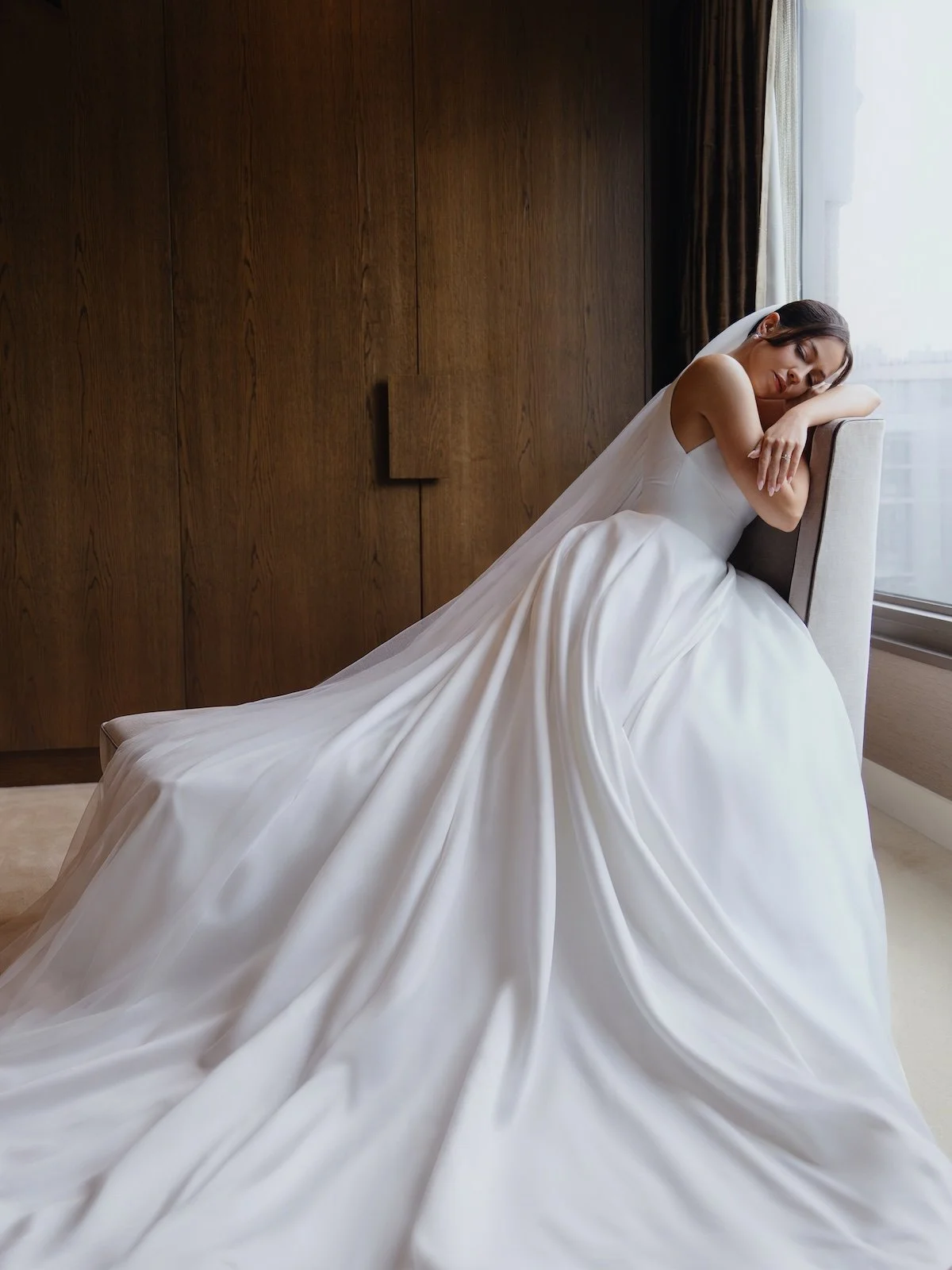
The halter is the breakout neckline of the season, confirmed independently by THE WED and by European runway coverage, followed by the high neck and off-the-shoulder draping. All three do the same job: they frame the collarbone and shoulders and elongate the neck without exposing the chest, which is why they replaced the sweetheart and the cat-eye in almost every collection.
Halter. The widest designer spread of any single detail this season: Noy Eliyahu, Seline Meisler, Eden Aharon, Ines Di Santo, Antonio Del Canto, Jenny Yoo, House of Gilles, Ferrah, Alexandra Grecco, Galia Lahav, and Luis Infantes all showed one, in both corseted and minimalist versions. Paris Select Book called it the collar of the year, offering bust-level coverage with a bare back.
High neck. Mira Zwillinger, Dana Harel, Katherine Tash, and Francesca Miranda showed high necks and halters that cross at the front, in full lace or lace against plain satin.
Off-the-shoulder draping. OUMA, Martina Liana, and Alyssa Kristin draped fabric across the upper arm without cutting a hard horizontal line, which is softer and stays put better than classic off-the-shoulder.
Reinvented strapless. Covered in the corsetry section below, since the change there happens in the construction.
One note worth knowing before you shop: halters and high necks change what jewelry works. Both fill the space a necklace would occupy, which is part of why statement necklaces disappeared from the runways this season.
Who this is for: Anyone with broad shoulders wanting to narrow them, brides who want coverage at the chest without sleeves, and anyone marrying somewhere with a dress code.
Is white still the default wedding dress color?
No. Non-white gowns appeared across almost every price tier in the Spring 2027 collections, and the range is much wider than the blush and ivory of previous seasons. Kyha, Monique Lhuillier, Galia Lahav, Ines Di Santo, Tanner Fletcher, and Honor showed creamy yellows, dusty pinks, red, orange, and black.
The three directions worth knowing:
Metallic and silver. Alon Livne, Mark Ingram Bride, and Ese Azenabor moved silver out of party dressing and into the neutrals.
Blush and soft pink. Anne Barge, Jaclyn WHYTE, and Sareh Nouri kept the softest end of the range, which still reads as bridal from a distance.
True color. Butter yellow, deep red, and black appeared as full gowns, not as accents.
The Knot filed this under unexpected muted color, which is the safer half of the trend. The louder half, full black and red bridal, is still a minority choice but salons now carry it off the rack.
Who this is for: Second weddings, city hall ceremonies, after-parties, and anyone who has never looked good in pure white. Colored gowns also solve a real technical problem covered below.
Which fabrics are defining 2027 wedding dresses?
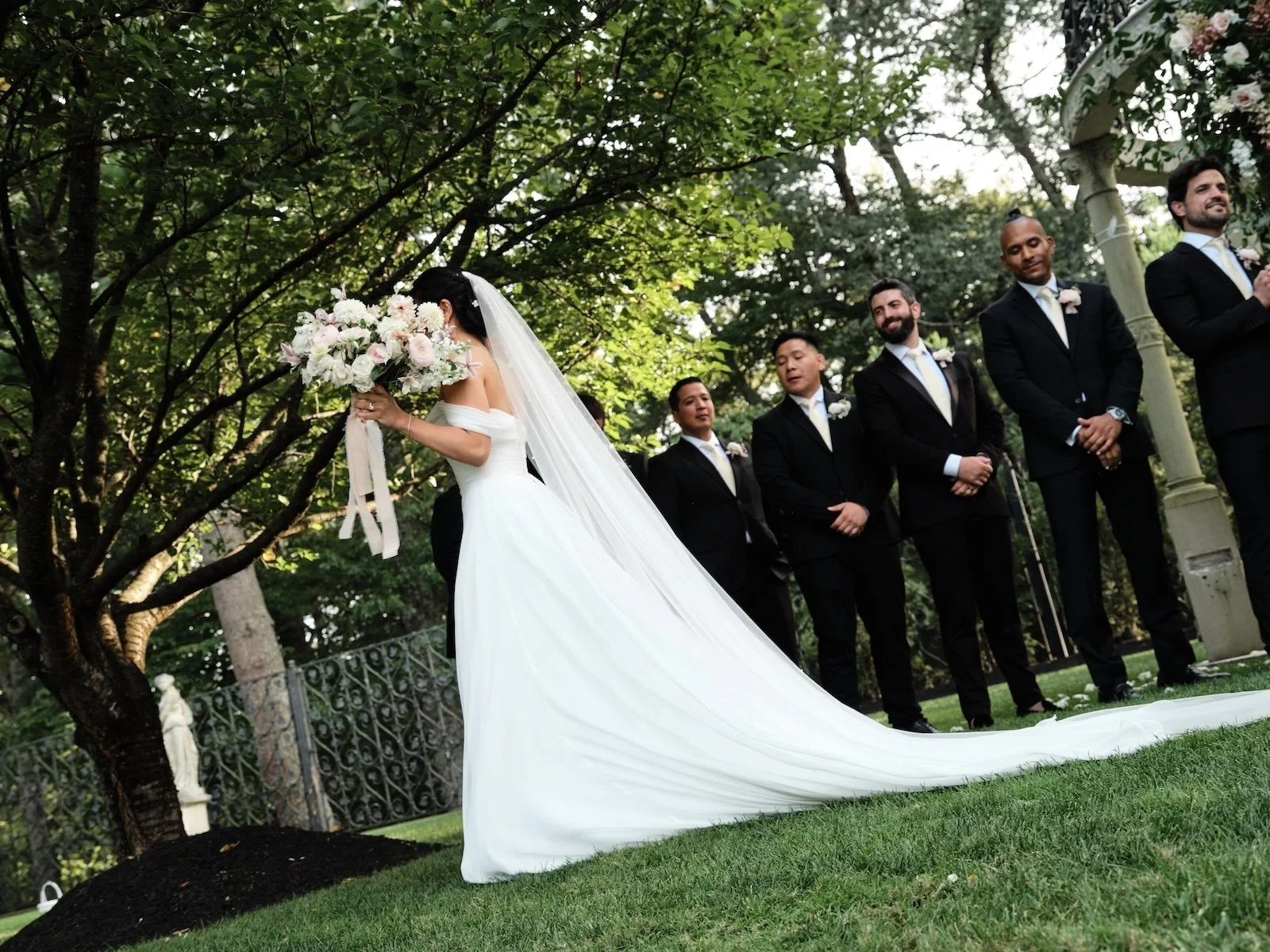
Fabric moved from a background decision to a headline one. Structured mikado, heavy satin, and silk organza dominated, because every major silhouette this season depends on fabric that holds a shape with no help from internal padding.
Mikado and duchess satin. The workhorses of the structured silhouettes. Tanner Fletcher used duchess satin under crystal beading; House of Gilles showed sand-washed double duchess faille.
Luminous satin. Monique Lhuillier, Kyha, and Savannah Miller built simplified satin gowns whose entire effect comes from how the fabric catches light.
Silk organza. Danielle Frankel cut organza into fan shapes and applied them to skirts; House of Gilles cut it into individual feathers.
Fine lace. Chantilly, corded, and guipure laces appeared across price tiers, used as placement, a panel here and a sleeve there.
Fluid voile, chiffon, and jacquard. The soft counterweight to all the structure, used for sheer layers, capes, and movement.
Pearl-embroidered tulle. The most common way designers added texture without adding crystal.
A useful shortcut when shopping: if a gown holds its silhouette on the hanger, it is built from structured fabric and will hold the same shape on you all day. If it collapses on the hanger, the shape is coming from your body and from the fit, which means alterations matter far more.
Who this is for: Anyone choosing between two gowns that look similar in photographs. The fabric is usually what separates them, and it is what you will feel for fourteen hours.
What does corsetry look like in 2027?
Corsetry moved to the outside. Long-line bodices with visible boning, exposed channels, and structural seams were shown as the design feature itself. Ines Di Santo, Alon Livne, and Justin Alexander Signature led the exposed-boning direction, and The Knot grouped it as long-line and exposed corsetry.
This connects directly to the strapless revival. Strapless gowns are back across the board, but rebuilt: the new versions use long-line internal structure that extends over the hip, which is what stops the constant upward tugging that made strapless unpopular in the first place. If you tried strapless five years ago and hated it, the current construction is a different garment.
Sculptural and architectural gowns sit at the far end of the same idea. Verdin, Renhue, and Mark Ingram Bride showed draped bodices built on visible internal structure, and Victorian-leaning versions came from Milla Nova, Lee Petra Grebenau, and Alon Livne.
Who this is for: Brides who want the waist engineered into the gown, and anyone with a fuller bust who has been told strapless is not an option.
What is the armor trend in 2027 bridal?
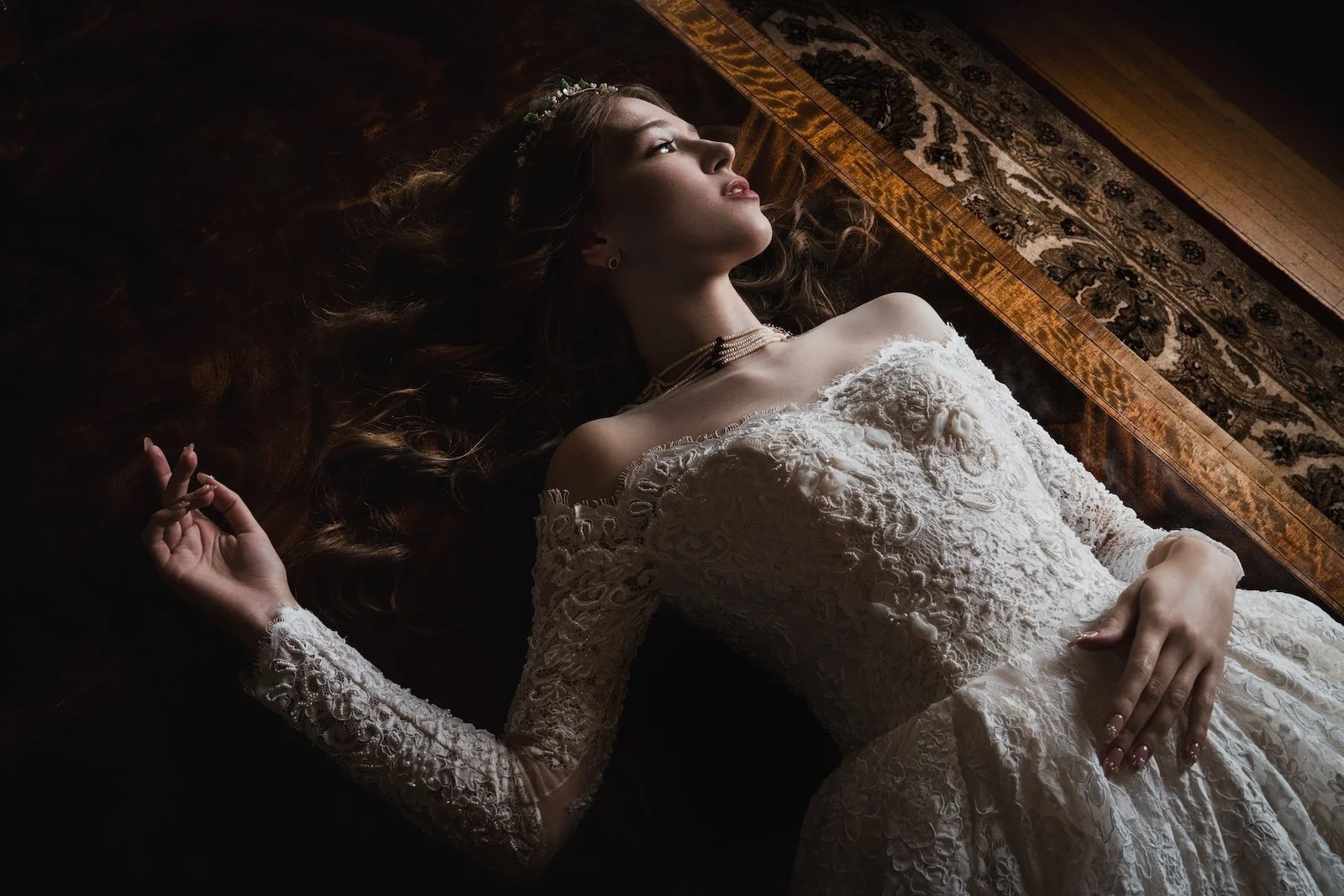
Metal entered bridal as structure. Chainmail panels, metallic plating, armor-inspired bodices, and hardware worked directly into the gown appeared across several collections, which THE WED grouped under a Joan of Arc heading and other coverage described as medieval made modern.
Alon Livne, House of Gilles, Danielle Frankel, Yudashkin, and Nicole + Felicia showed the clearest versions. The common thread is a bodice that reads as built, often paired with a chainmail veil or a metallic cape in place of tulle.
This connects to the wider metallic direction. Silver moved from an accent to a full alternative to white, and black gowns and black-and-white contrast appeared as their own category: Milla Nova, Danielle Frankel, Varca, Tanner Fletcher, Monique Lhuillier, and Harris Reed all showed monochrome looks.
Who this is for: A small minority of brides, and the reason it is here is that it is the most photographable trend of the season. Metal is the only surface on this list that changes completely depending on where the light is, which makes it extraordinary in a film and difficult in flat daylight
Which embellishments read as couture, and which read as busy?
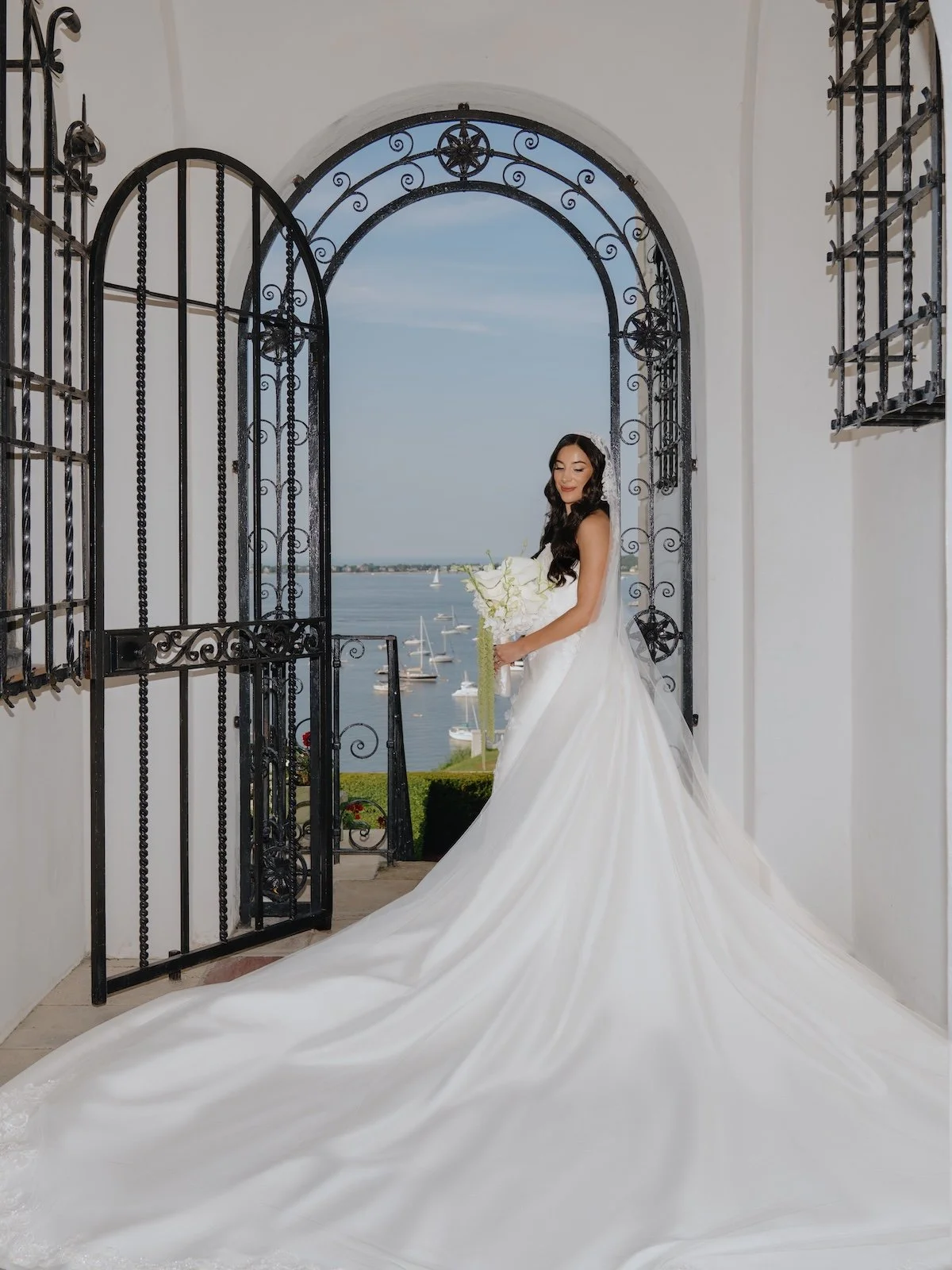
Three-dimensional, hand-worked detail reads as expensive. Flat all-over crystal reads as cheap, even when it is not. This is the clearest line in 2027 bridal, and it is visible from six feet away.
Reads as couture:
Hand-cut organza and feather work. House of Gilles showed an organza feather bustier that took over 200 hours, and sheer capes with individually cut feathers.
Three-dimensional florals. Pronovias, Nardos, and Francesca Miranda built dimensional appliqué onto bodices and skirts.
Graphic oversized flowers. Lihi Hod, Jaclyn WHYTE, and Mira Zwillinger scaled florals up into single dramatic placements.
Structured beadwork. Tanner Fletcher used teardrop crystal beading and antique millinery flowers on duchess satin; Danielle Frankel showed pewter silk and metal basket-weave embroidery.
Beaded fringe. Netta BenShabu, Berta, and Atelier Pronovias let fringe cascade from the bodice so it moves when you do.
Feathers. One of the broadest trends of the season, shown by Atelier Arielle, House of Gilles, Danielle Frankel, Alexandra Grecco, Yudashkin, Costarellos, and Luis Infantes, from full feathered skirts to single trimmed edges.
Reads as busy: edge-to-edge small crystal with no variation in scale, and glitter tulle used as a full overlay.
Bows fall into their own category and split at both extremes. The Knot named micro bows as a trend, meaning small bows at the strap, hip, or back seam. At the opposite end, Mark Ingram Bride, Sareh Nouri, and Lihi Hod showed oversized bows at the back large enough to be the entire back view of the dress.
Who this is for: If your budget is limited, put it into one piece of dimensional detail and let the rest stay plain. One hand-worked element photographs better than an entirely beaded gown at twice the price.
What are brides wearing instead of a traditional veil?
Sculpted headwear replaced statement jewelry as the accessory of the season. Danielle Frankel, Alexandra Grecco, and Lein showed calotte caps, crochet and sheer caps, mini veils, and veilettes, some built to wrap around the face. The Knot separately identified the mantilla veil, a lace-edged veil worn over the head, as a returning classic.
The practical version of this trend is that brides are buying a smaller, more designed head piece in place of a long cathedral veil, and treating it as part of the look, not as something to remove after the ceremony.
Two related accessory shifts are worth knowing. Lace gloves returned alongside embellished tights, ornate combs, and single dramatic earrings, filling the role statement necklaces used to play. And the short dress moved from a novelty to a stocked category: Nardos, Jaclyn WHYTE, and Mira Zwillinger showed minis, and The Knot named the bridal midi as a trend of its own. Most brides buying one are buying it for the reception.
Who this is for: City weddings, short ceremonies, and anyone who has watched a cathedral veil fight with wind on a rooftop.
Which of these trends actually photograph and film well?
This is the part no runway recap covers, and it is the part that determines what your gallery looks like a year from now. Every note below comes from shooting these silhouettes at real weddings, not from the runway.
Photograph exceptionally well:
Basque and drop waists. The seam draws a hard graphic line across the frame. It is the one silhouette that still reads clearly in a wide shot from across a ballroom, where most details disappear.
Sheer volume and capes. Nardos, Justin Alexander Poeza, and Mira Zwillinger all showed voluminous sheer layers. Backlit, that layer separates from the background and glows. It is the single best fabric for golden hour and for window light.
Mantilla veils. The lace edge sits at face level, so it holds detail in close portraits, where a veil clipped behind the head sits empty.
Non-white gowns. This is a technical advantage, not only a style choice. Pure white clips to flat white under midday sun and under strong reception uplighting, losing all texture. Blush, champagne, and silver hold detail in exactly those conditions. If you are marrying outdoors in Los Angeles in July, this matters more than any other decision on this list.
Long sleeves and high necks. They stay put. Nothing pulls the eye in a candid frame faster than a hand adjusting a bodice, and covered arms remove that gesture entirely.
Need planning to photograph well:
Strapless and minimal satin. Beautiful in controlled portraits. In candids, expect a percentage of frames with hands at the neckline. Get the bodice properly fitted and this problem disappears; skip the fitting and it appears in half the gallery.
Heavy crystal and all-over beading. Stunning in daylight and with a single controlled light. Under multiple uncontrolled reception lights it flares, and on video it can strobe. Worth telling your team in advance so we light for it.
Micro bows and fine detail. Invisible past six feet. If you chose a gown for a detail smaller than your hand, ask for detail shots explicitly, otherwise that detail will not exist in the final gallery.
Long trains. A cathedral train needs floor space. In a Brooklyn loft or a narrow ceremony aisle it becomes a logistics problem. In a garden, a staircase, or a wide venue it is the best photograph of the day.
Peplums and hip volume. Excellent from the side and in full-length frames. In tight portraits shot from the waist up the volume crowds the edge of the frame, so plan on more full-length coverage.
Mermaid silhouettes. The most flattering shape in a full-length frame and the least forgiving in candid movement. It photographs superbly standing and walking, and awkwardly when you sit. Plan seated portraits deliberately, because they will not happen on their own.
Halter and high necks. They photograph cleanly from every angle and remove the neckline-adjustment problem entirely, but they cast a harder shadow under the chin in overhead midday light. Worth mentioning to your team if your ceremony is outdoors at noon.
Structured mikado and duchess satin. These hold their silhouette in every frame, including in wind, which is why they outperform soft fabrics at rooftop and beach venues. The tradeoff is that heavy satin shows every crease, so it needs steaming right before portraits.
Give you two galleries instead of one:
Convertible gowns and two-piece sets, when the two halves look genuinely different. Covered ceremony look, bare reception look. That structure gives a wedding film a visible second act, and it is the reason we ask about it during planning.
If you want to see how these silhouettes look in real light and not on a runway, our wedding photo gallery
(/wedding-photo-gallery) and editorial wedding photography (/editorial-wedding-photo) work show most of them at actual weddings.
| Silhouette | How it photographs | What to plan for | Best for |
|---|---|---|---|
| Basque and drop waist | Reads clearly in a wide shot from across a ballroom | Nothing. This is the safest silhouette on camera | Short torsos, and anyone who wants waist definition without boning |
| Sheer volume and capes | Separates from the background and glows when backlit | Needs a light source behind you. Say so at the venue walkthrough | Golden hour portraits and window light |
| Non-white (blush, champagne, silver) | Holds texture where pure white clips to flat white | Nothing. It is a technical advantage | Outdoor midday ceremonies and heavy reception uplighting |
| Long sleeves and high necks | Stay put, so no hands appear at the bodice in candids | Harder shadow under the chin at noon | Church and synagogue ceremonies, cold weather |
| Halter | Photographs cleanly from every angle, strong from behind | Same midday chin shadow as high necks | Broad shoulders, and brides who want a bare back |
| Mermaid | Superb standing and walking | Awkward seated. Plan seated portraits deliberately | Brides willing to commit to a shape and to alterations |
| Strapless and minimal satin | Beautiful in controlled portraits | A share of candids will have hands at the neckline unless the fit is right | Brides who will do all three fittings |
| Structured mikado and duchess satin | Holds its silhouette in wind | Shows every crease. Steam right before portraits | Rooftops, beaches, anywhere exposed |
| Heavy crystal and all-over beading | Stunning in daylight and under one controlled light | Flares under mixed reception light and can strobe on video | Daytime weddings. Tell the team in advance |
| Metal and armor detail | Changes completely with the light, exceptional on film | Flat daylight kills it | Evening receptions and film-led coverage |
| Micro bows and fine detail | Invisible past six feet | Ask for detail shots explicitly or they will not exist | Brides who chose the gown for one small thing |
| Peplums and hip volume | Excellent from the side and in full-length frames | Crowds the frame in waist-up portraits | Straighter figures wanting curve |
| Long trains | The best photograph of the day in the right room | A logistics problem in a small loft or narrow aisle | Gardens, staircases, wide venues |
When should you order a wedding dress for a 2027 wedding?
Order nine to twelve months before the wedding date, and start shopping twelve to eighteen months out. Kleinfeld Bridal gives the same window: begin browsing at twelve to eighteen months, place the order at nine to twelve months, then leave room for production and alterations on top of that.
If you are shopping now for a 2027 wedding, you are on time for a fall date and running slightly late for a spring one. Rush production exists, typically four to ten weeks depending on the designer and the style, but it costs more and narrows your options sharply. Sample sales and pre-owned gowns are the other route and can be bought the same day.
Build in three fittings. Alterations are the step most brides underestimate, and they are not included in any advertised dress price.
Who this is for: Anyone with a 2027 date who has not started. Book appointments this season, not in the new year.
How much does a wedding dress cost?
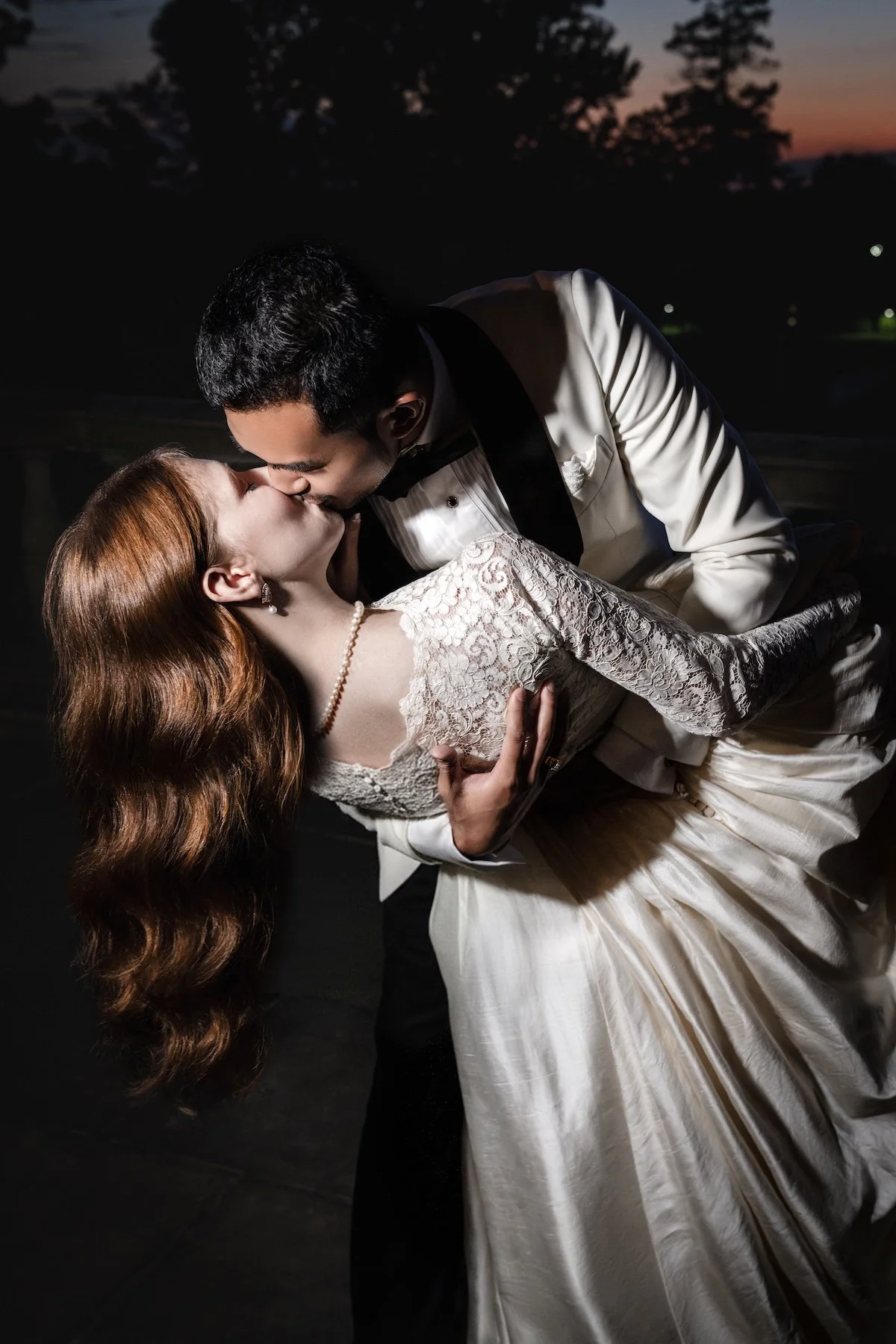
The average wedding dress costs about $2,100, according to The Knot 2026 Real Weddings Study, which surveyed 10,474 US couples married in 2025. Practical budget tiers land at roughly $1,200 at the low end, $2,000 in the middle, and $3,200 at the high end, with regional variation: the Mid-Atlantic averaged $2,200 and the Midwest $2,500.
Alterations are not included in that figure and are not optional. Budget separately for them, plus the veil or head piece, shoes, and any second look.
For couples planning in Los Angeles, the dress sits inside a much larger budget picture. Our complete guide to the average wedding cost in Los Angeles breaks down where the rest of the money goes.
Planning a 2027 wedding in New York or Los Angeles?
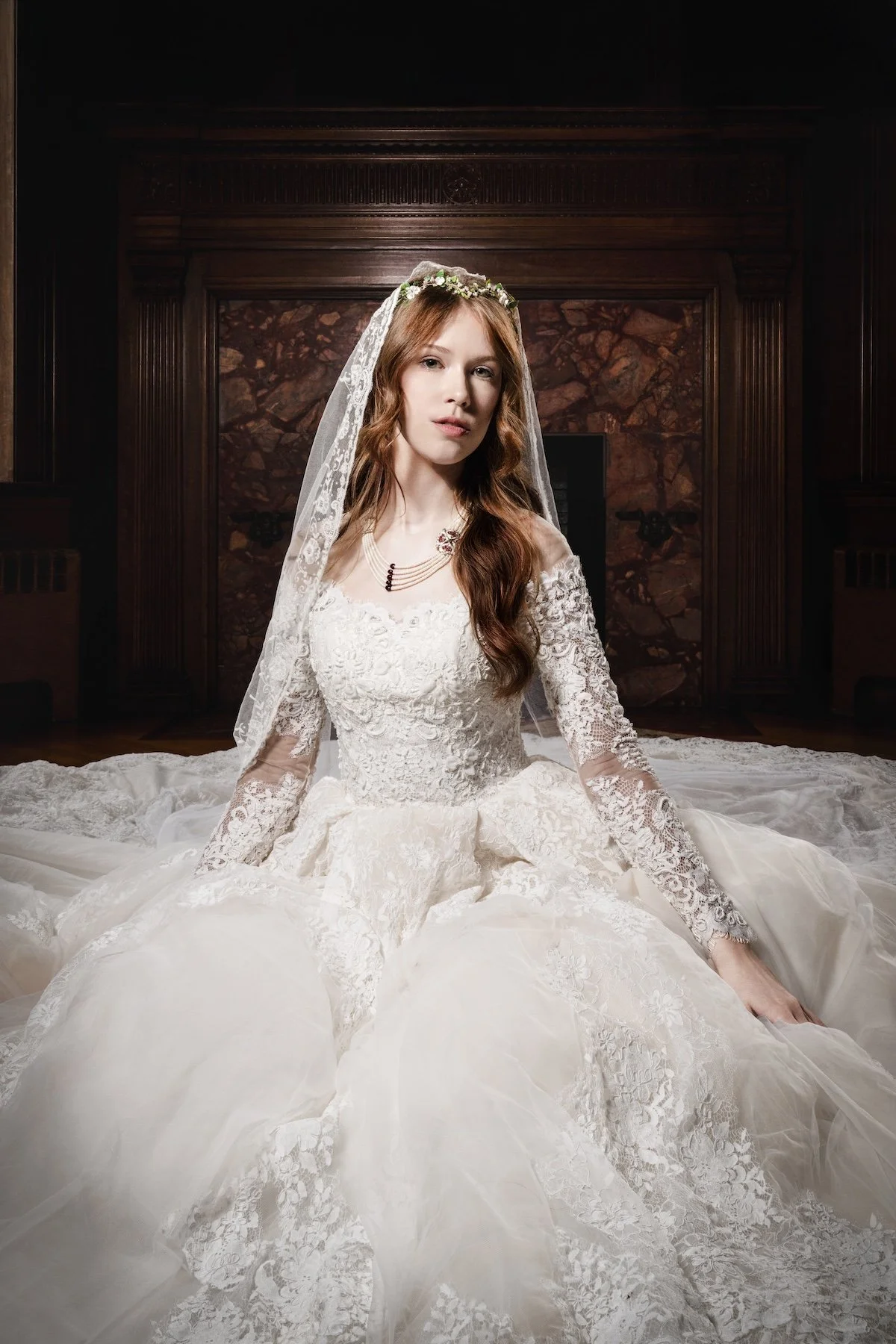
We shoot photo and film as one language, in both cities. If you have chosen your dress, or are still choosing it, we can tell you how it will behave on camera at your specific venue and time of day.
Frequently asked questions
-
Two share the lead: the halter neckline and the Basque or drop waist. Runway coverage of Spring 2027 New York Bridal Fashion Week credits eleven houses with halters, including Ines Di Santo, Jenny Yoo, Galia Lahav, and Alexandra Grecco, and a similar number with statement hips built on a Basque waist. Both frame the body without exposing it, which is the direction of the whole season.
-
Yes, and they returned as a major trend in their own right. The Knot named reinvented strapless gowns as a leading 2027 direction. The difference from previous strapless is construction: long-line internal corsetry extending over the hip holds the bodice in place, which removes the constant adjusting that made earlier strapless designs uncomfortable.
-
A Basque waist is a seam that drops below the natural waistline in a V or U shape before the skirt begins, in contrast to a standard waistline that sits at the narrowest point of the torso. It visually lengthens the torso and narrows the waist, and it suits most body types, which is why designers used it so heavily for 2027.
-
About $2,100 on average, based on The Knot 2026 Real Weddings Study of 10,474 US couples married in 2025. Budget tiers run roughly $1,200 low, $2,000 middle, and $3,200 high, with regional differences. Alterations are excluded from that average and typically add several hundred dollars on top.
-
Nine to twelve months before the date, with shopping starting twelve to eighteen months out. Rush orders are possible in four to ten weeks depending on the designer, but they cost more and limit your choices. Sample sales and pre-owned gowns can be purchased immediately if you are short on time.
-
Yes, and the range is wider than it has been. Kyha, Monique Lhuillier, Galia Lahav, Ines Di Santo, Tanner Fletcher, and Honor showed creamy yellow, dusty pink, red, orange, and black for Spring 2027. Blush, champagne, and silver are the most common choices and also hold photographic detail better than pure white in bright sun.
-
Yes, but the placement changed. Instead of all-over lace, designers used high-neck lace bodices, sleeveless lace panels, and oversized botanical patterns on plain satin bases. Mira Zwillinger, Dana Harel, Katherine Tash, Watters, and Monique Lhuillier all showed versions of this larger-scale, placement-driven approach.
-
Yes. Lazaro, Rivini, and Pronovias showed rebuilt mermaid silhouettes using structured mikado and airy tulle in place of ruffle volume, and Monique Lhuillier, SenStudio, and Ines Di Santo pushed the same shape into exaggerated fit and flare. The flare starts higher than the early-2000s version, which makes the gown easier to walk and dance in.
-
The halter, followed by the high neck and off-the-shoulder draping. Mark Ingram, Amsale, Dany Tabet, and Sarah Seven led the halter direction, often with open backs or keyhole details. All three necklines frame the shoulders and lengthen the neck without exposing the chest, which is why they displaced the sweetheart neckline.
-
Structured mikado, duchess satin, and silk organza dominated, because the season's silhouettes rely on fabric that holds its own shape. Fine Chantilly, corded, and guipure lace appeared as placement detail, with fluid voile, chiffon, and pearl-embroidered tulle used for sheer layers and movement.
-
Choose the silhouette for your body and the venue first, then let a trend live in one detail and keep the rest of the gown yours. A Basque waist, a halter neckline, or a soft color will still read as current in ten years. A gown built entirely around one season's signature detail will date, and it will date in your photographs, which outlast the dress.