What Is Loose Editorial Wedding Photography? (And Why Every Couple Suddenly Wants It)
If you have been researching wedding photographers lately, you have probably run into the phrase "loose editorial" a dozen times, usually with no explanation attached. It sounds like industry jargon, and partly it is. But behind the buzzword sits a real shift in how couples want their weddings photographed and filmed, and it is worth understanding before you book anyone.
Quick Answer: Loose editorial wedding photography blends the polished, fashion-inspired look of magazine editorials with the unscripted honesty of documentary coverage. Your photographer directs light, composition, and mood, but never scripts your reactions. The result looks like a Vogue spread that happened by accident: elevated, intentional, and still recognizably you.

In this article
- What does "loose editorial" actually mean?
- How is loose editorial different from documentary and candid photography?
- What does a loose editorial wedding gallery look like?
- Does loose editorial work for wedding video too?
- Who is loose editorial right for?
- How do you find and brief a loose editorial photographer?
What Does "Loose Editorial" Actually Mean?
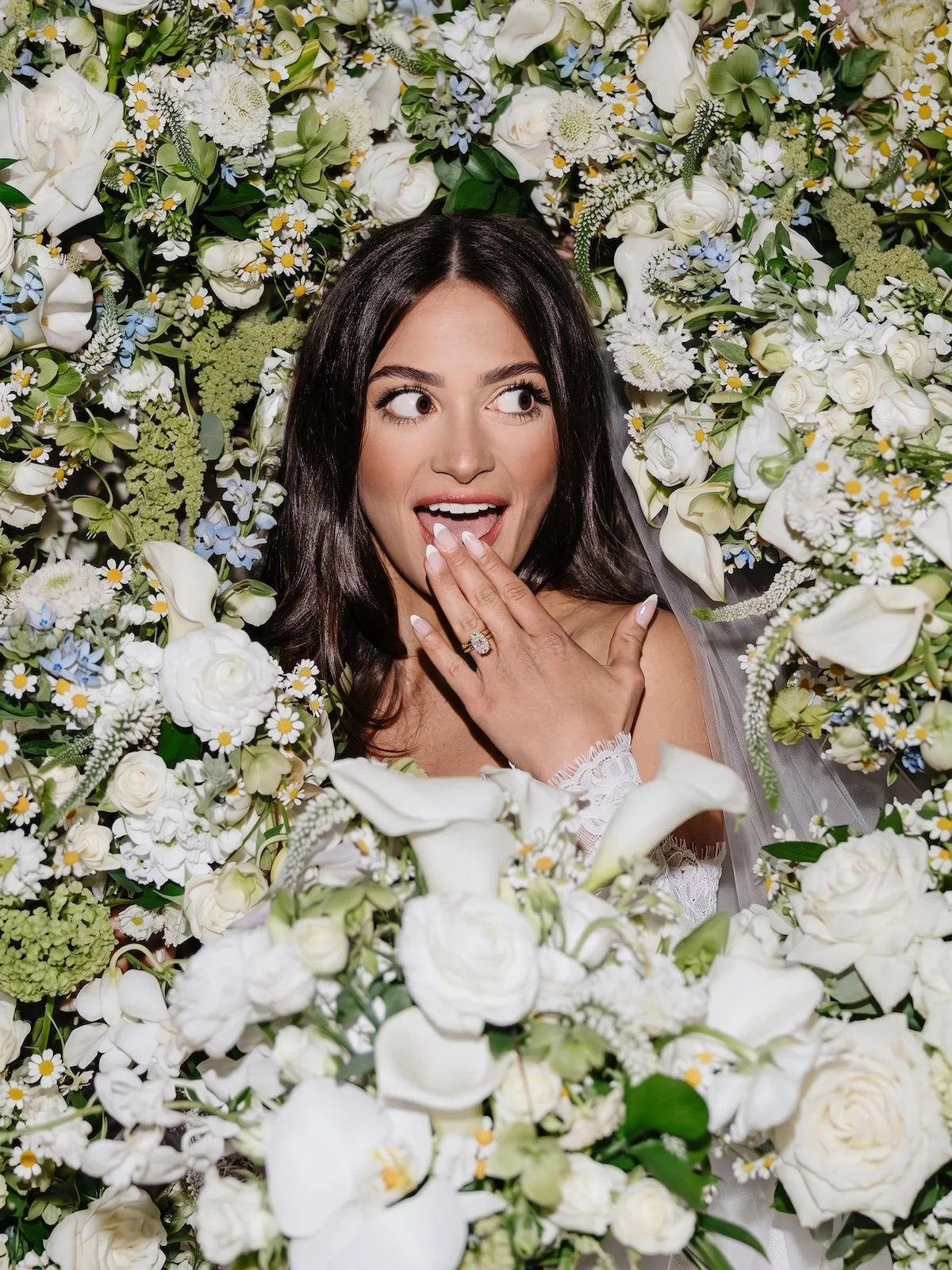
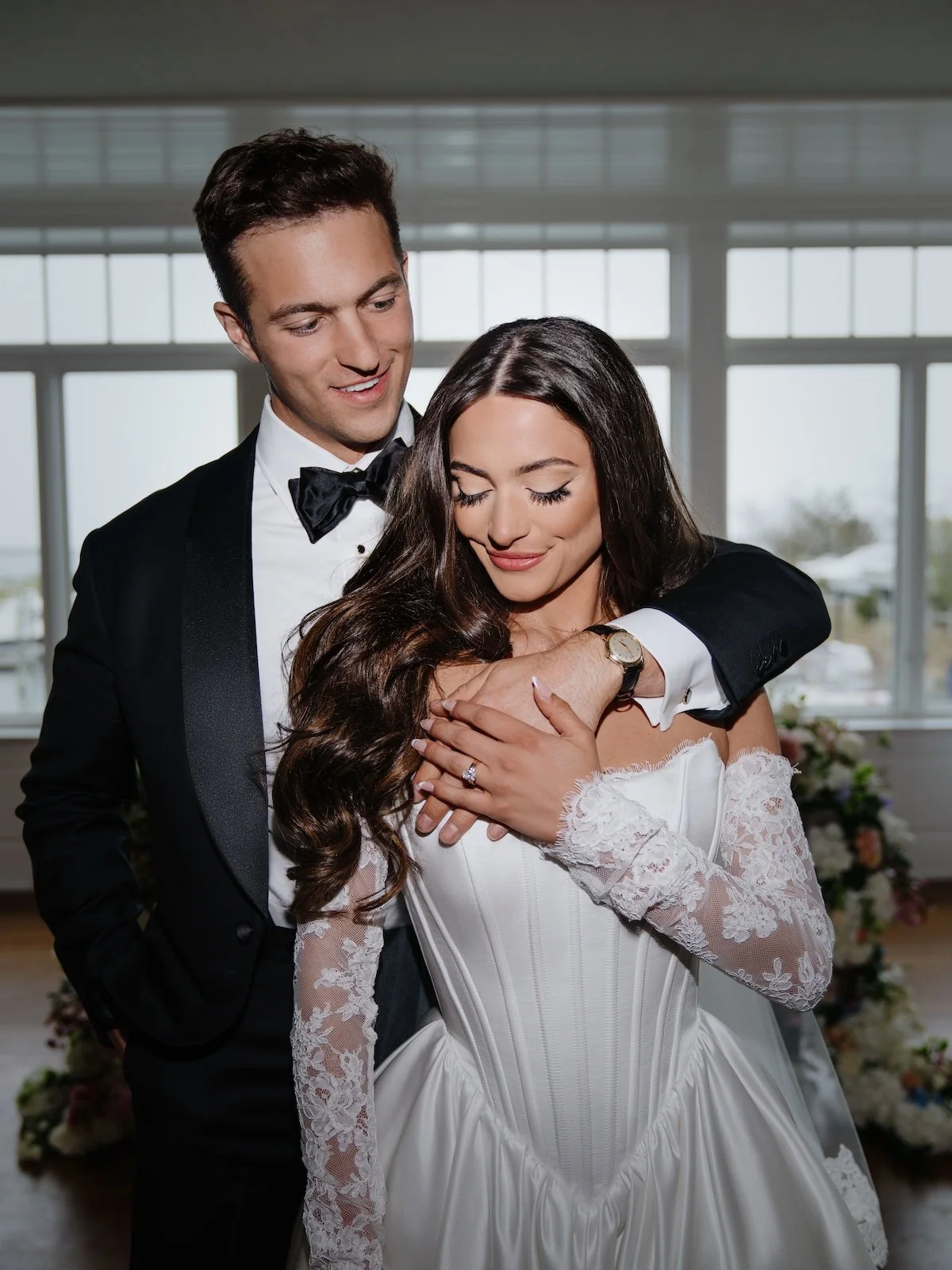
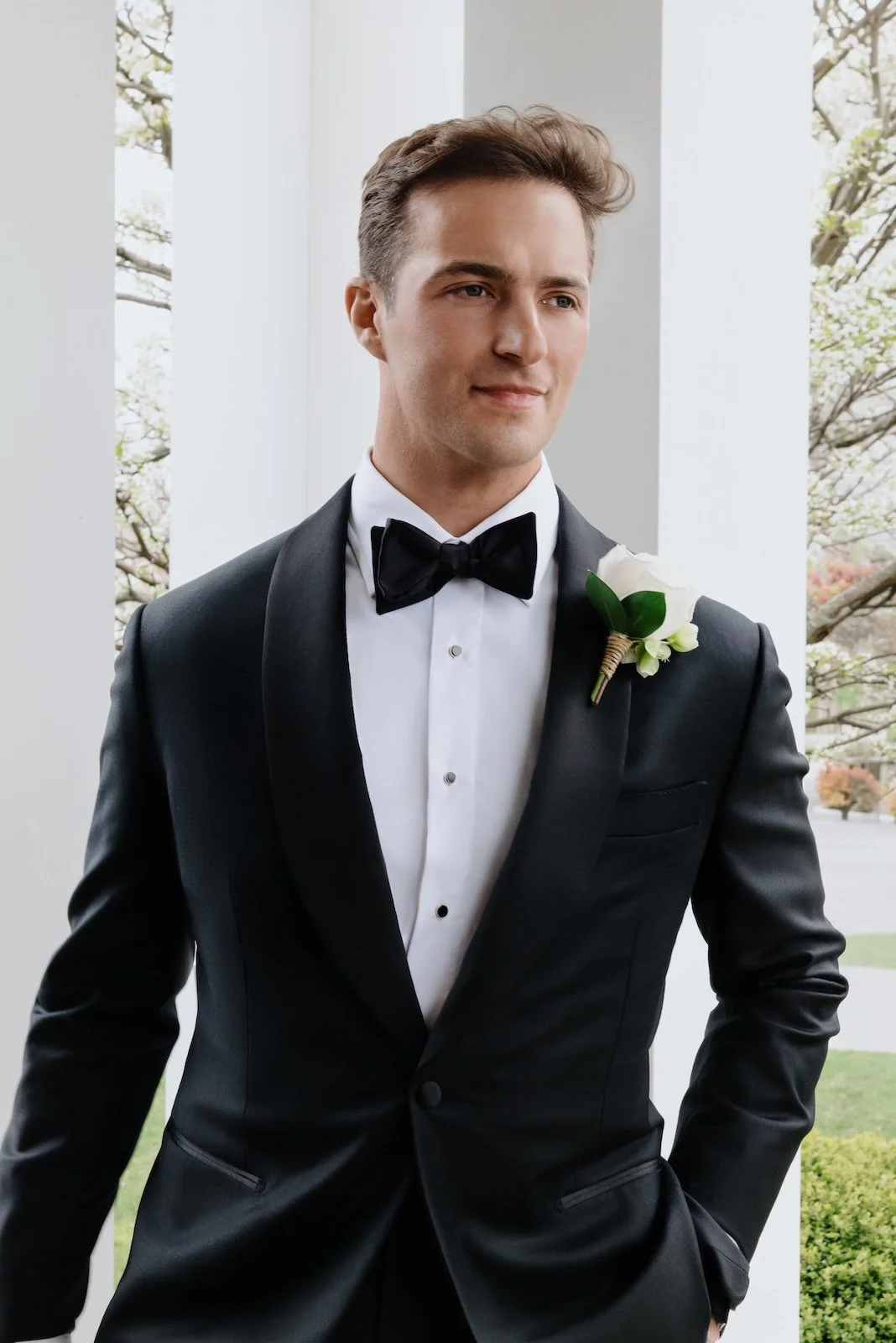
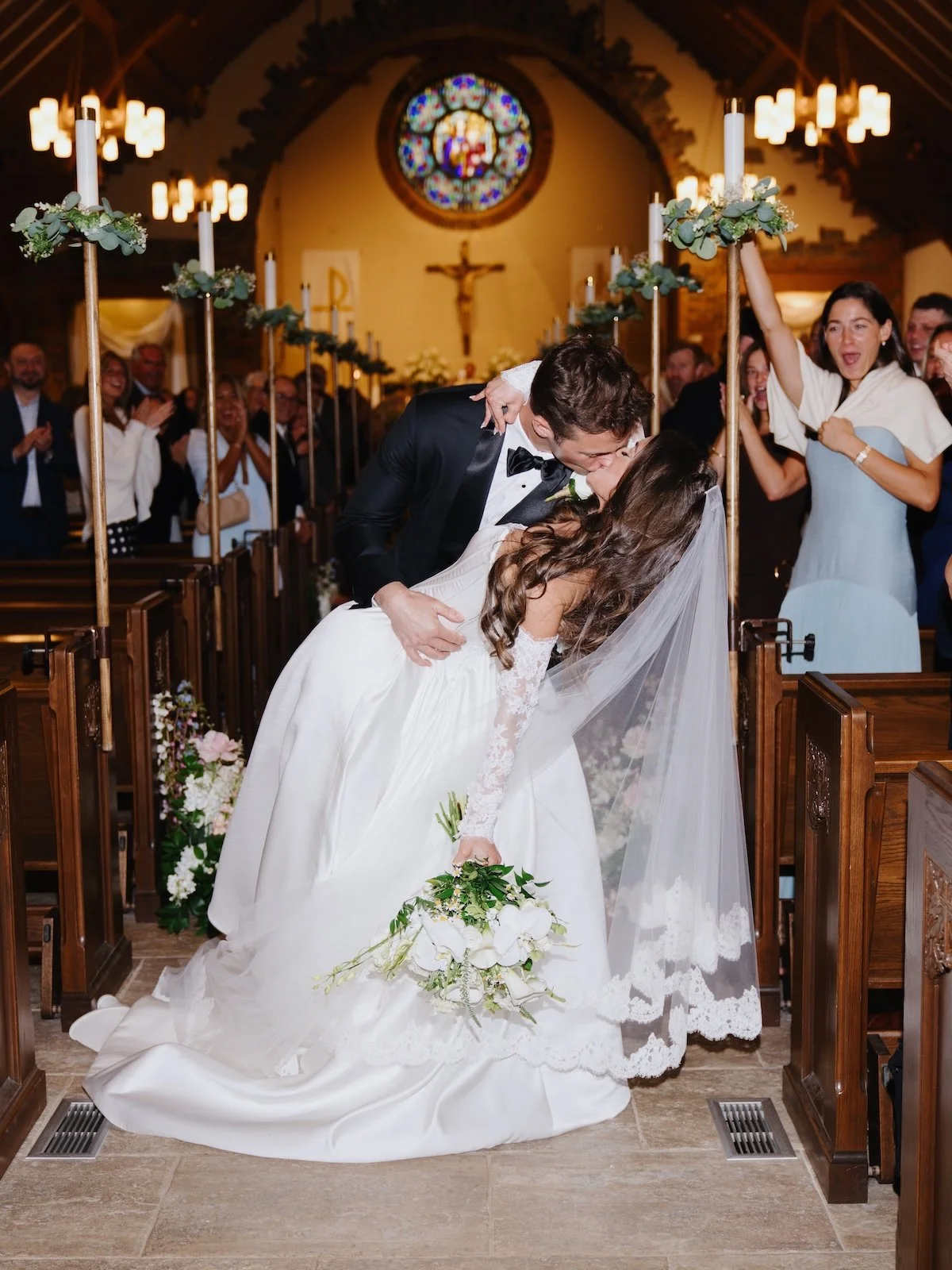
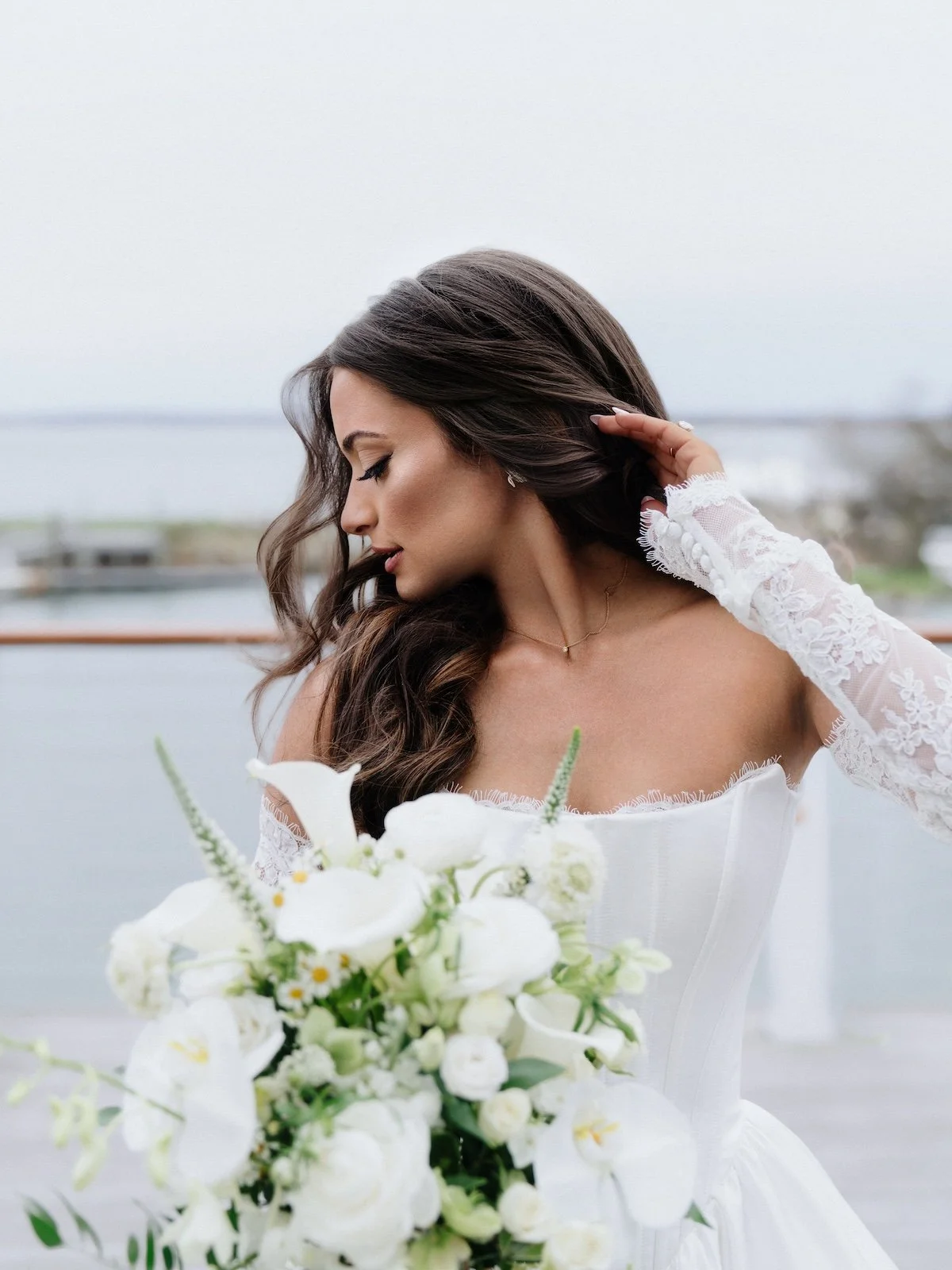
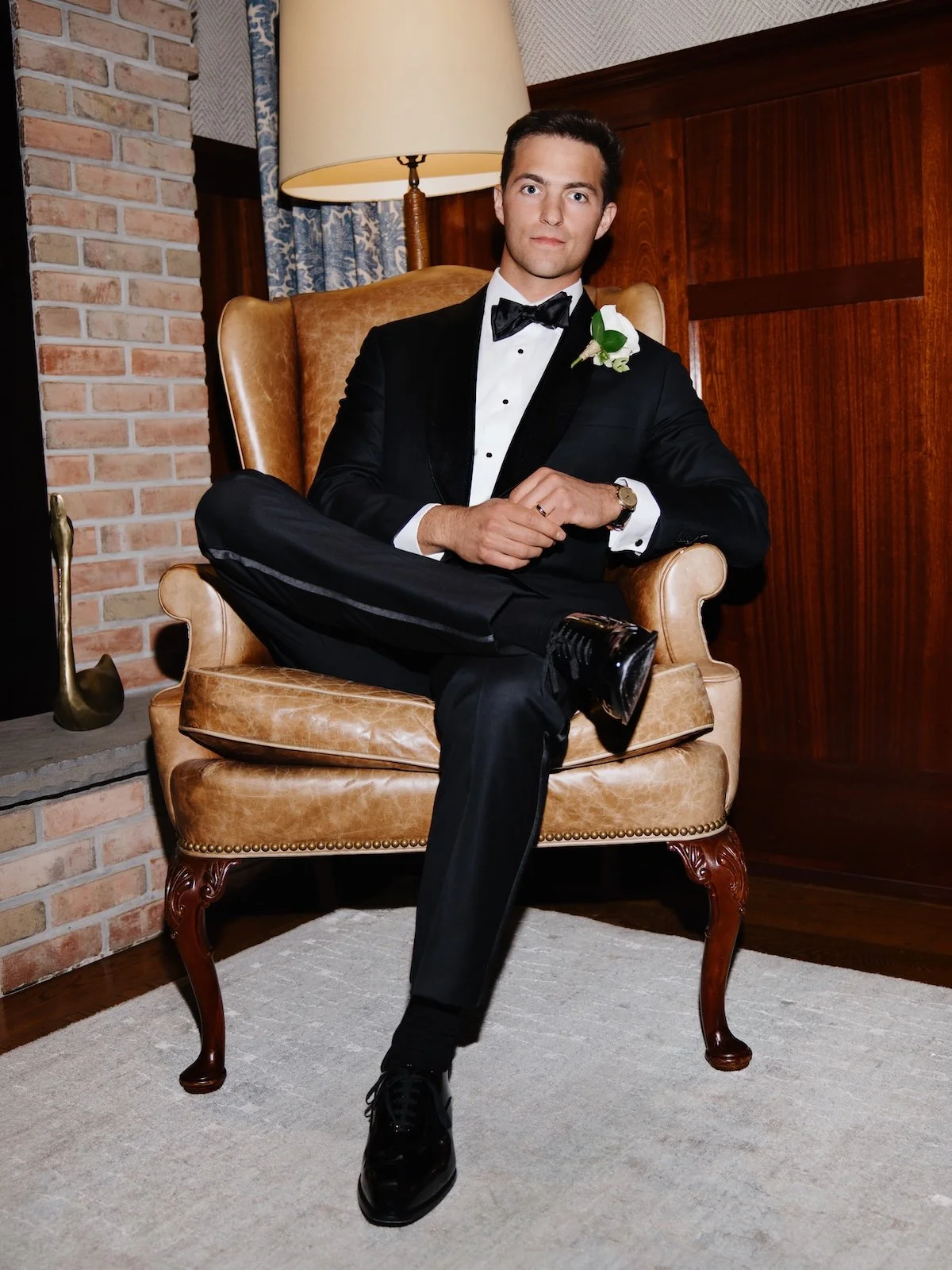
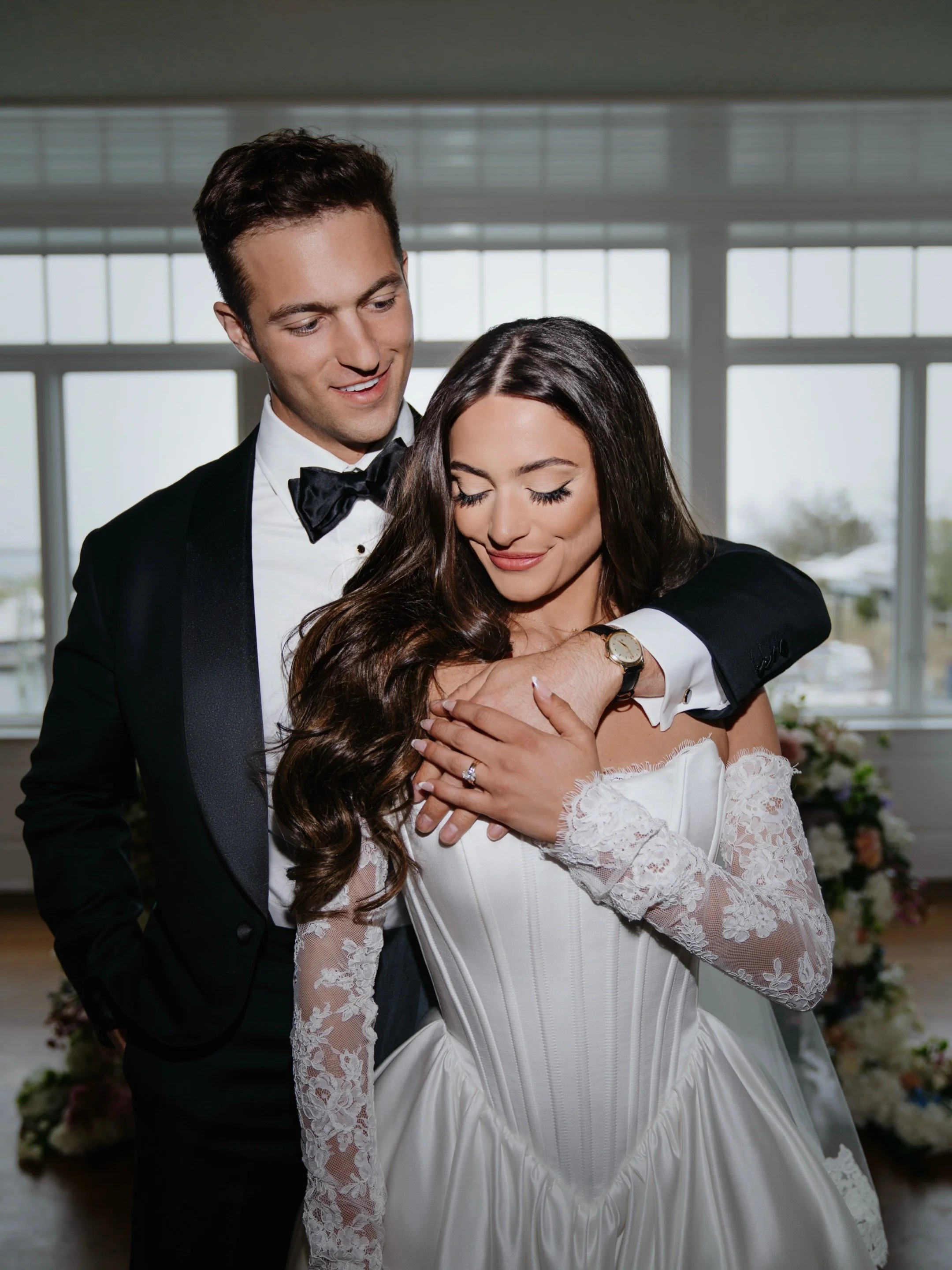
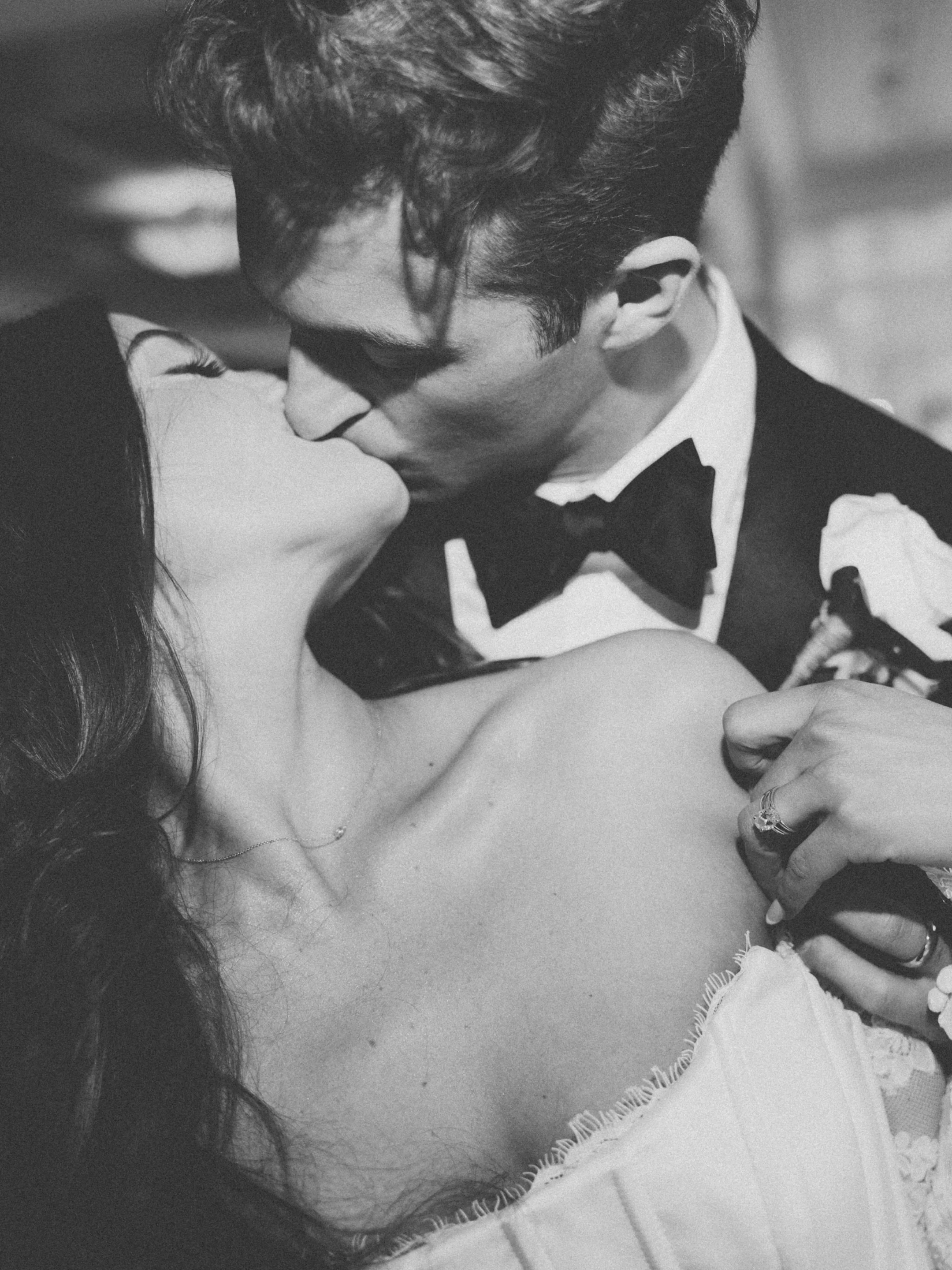
Loose editorial is a hybrid style: the visual discipline of editorial photography applied to real, unrepeatable moments. The photographer controls the frame, not the people in it. You get deliberate composition and considered light, while the laughter, tears, and chaos inside that frame stay completely real.
Break the phrase apart and it explains itself. "Editorial" refers to the fashion-magazine tradition: strong composition, dramatic light, poses that feel like a statement. "Loose" is the correction to it. Nobody freezes for the camera. Nobody repeats a hug because the angle was wrong.
In practice, a loose editorial photographer works in two modes at once. During portraits, they give you loose prompts instead of stiff poses: walk toward me, fix his collar, whisper the worst joke you know. During the day itself, they anticipate moments and position themselves so that reality lands inside a strong frame. Direction exists, but you never feel directed, and it never reads as staged in the final gallery.
The style has roots in film photography culture and destination weddings, but it went mainstream when couples got tired of choosing between two extremes: galleries too posed to feel true, or reportage too messy to hang on a wall.
How Is Loose Editorial Different From Documentary and Candid Photography?
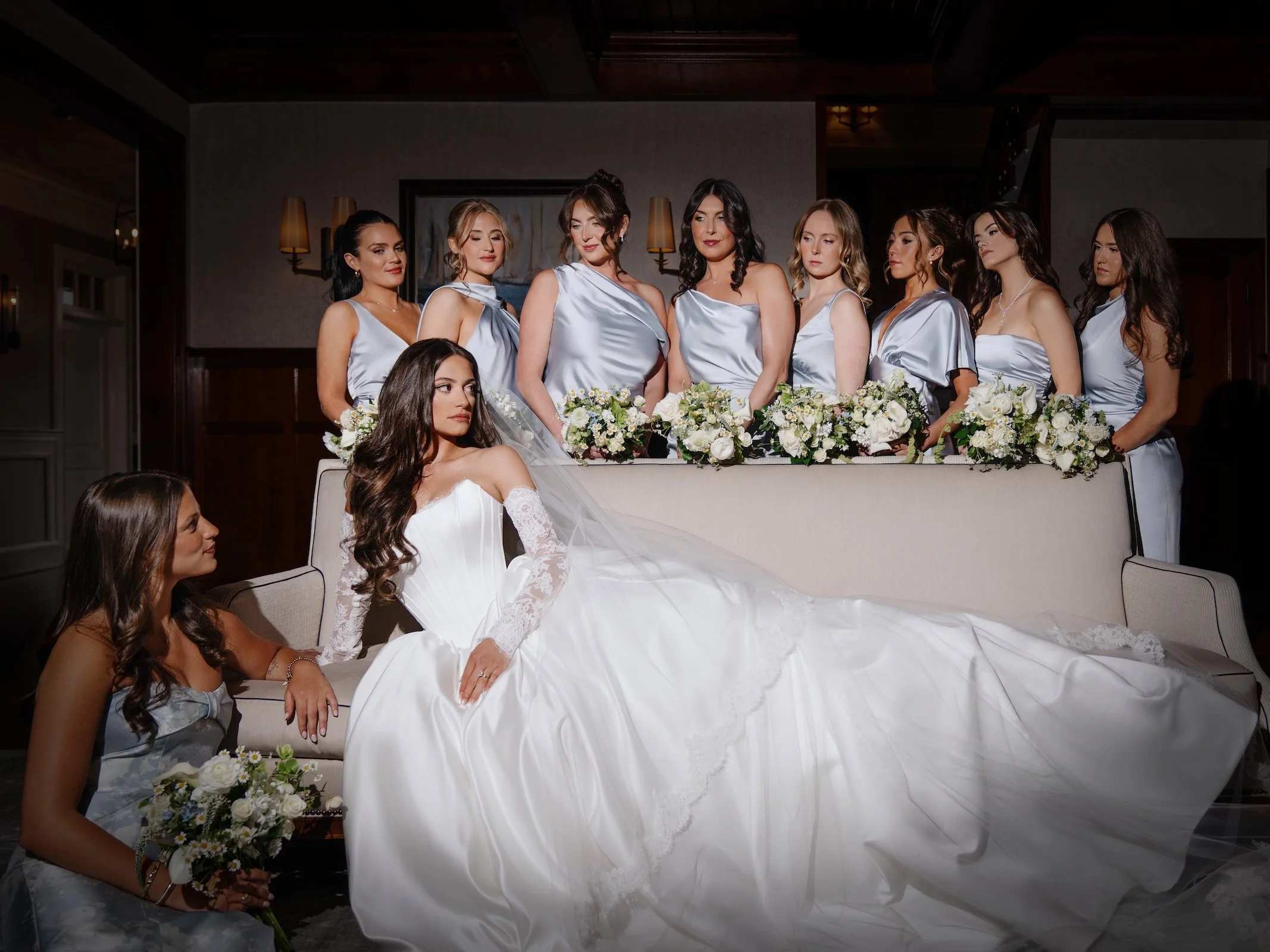
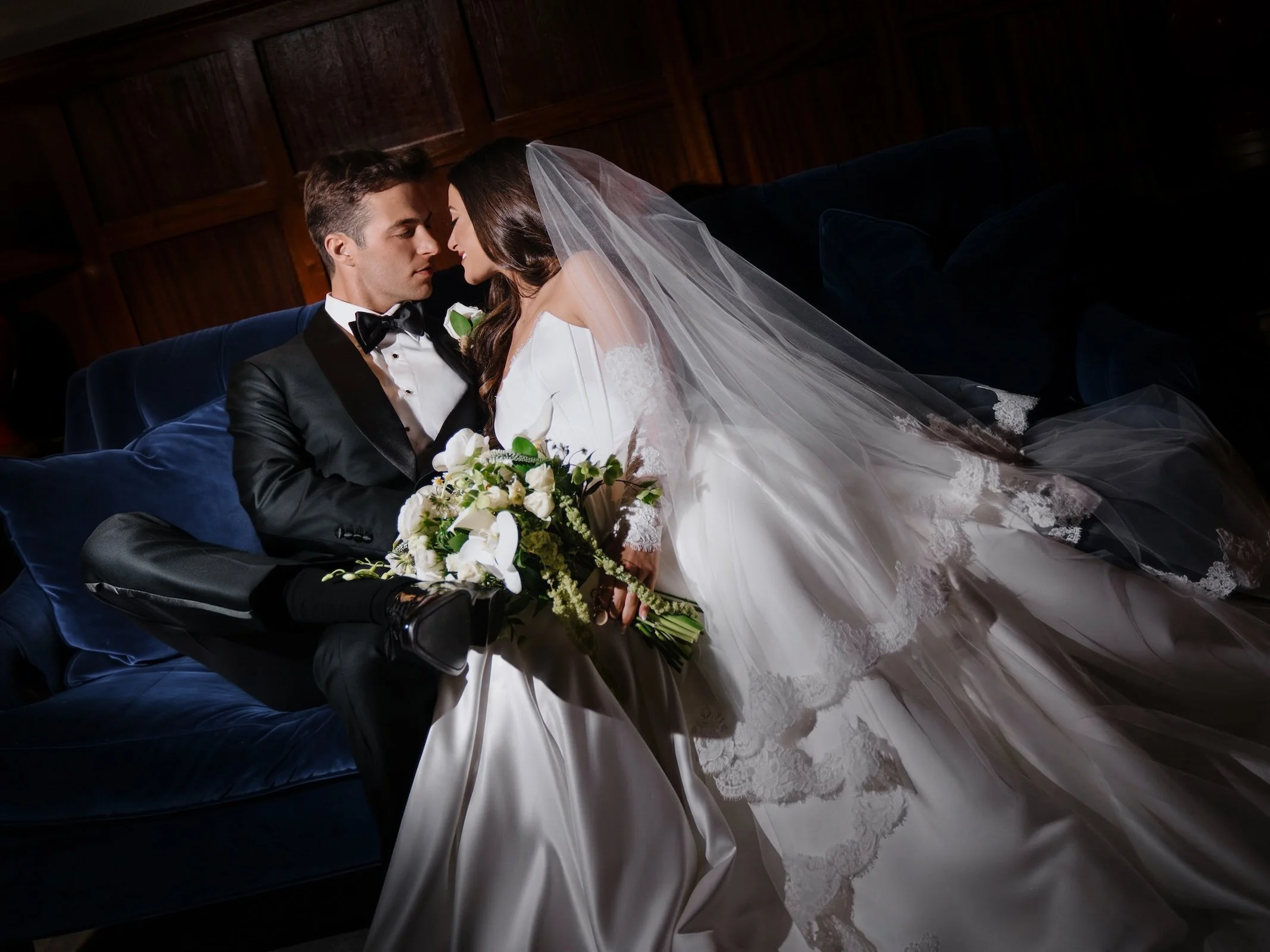
The difference is the amount of direction. Documentary photographers observe and never intervene. Candid coverage catches unposed moments without a strict visual agenda. Loose editorial adds a deliberate aesthetic layer on top of real moments: the photographer shapes light and composition while leaving your behavior untouched.
Wedding style vocabulary is genuinely confusing because photographers use these words loosely themselves. Here is the practical breakdown:
Documentary (photojournalistic). The photographer is a silent witness. Zero direction, zero interference, even during portraits. You get the truest record of the day, but the visual quality depends entirely on what the day gives the camera.
Candid. Often confused with documentary, but candid is a shot type, not a philosophy. Any photographer takes candids. A "candid" photographer usually mixes unposed moments with lightly posed portraits, without a strong editorial signature.
Classic editorial. Full direction. Poses are built, light is set, details are styled. Gorgeous, cohesive, magazine-ready, and noticeably produced. Some couples love it; others feel like models at their own wedding.
Loose editorial. Editorial eye, documentary ethics. Direction applies to the frame, not to your emotions. This is the middle path, and it is why The Knot and other industry outlets flag the "candid editorial" blend as the defining photography trend of 2026.
| Style | Direction level | Visual signature | Best for |
|---|---|---|---|
| Documentary | None. Pure observation | Honest, unfiltered, dependent on the day's light | Couples who want a true record above all |
| Candid | Minimal, mixed with light posing | Natural moments without a strict visual agenda | Relaxed couples with no strong aesthetic brief |
| Classic editorial | Full. Posed and styled | Magazine-perfect, cohesive, visibly produced | Couples who enjoy being styled and directed |
| Loose editorial | Frame directed, people unscripted | Fashion-level composition around real moments | Couples who want both truth and a strong aesthetic |
What Does a Loose Editorial Wedding Gallery Look Like?
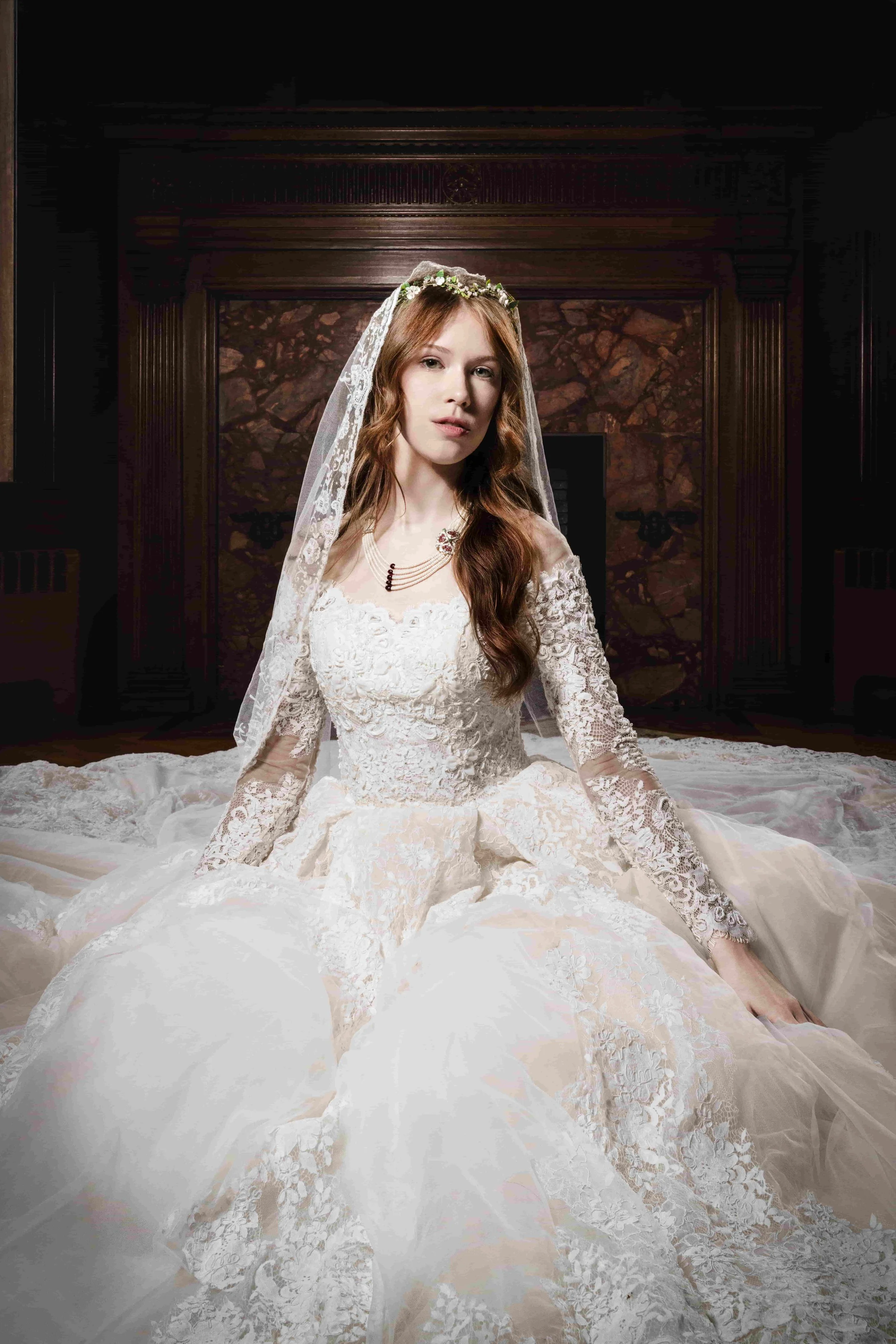

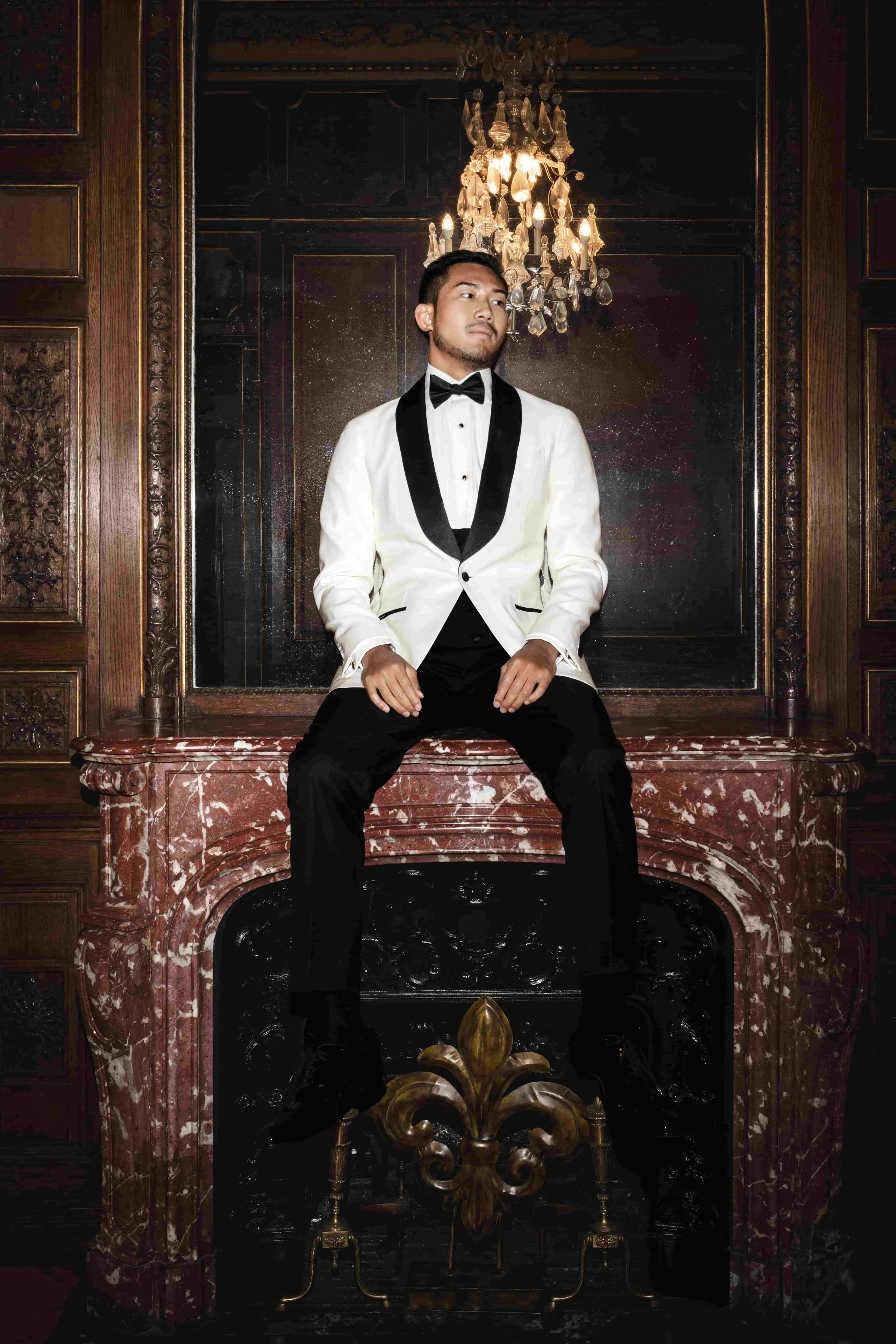

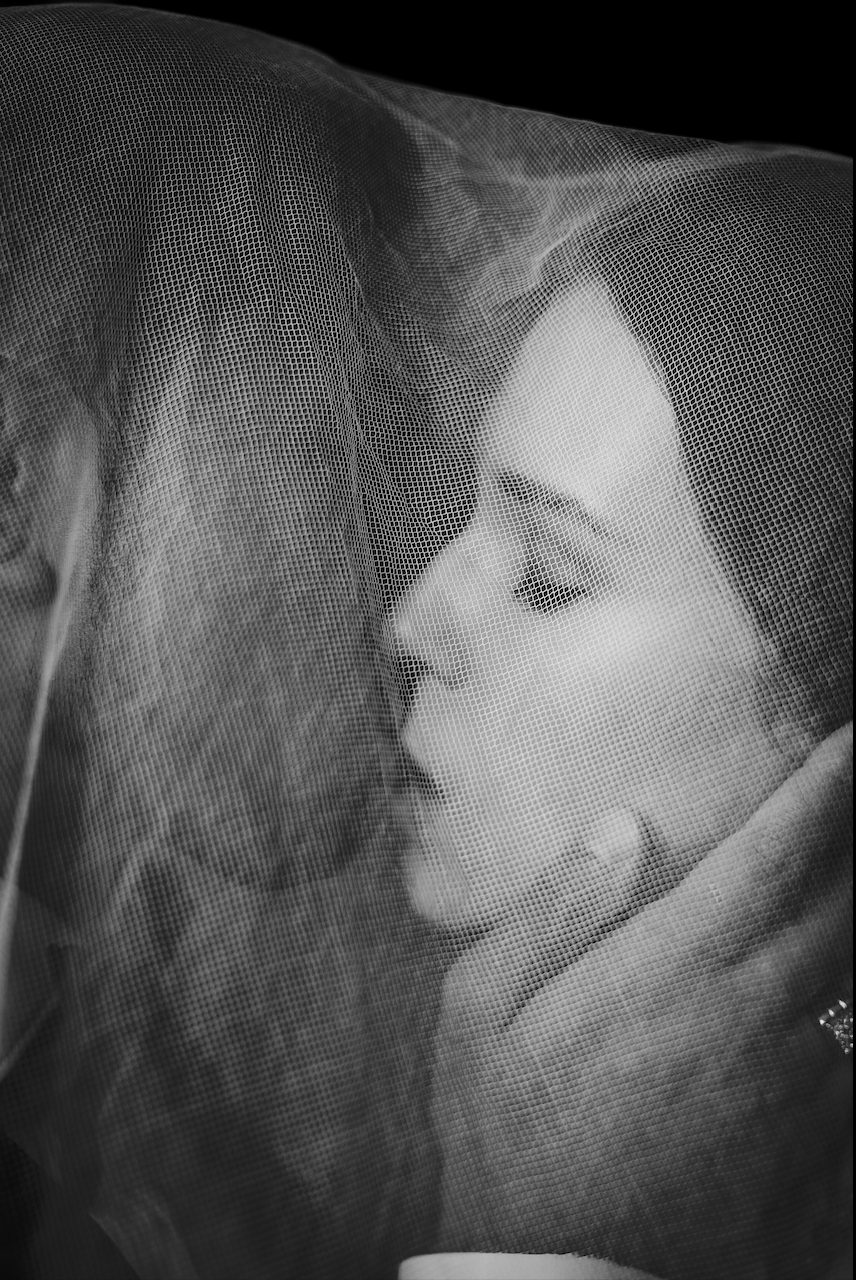
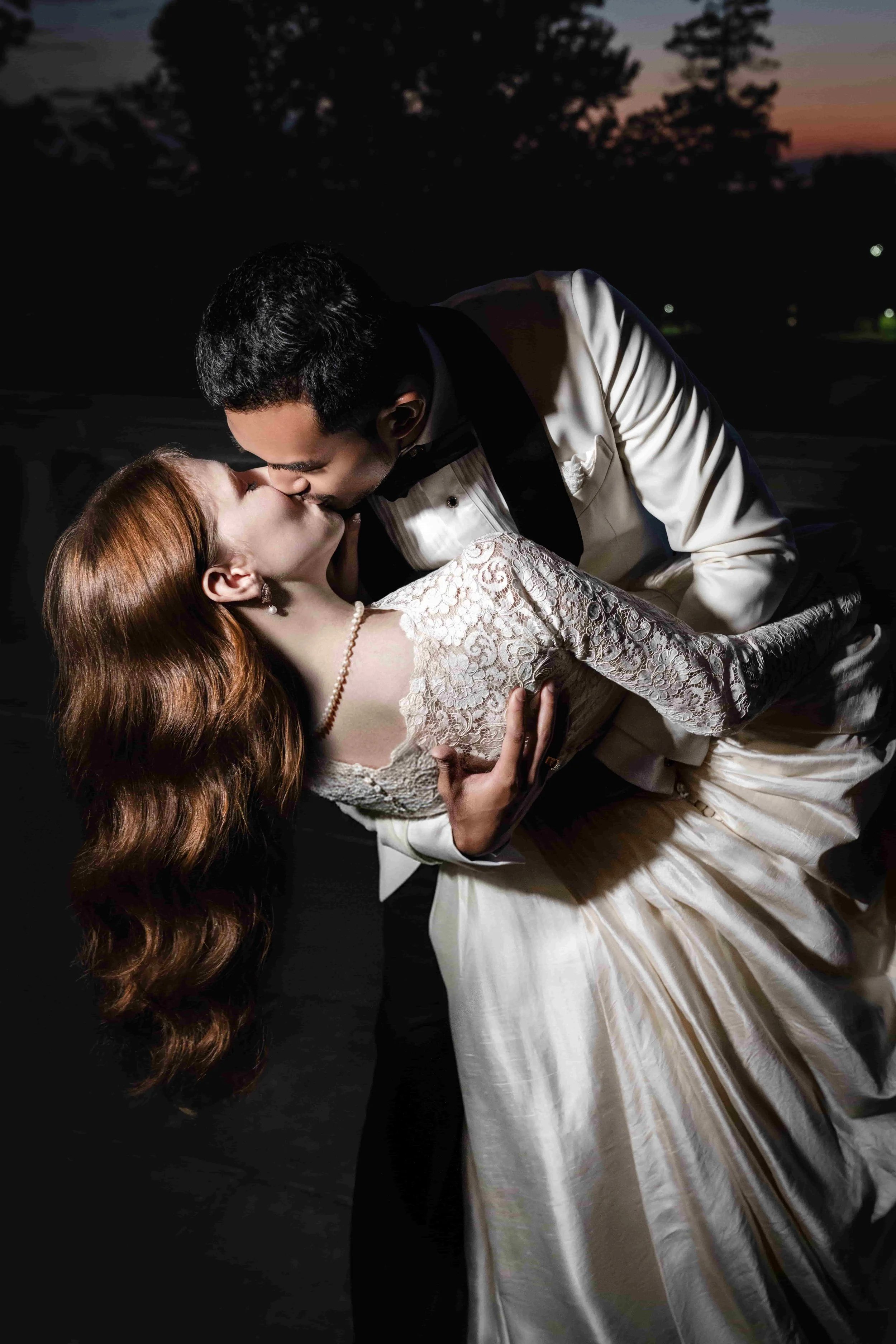
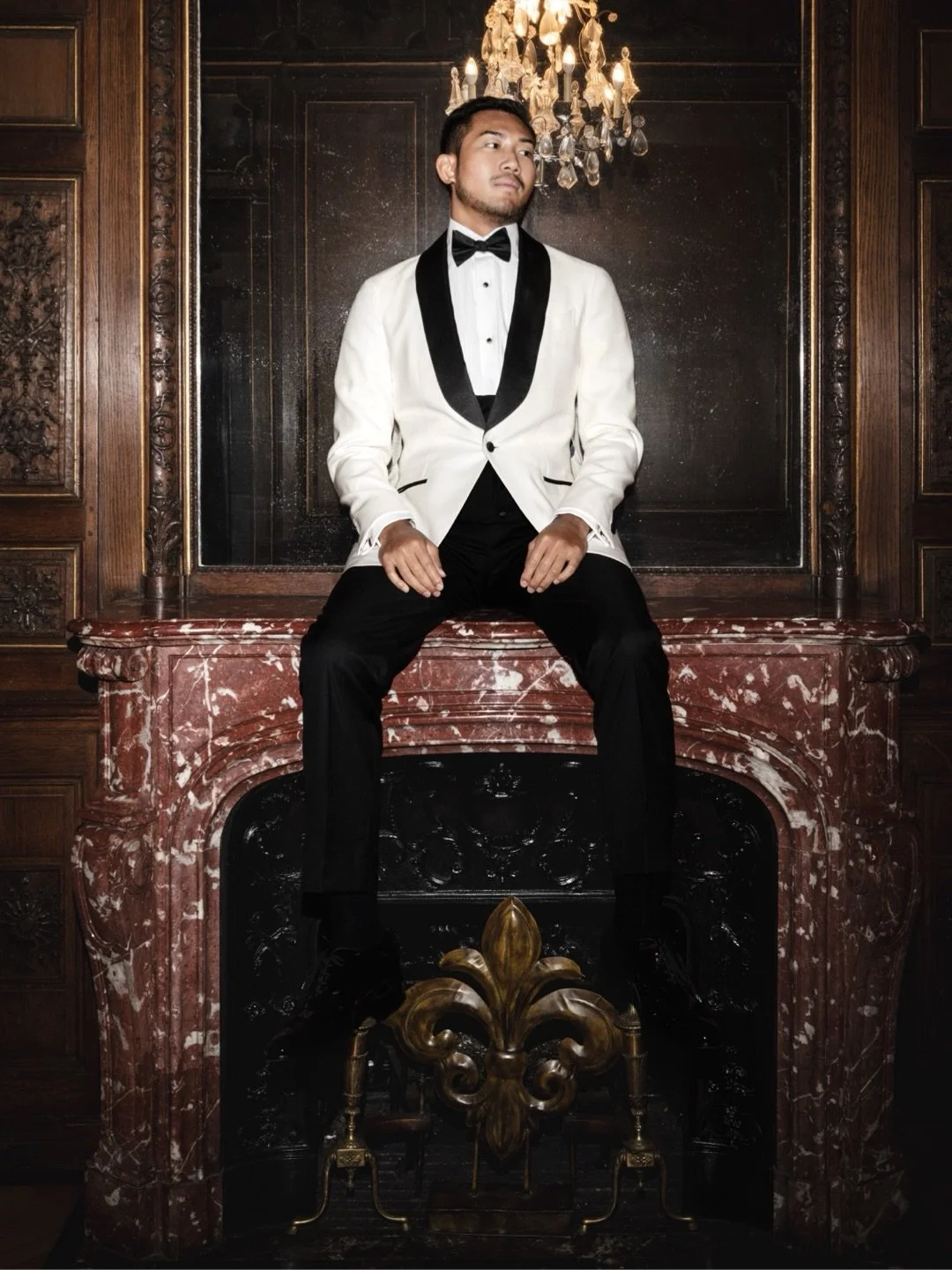
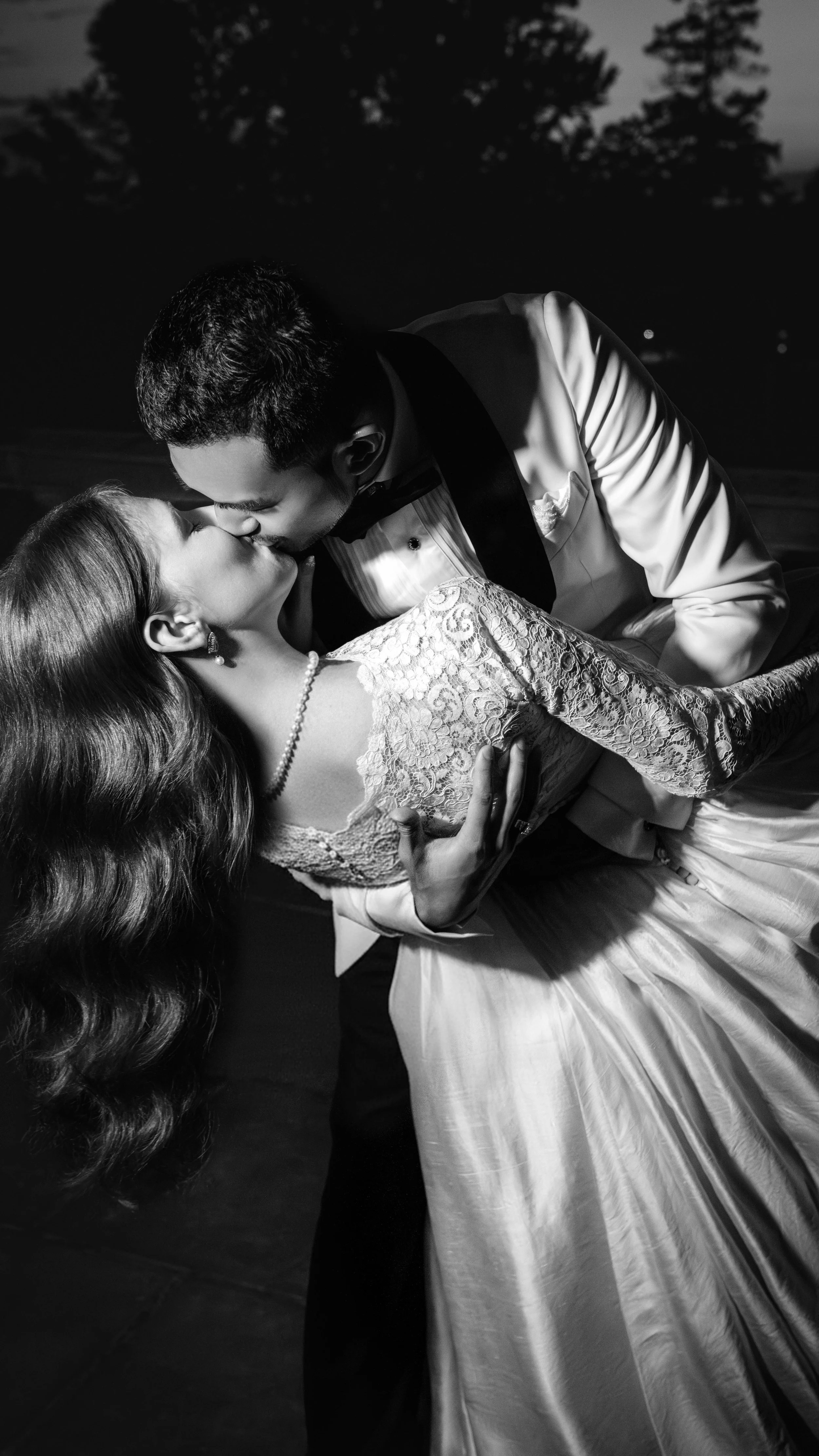
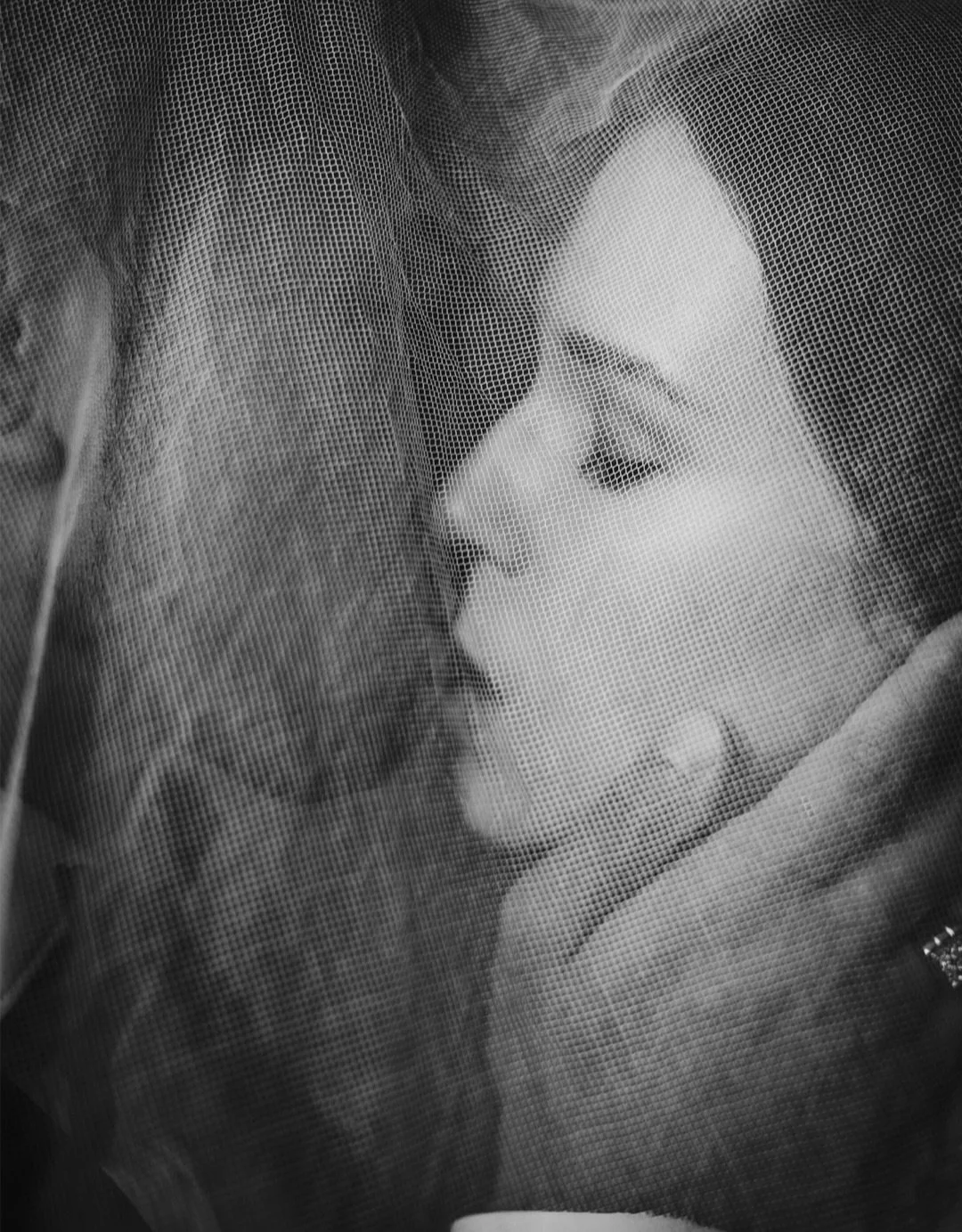
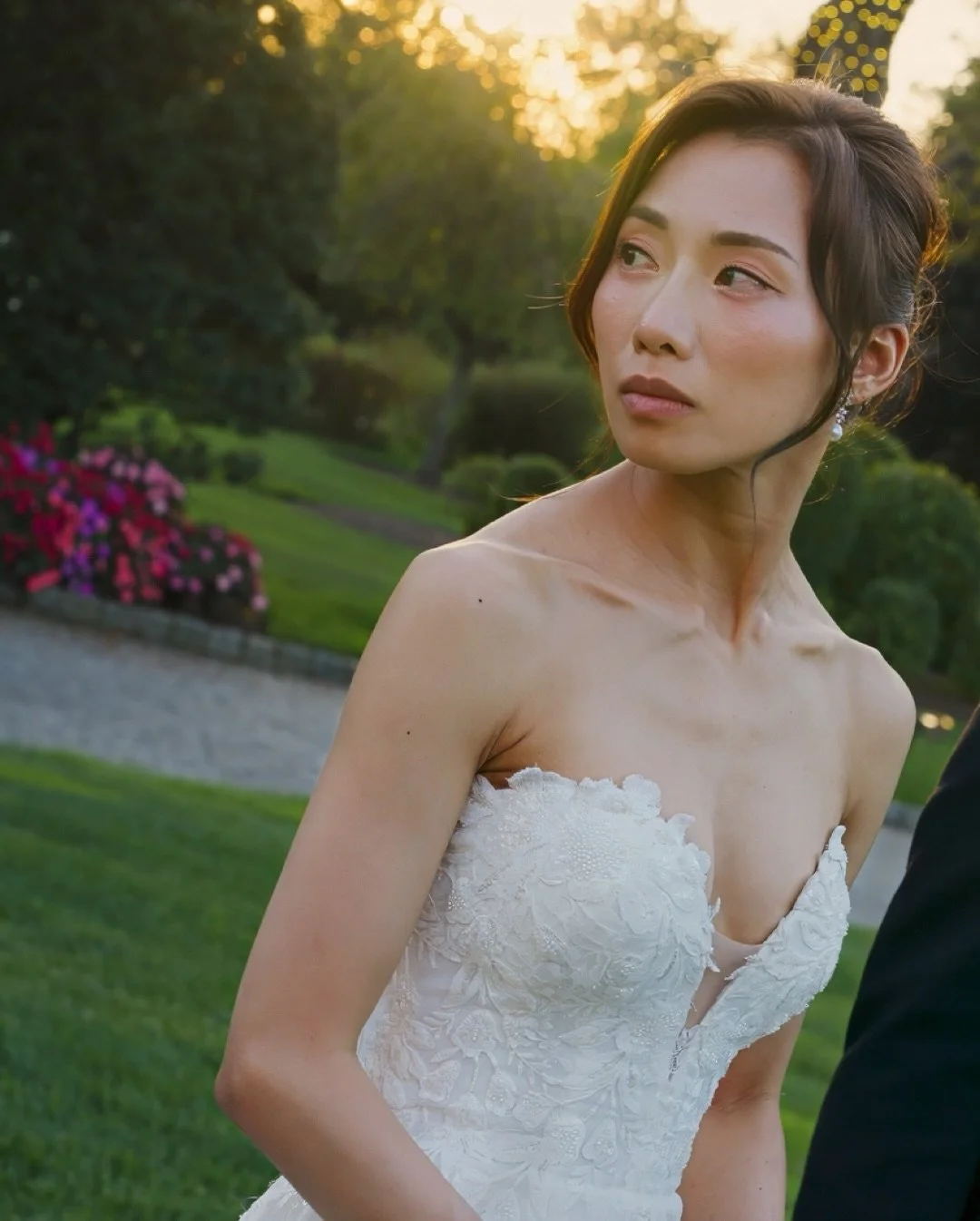
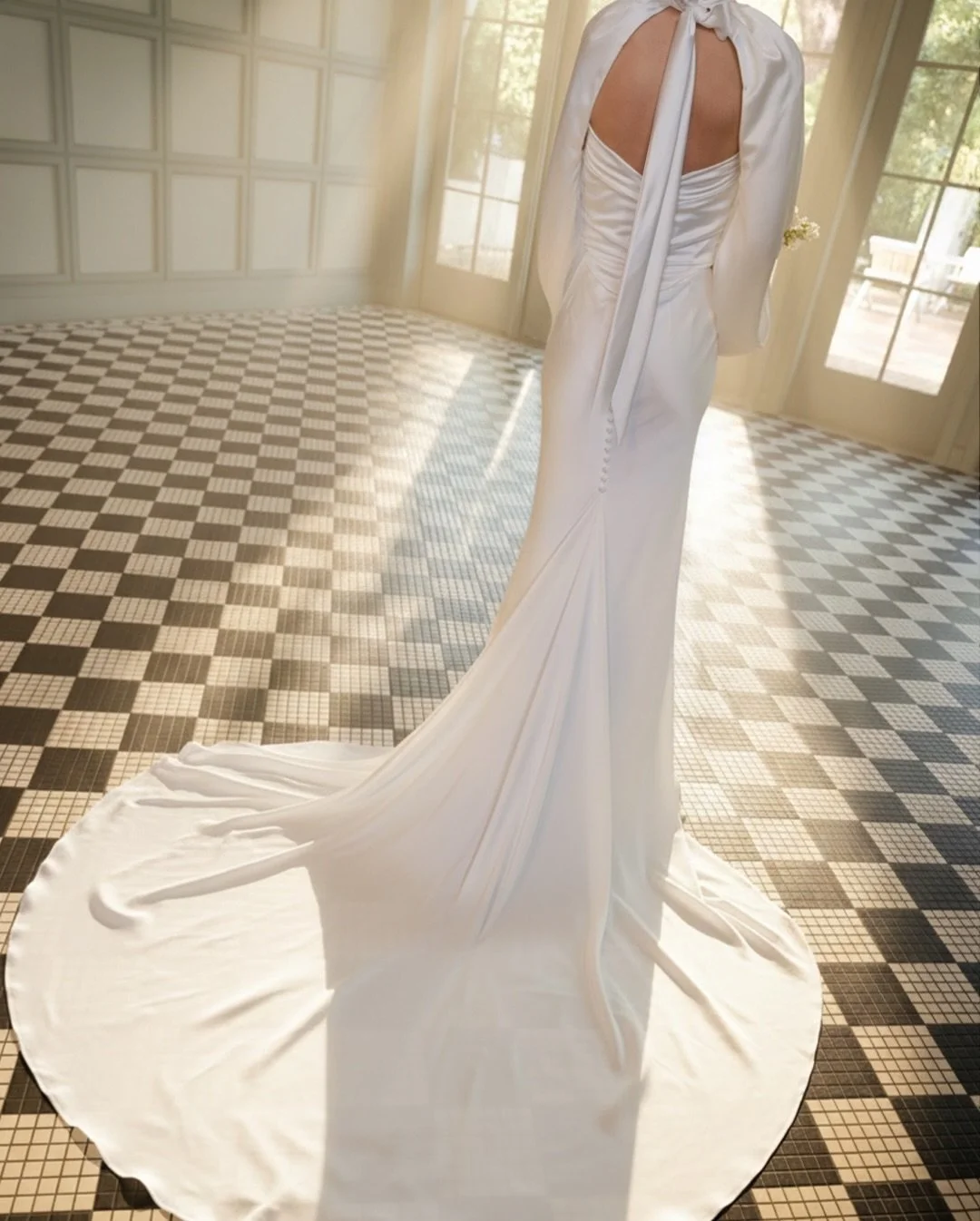
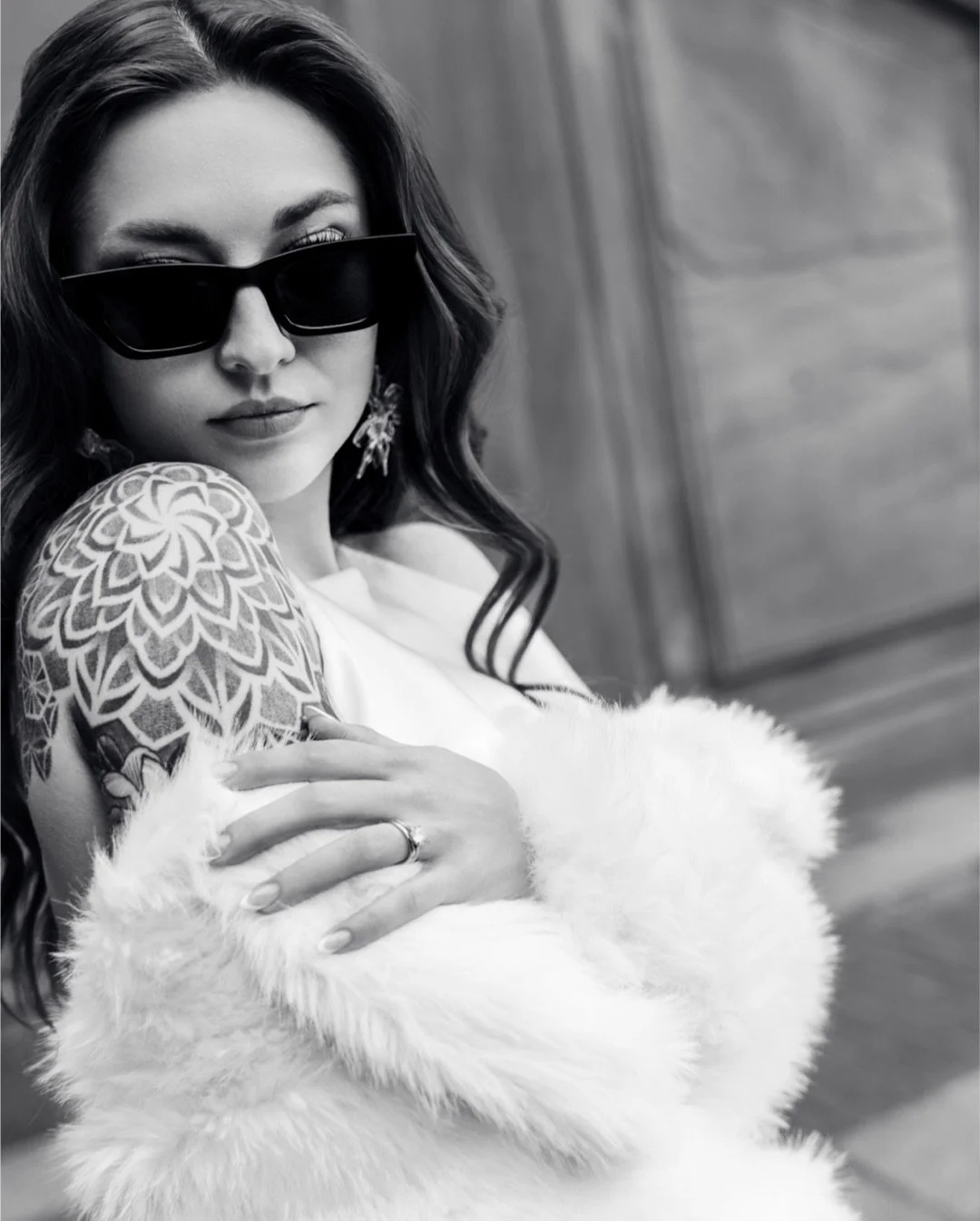
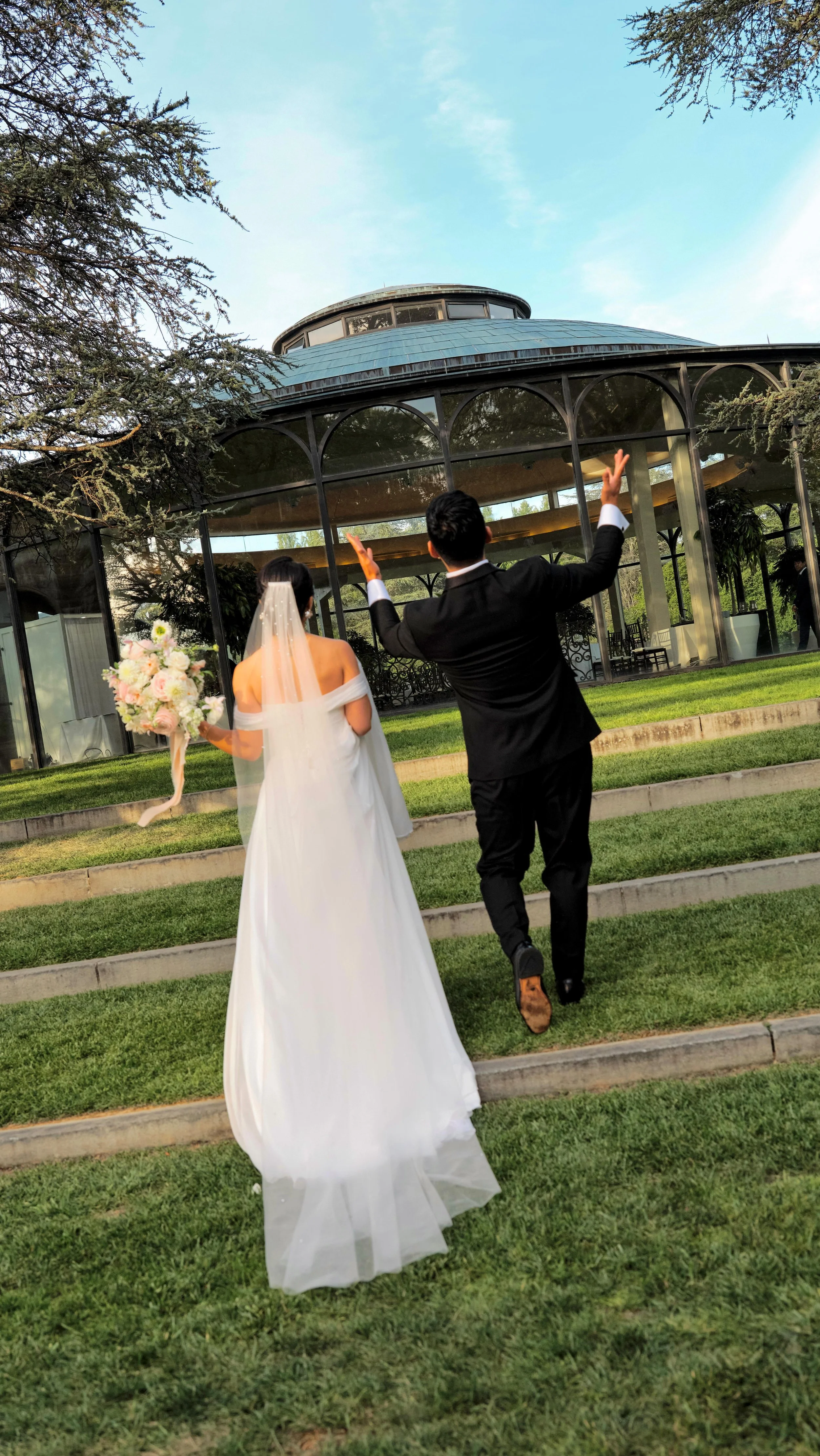
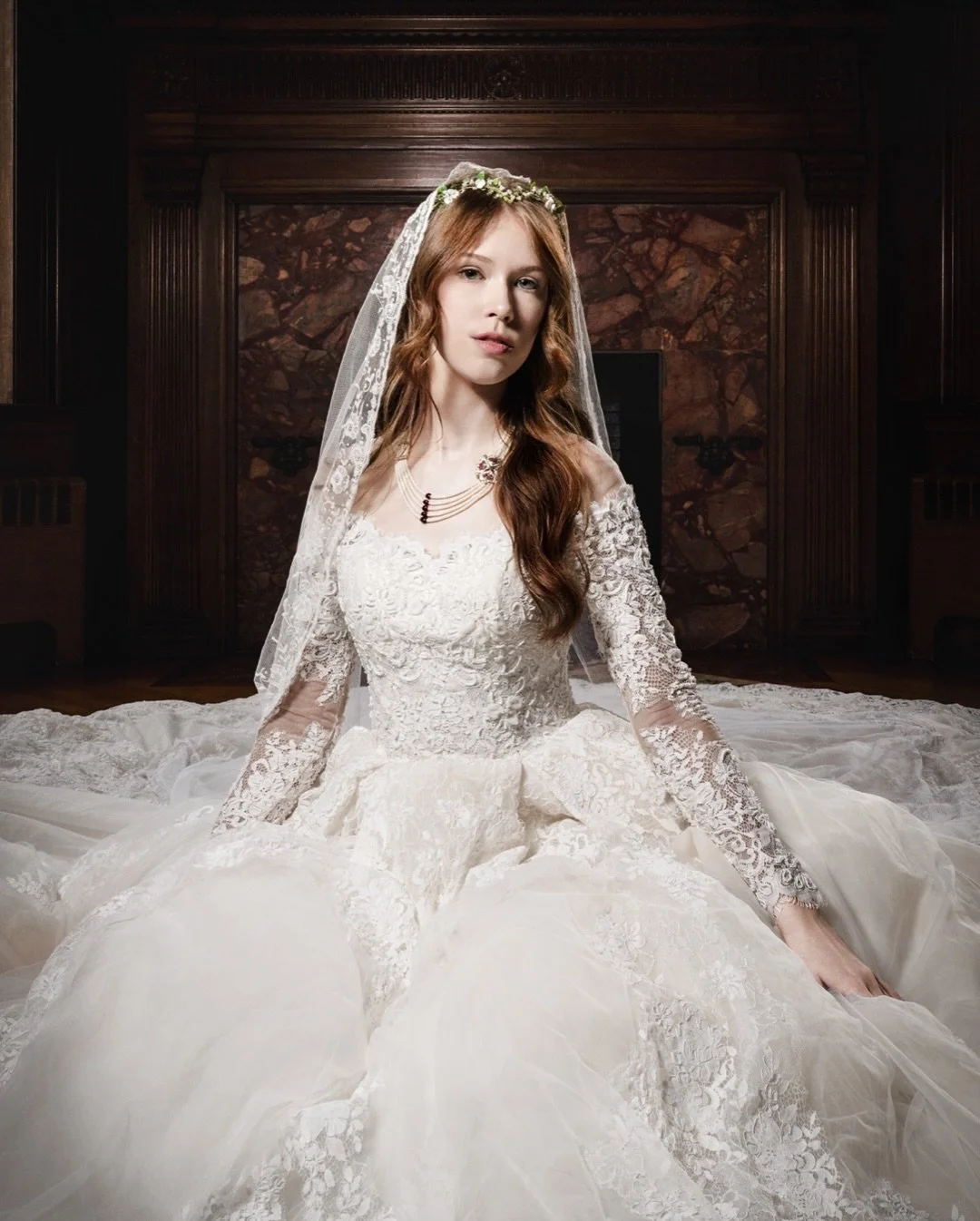
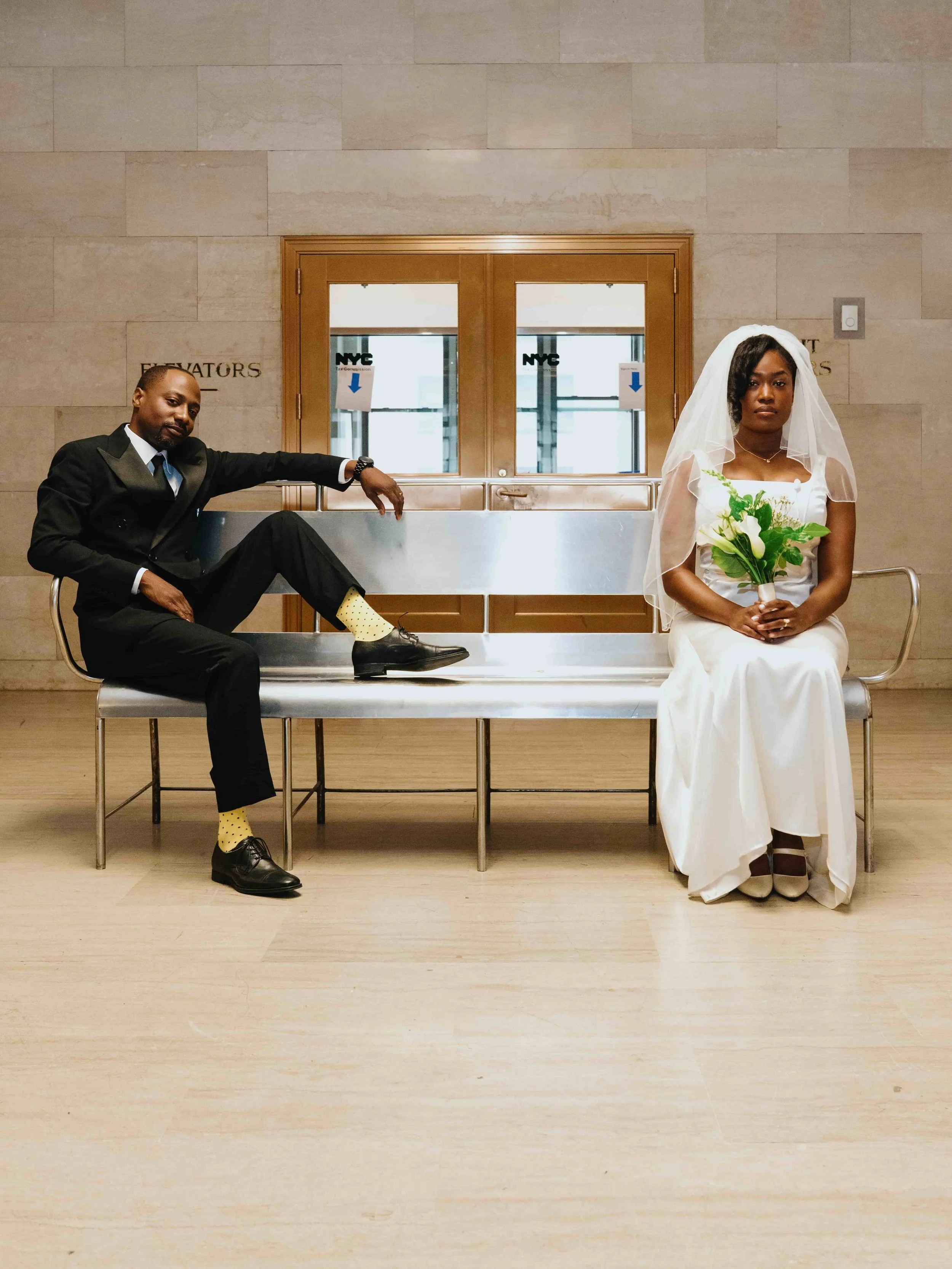
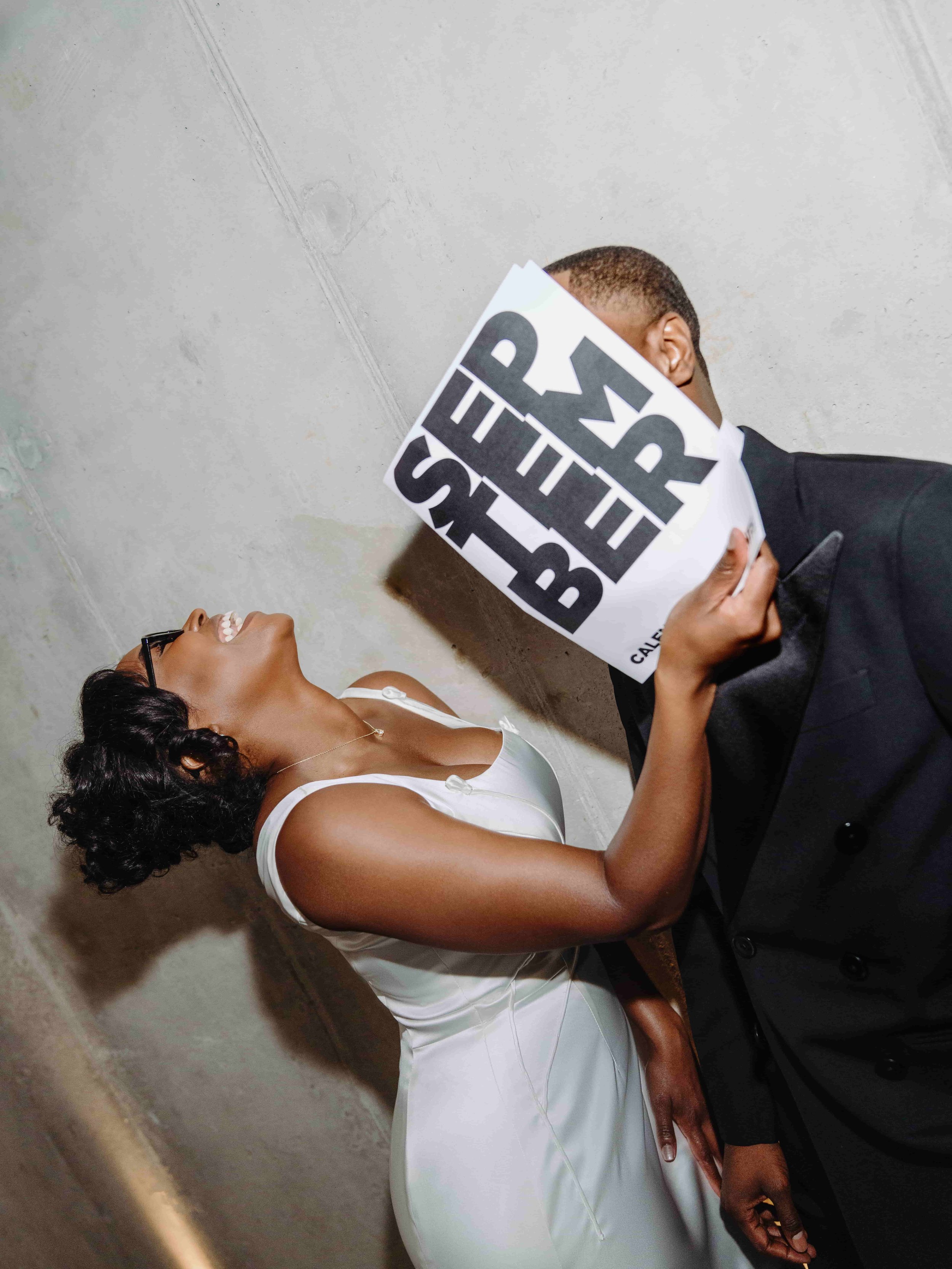
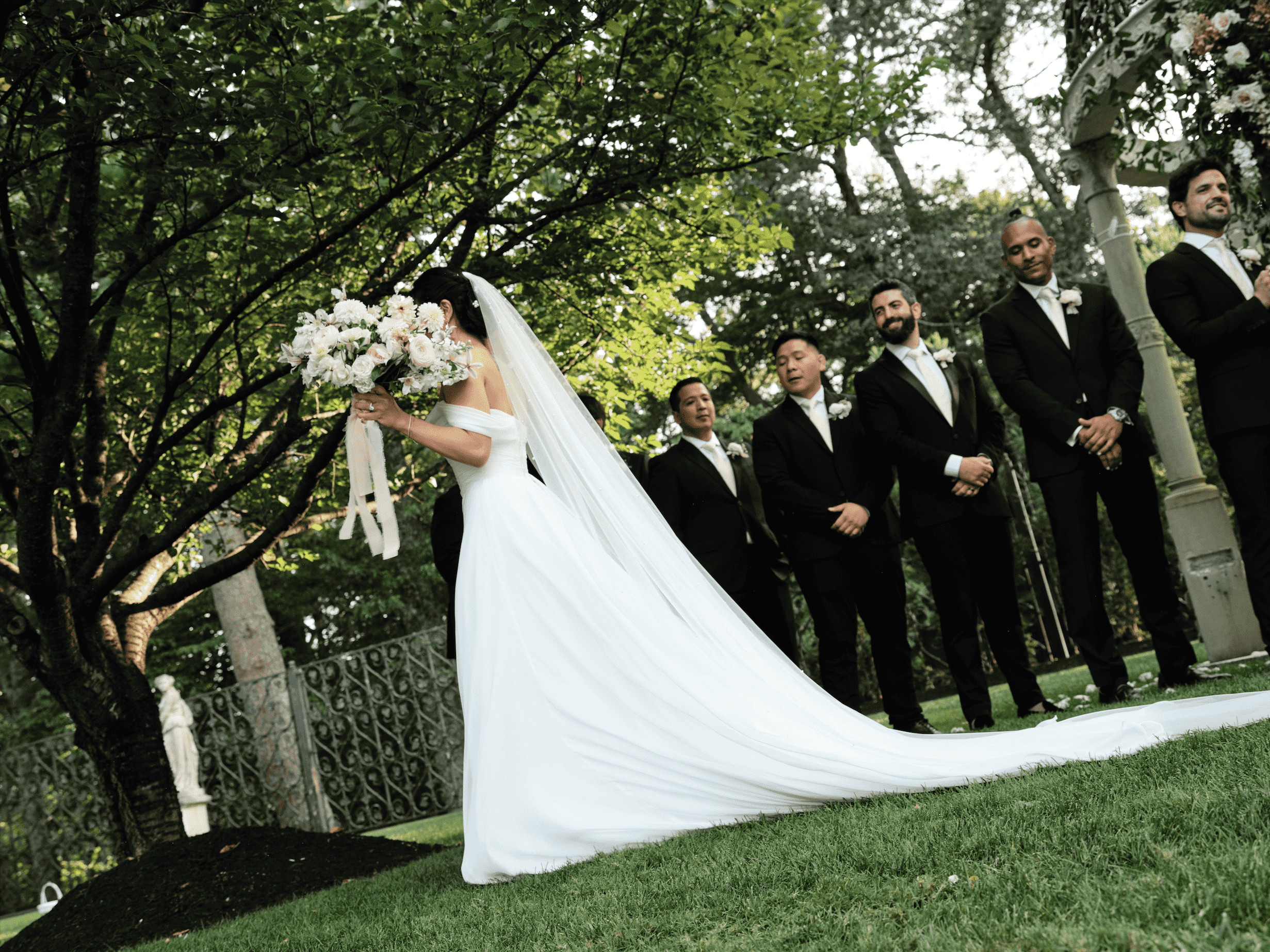
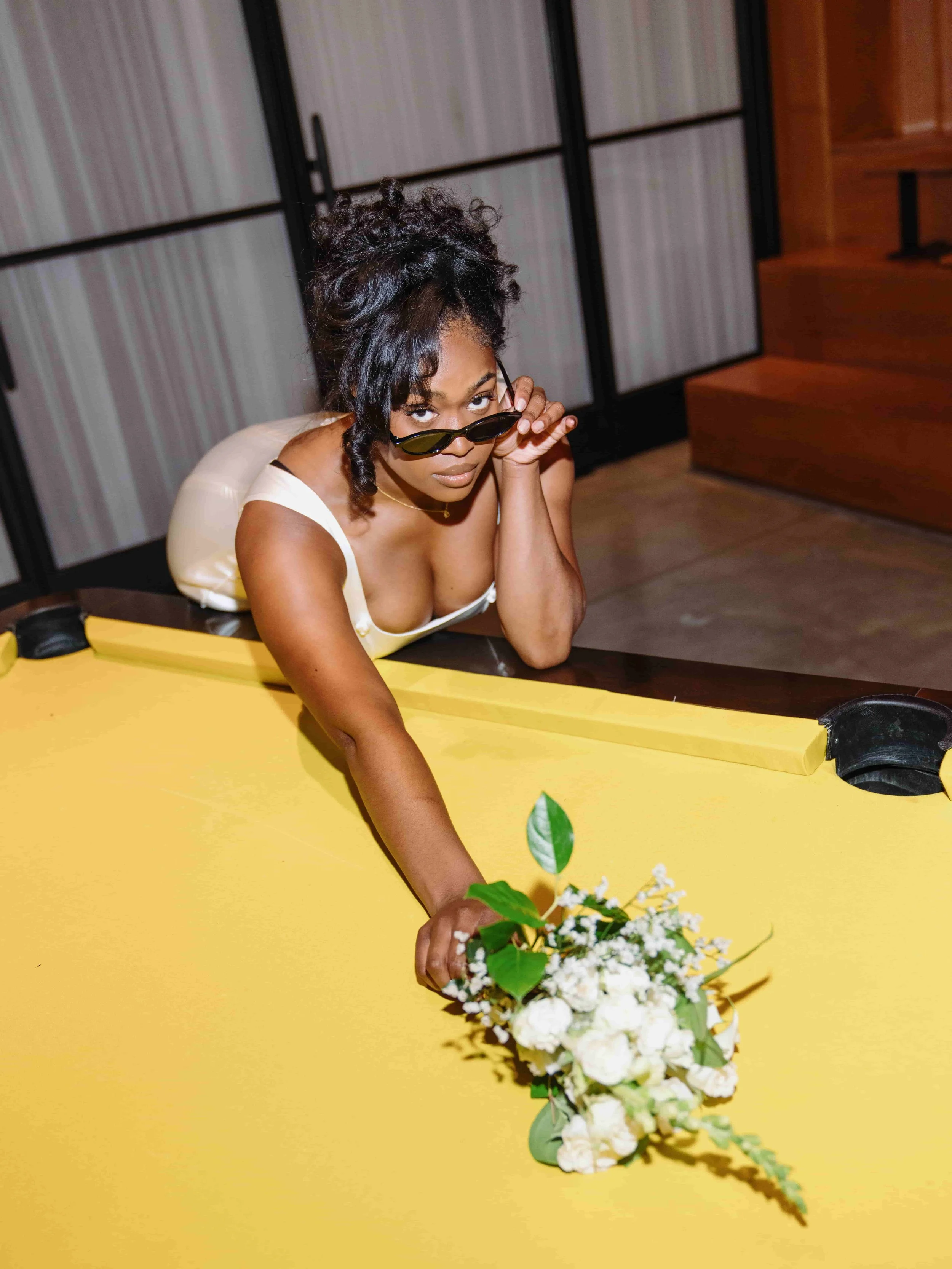
Expect a gallery that reads like a magazine feature about your wedding, not a catalog of it. Wide cinematic establishing shots, portraits with fashion-level composition, and in-between moments (a grandmother mid-laugh, a veil caught by wind) treated with the same visual care as the first kiss.
A few signatures show up across almost every loose editorial gallery:
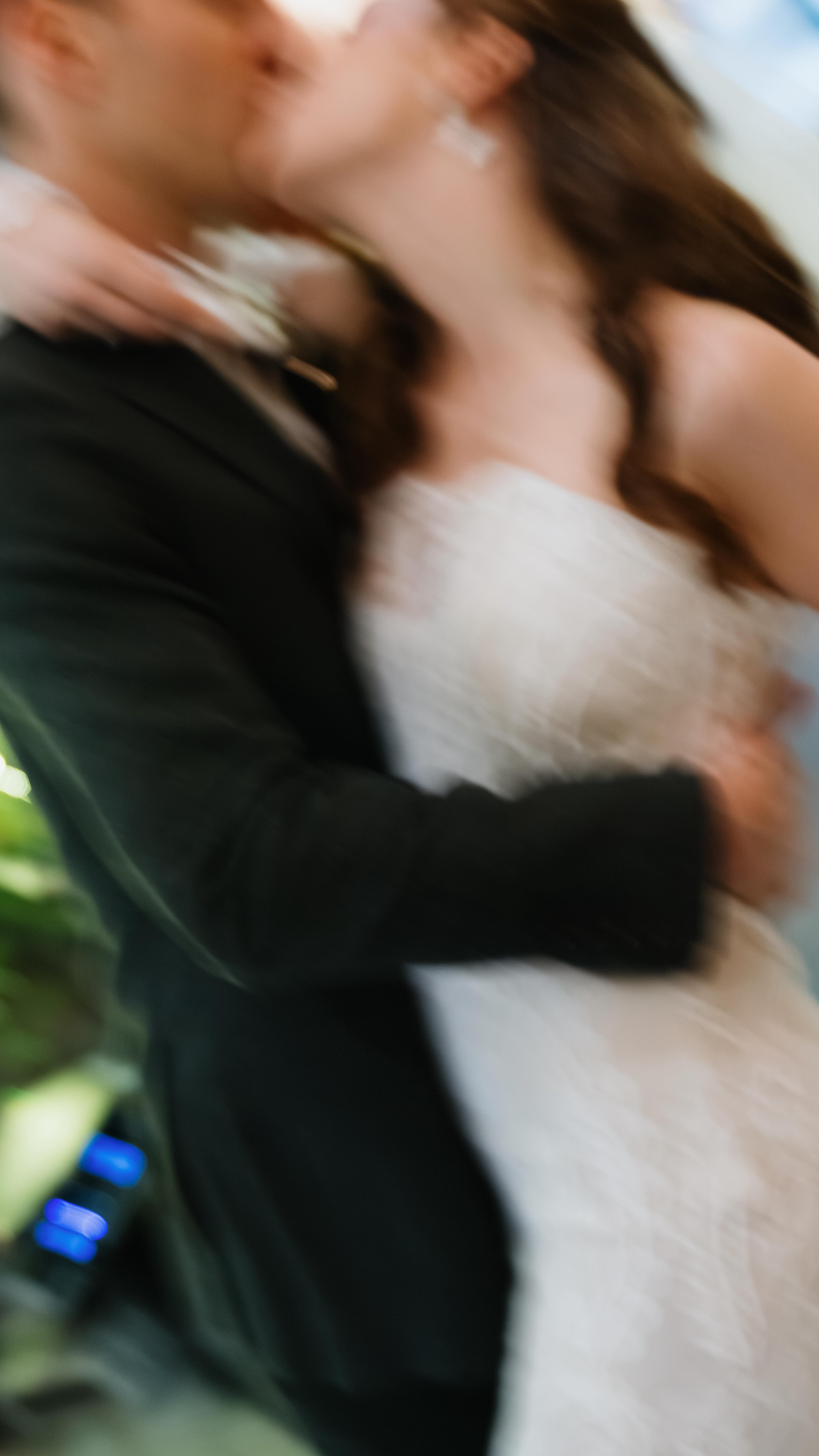
Direct flash and motion blur used on purpose. A slow-shutter dance floor frame or a hard-flash exit shot brings energy that soft, airy galleries never have.
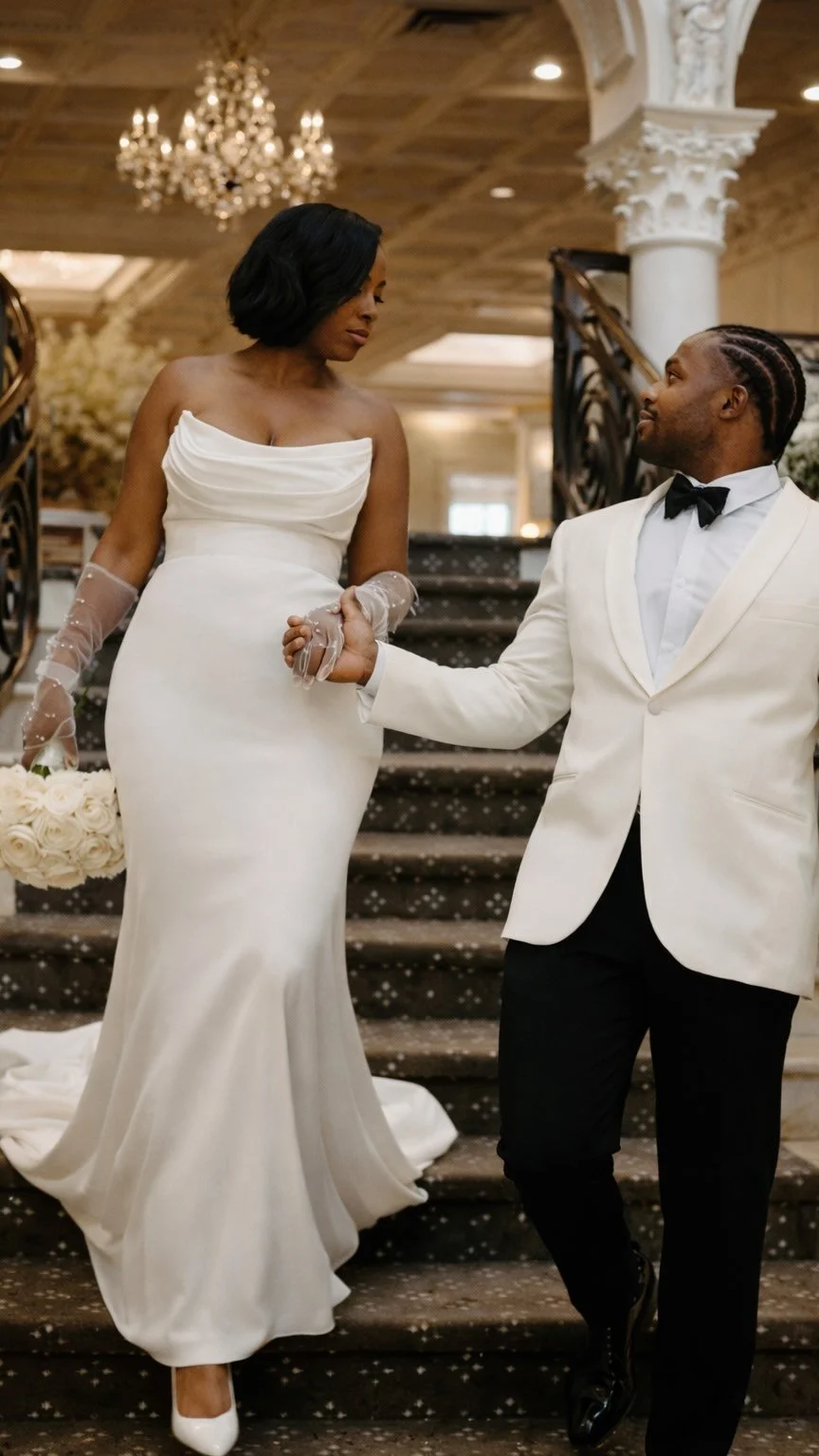
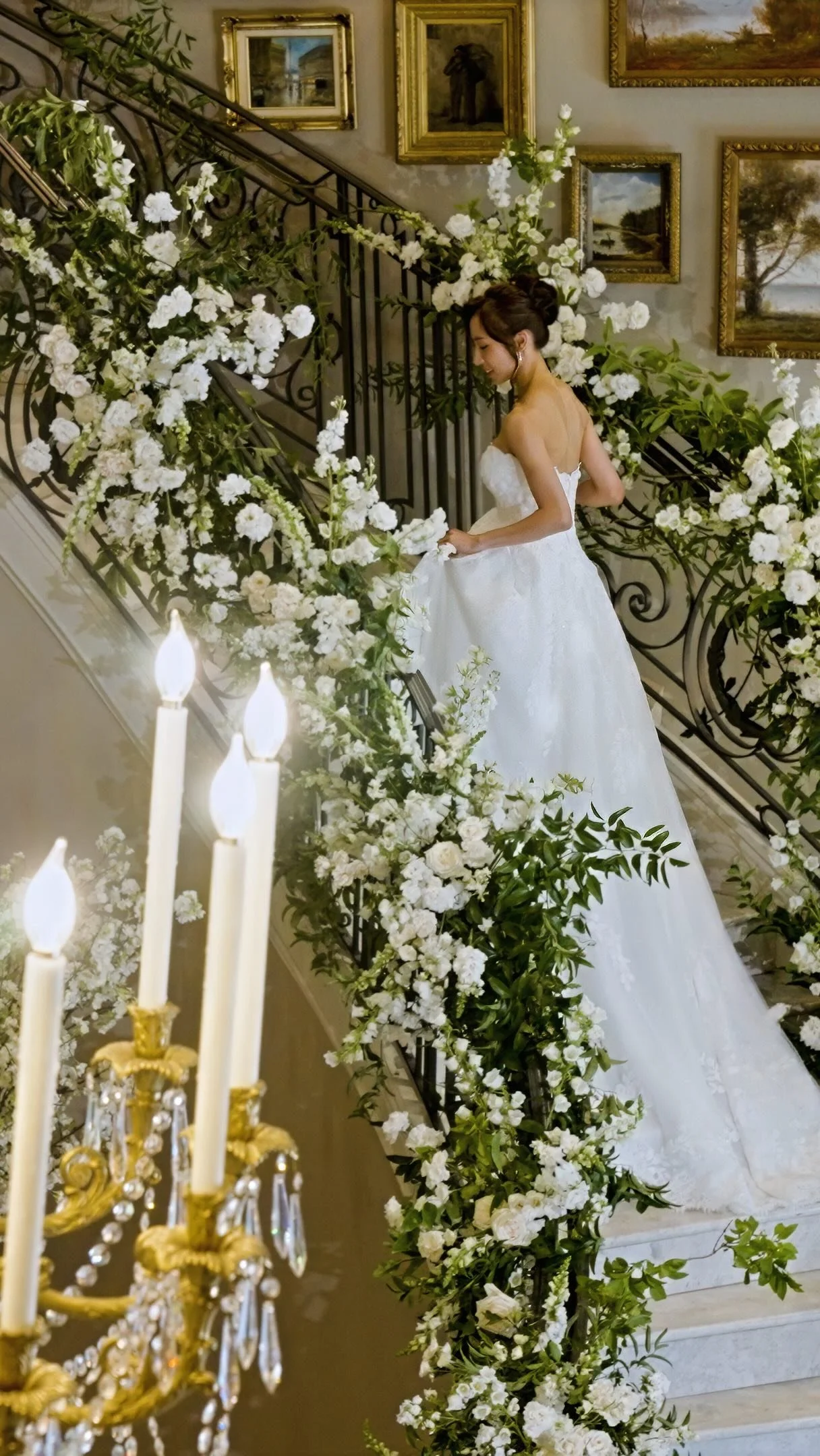
Negative space and architecture. The venue becomes a character. A couple small against a dramatic staircase says more than a tight crop ever could.
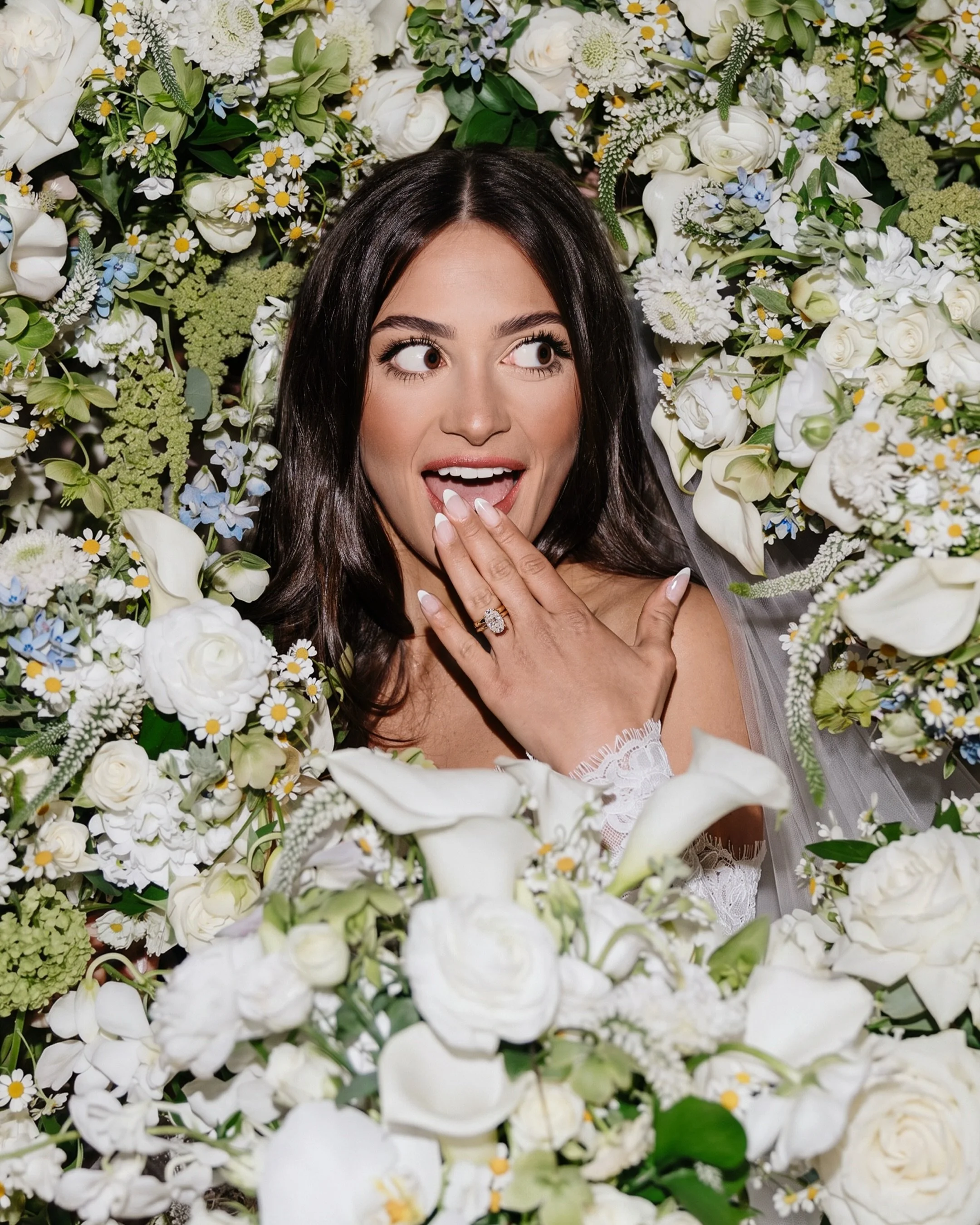
Imperfection kept in. A crooked boutonniere, mascara after the vows, a guest photobombing the portrait. Loose editorial keeps what classic editorial would reshoot.
Portraits in under thirty minutes. Because prompts replace pose-by-pose construction, couples spend the cocktail hour with guests, not with a shot list.
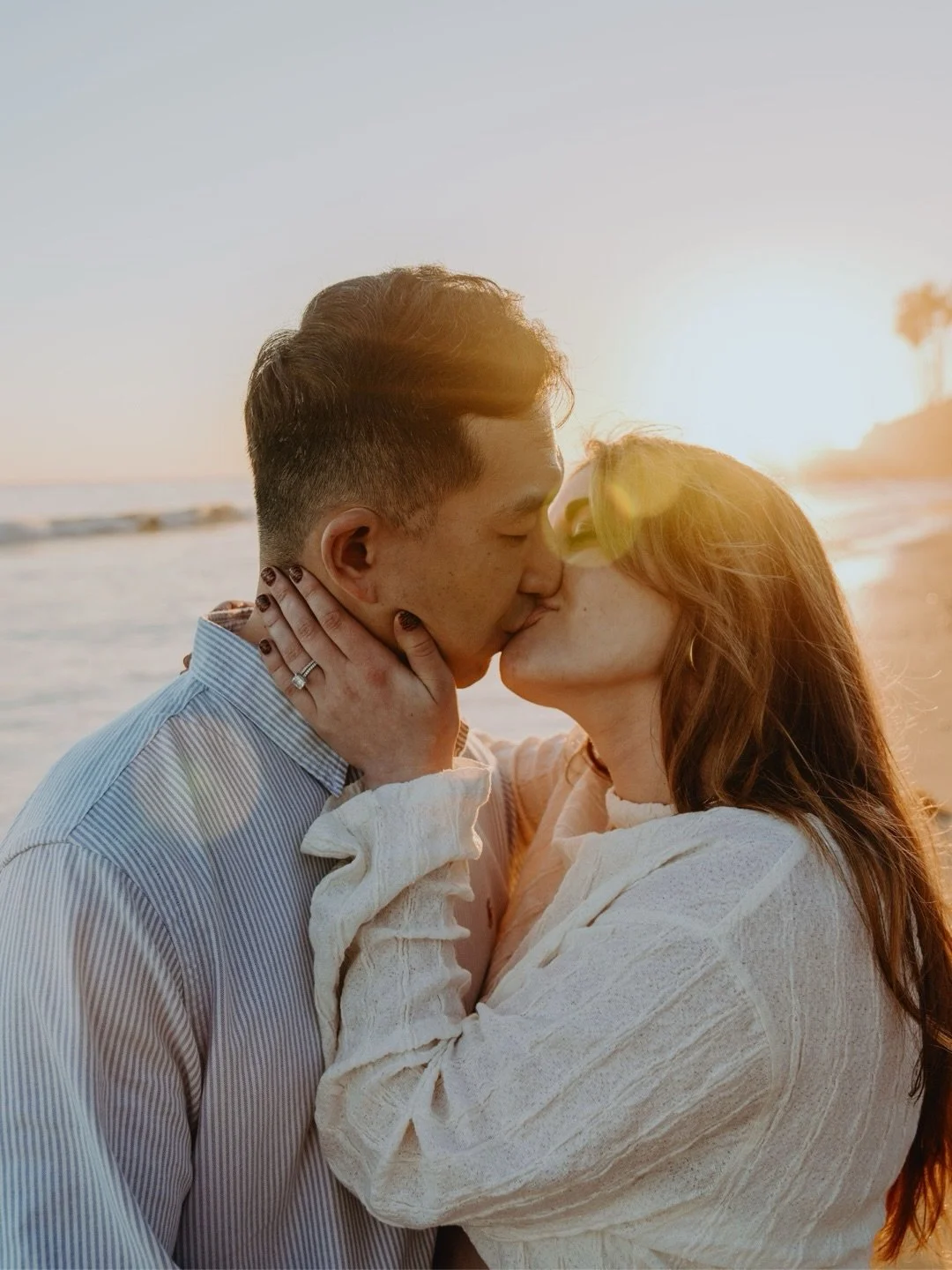
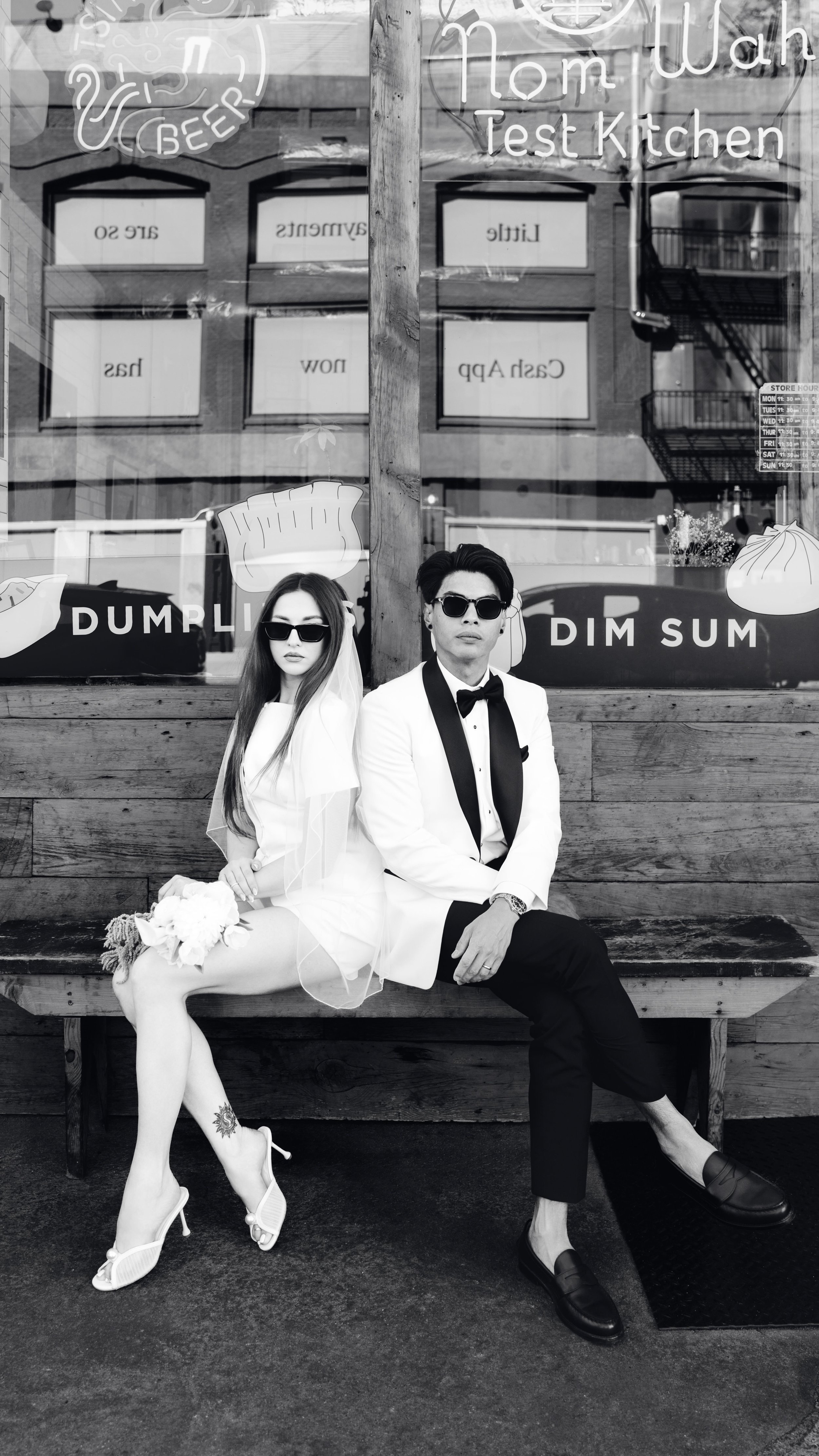
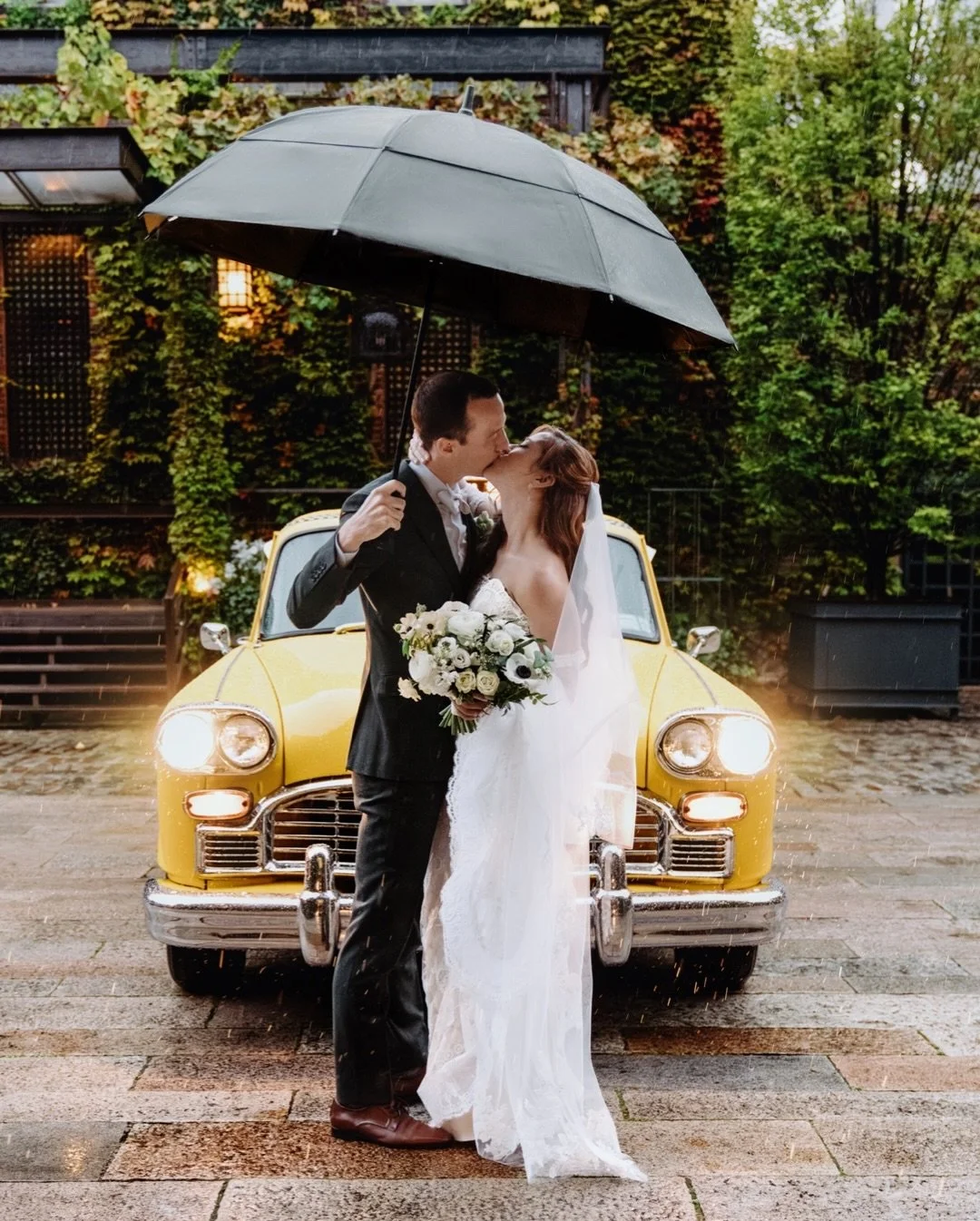
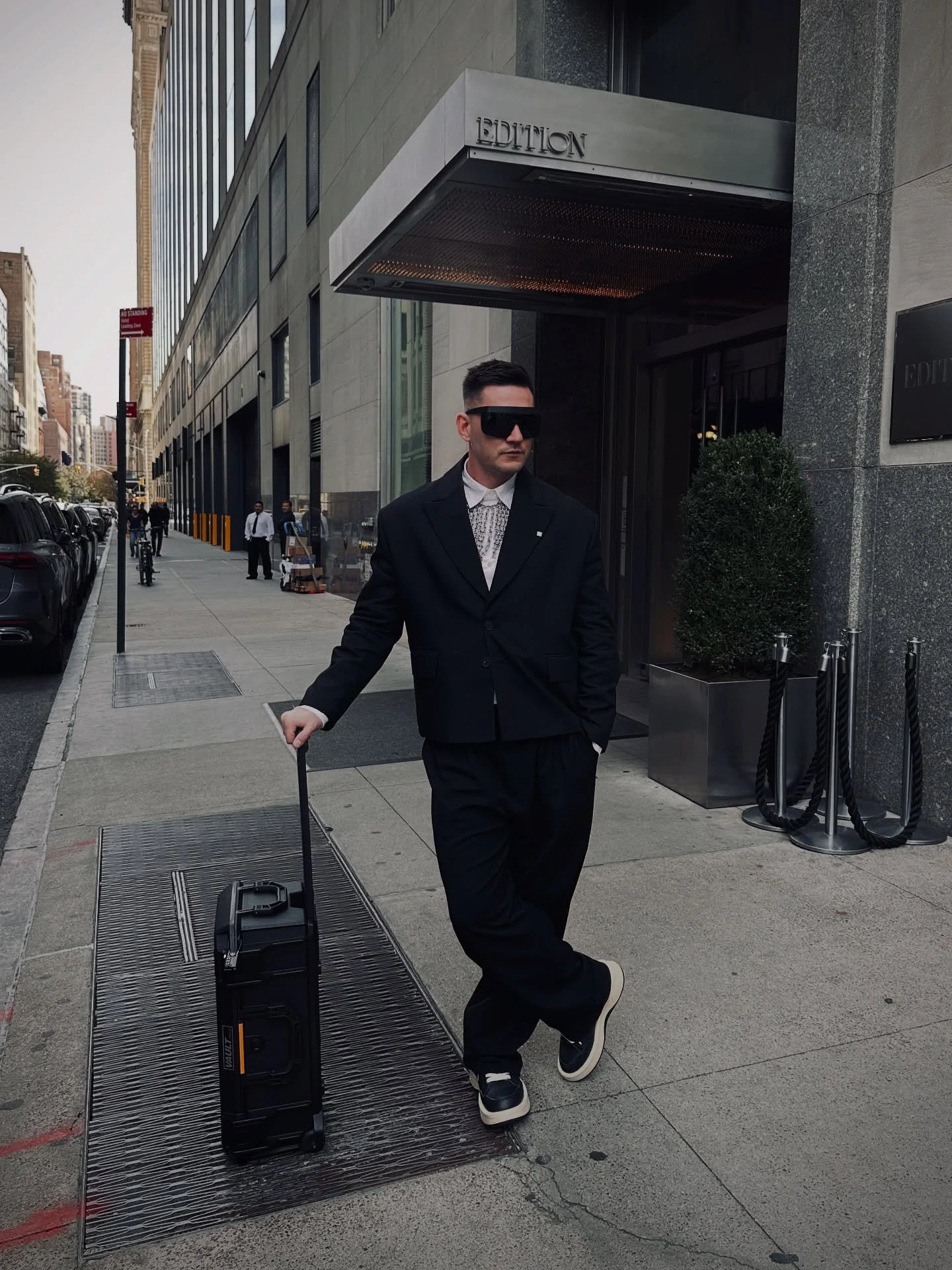
Location changes the flavor of the style without changing its logic. In New York, loose editorial leans on the city itself: hard light between Tribeca buildings, rooftop portraits with the skyline half out of focus, a yellow cab as an accidental prop. In Los Angeles, it is golden-hour haze, desert light and a more relaxed body language – on our Joshua Tree elopement the open landscape did the work that architecture does in New York. In our New York weddings the venue sets the frame: at The Plaza and Oheka Castle we place couples small against staircases and ballrooms, and at The Skylark and The William Vale portraits move to the rooftop with the skyline behind. Same approach, two very different looks.
Does Loose Editorial Work for Wedding Video Too?

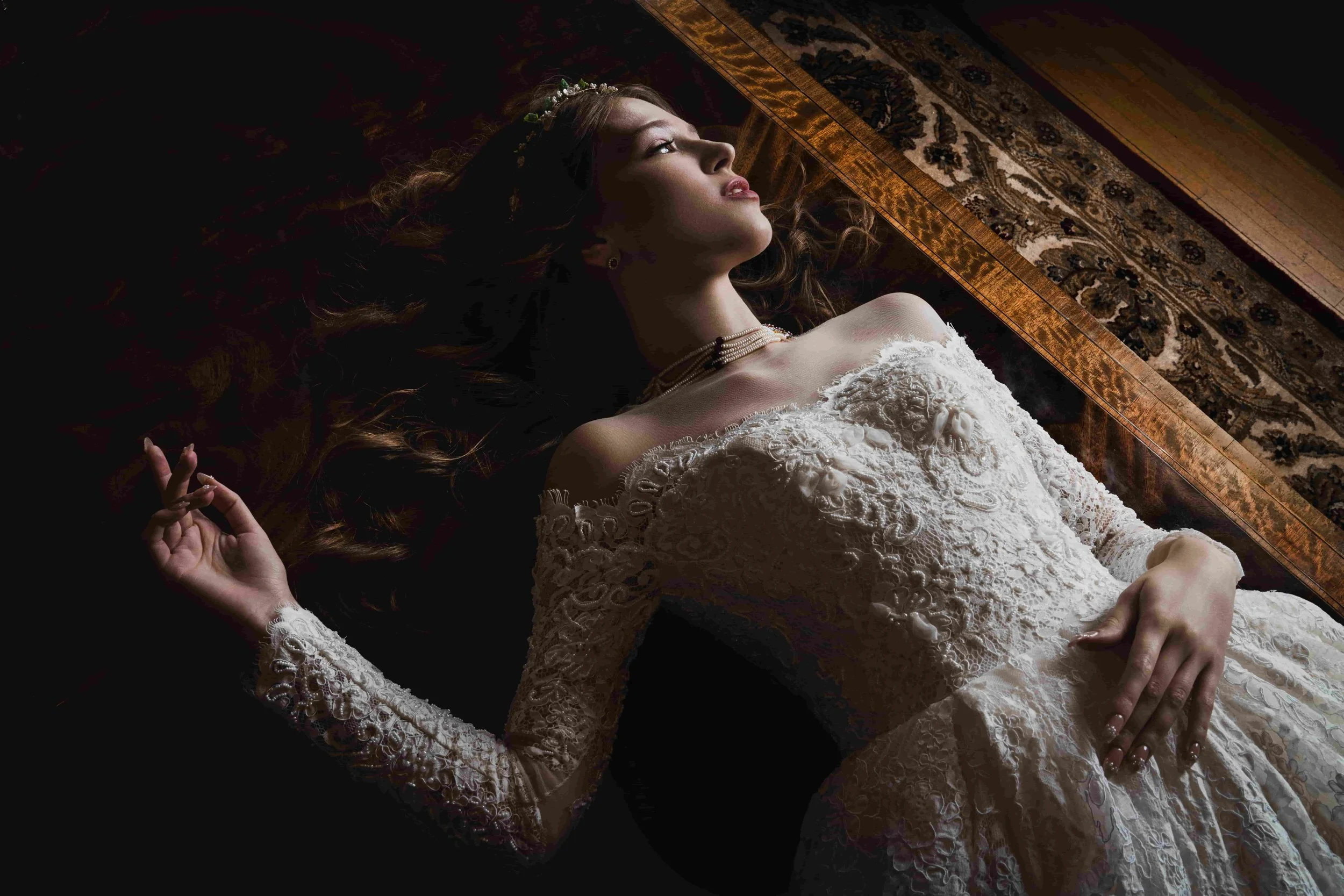
Yes, and this is where the style gets interesting, because almost nobody talks about it. Loose editorial translates directly to film: composed, cinematic frames capturing unscripted sound and movement. Real vows and real laughter, shot with the discipline of a narrative film rather than the run-and-gun look of event videography.
Most couples discover loose editorial through photography and then realize their video package is coming from a completely different visual planet: fast cuts, drone-everything, stock-music montage. The mismatch shows when you put the album next to the film.
A loose editorial wedding film works like the photography does. The filmmaker blocks scenes the way a director of photography would (where the light falls, where the couple will walk), then lets the scene play out without a script. Audio is documentary: vows, toasts, a father's shaky breath before the aisle. Grade and composition are editorial: intentional color, held frames, room to breathe.
The practical takeaway: if the loose editorial look is what you want, hire a photo and video team that shares one visual language, or at minimum show your videographer the photographer's portfolio before booking. When both teams shoot in the same style, the album and the film feel like chapters of one story instead of two vendors' separate products.
Who Is Loose Editorial Right For?
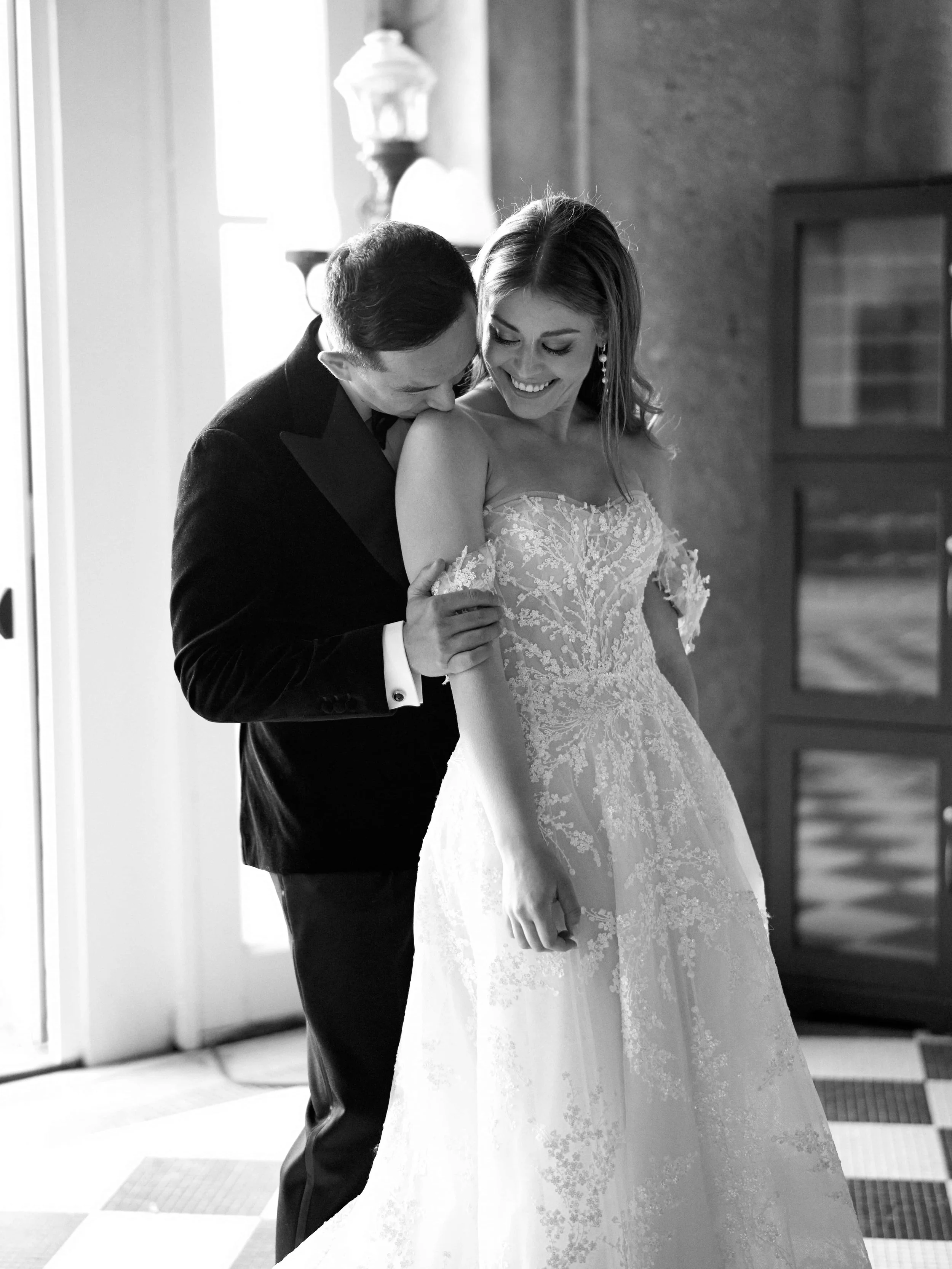
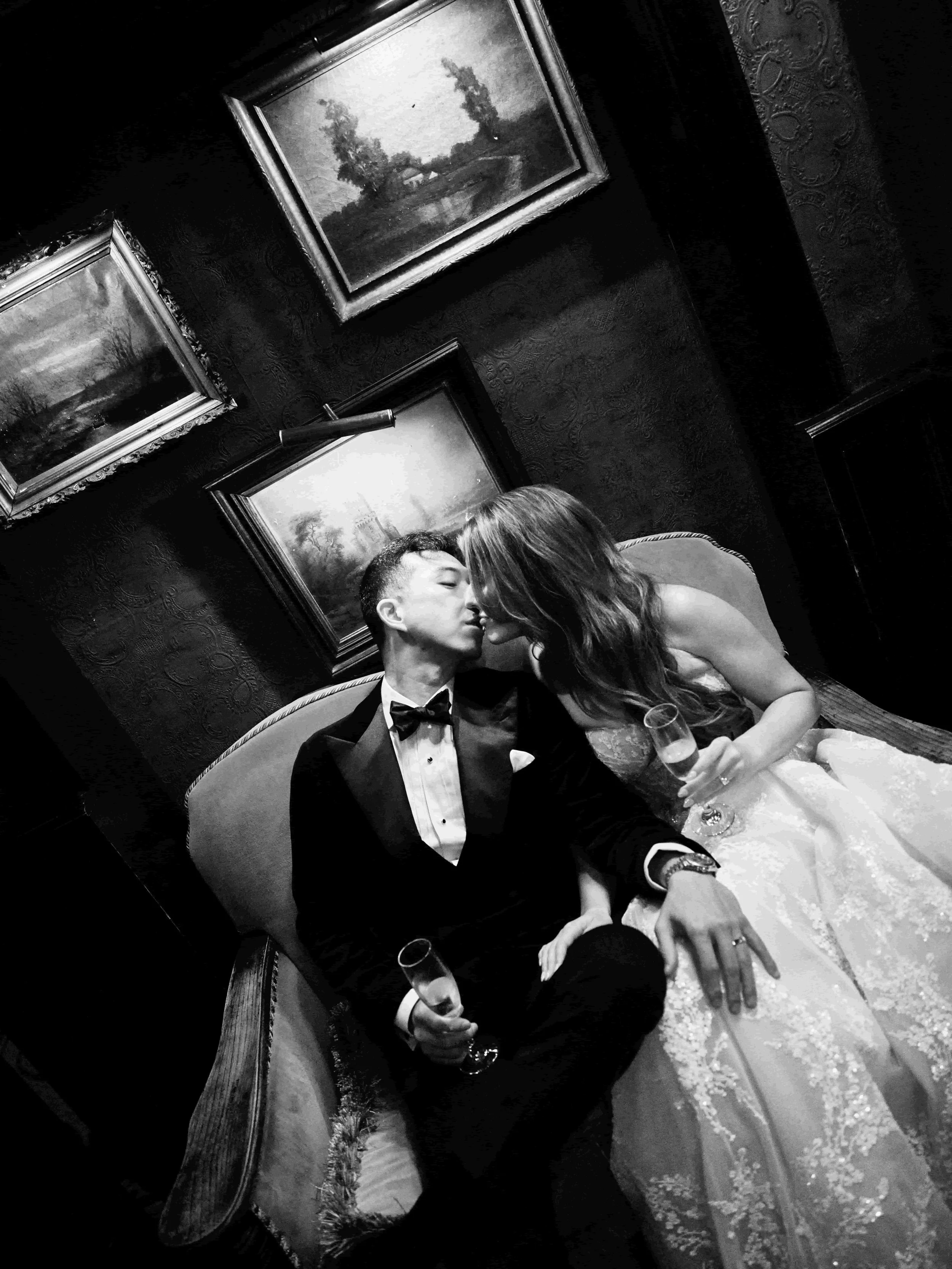
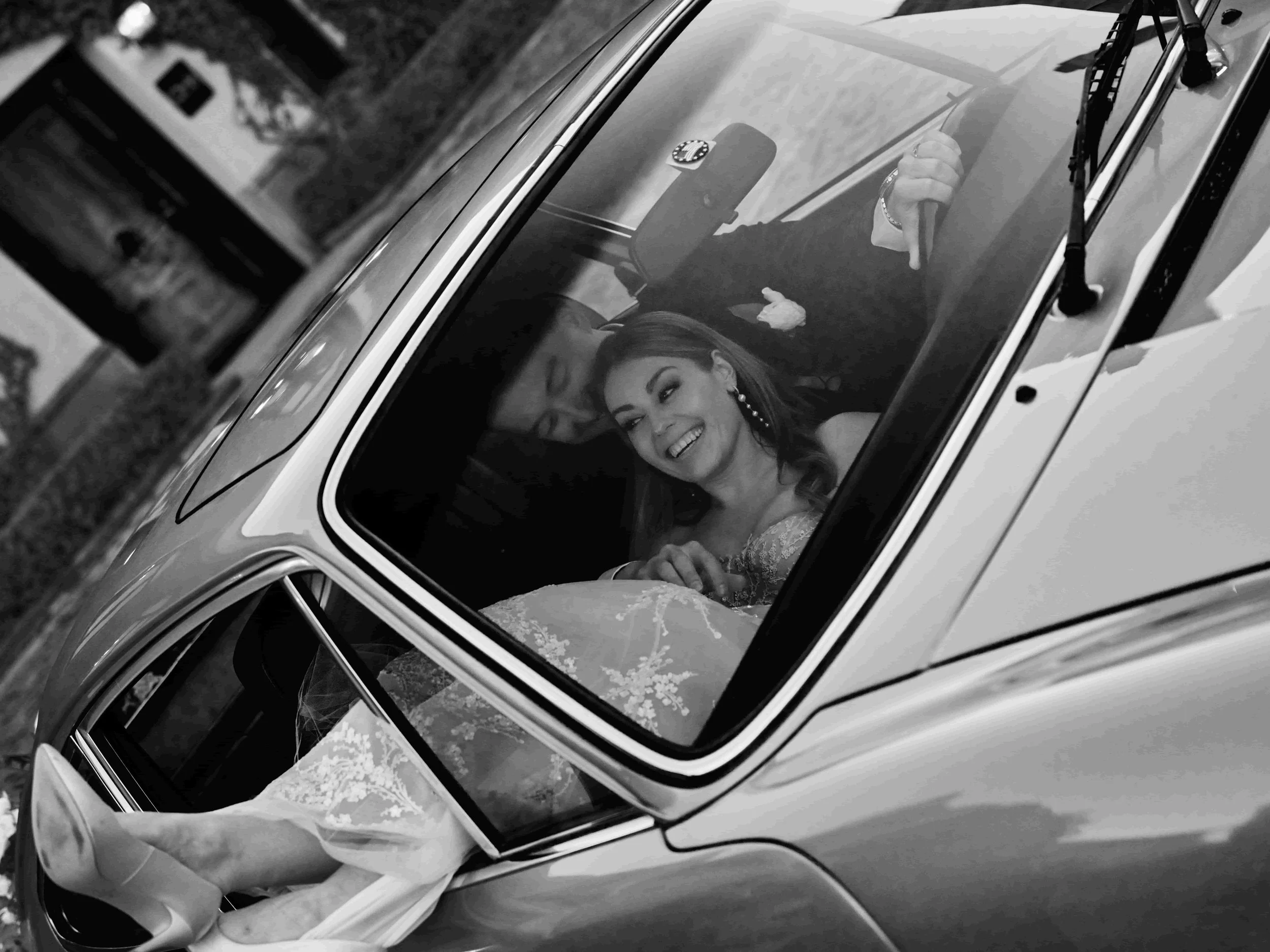


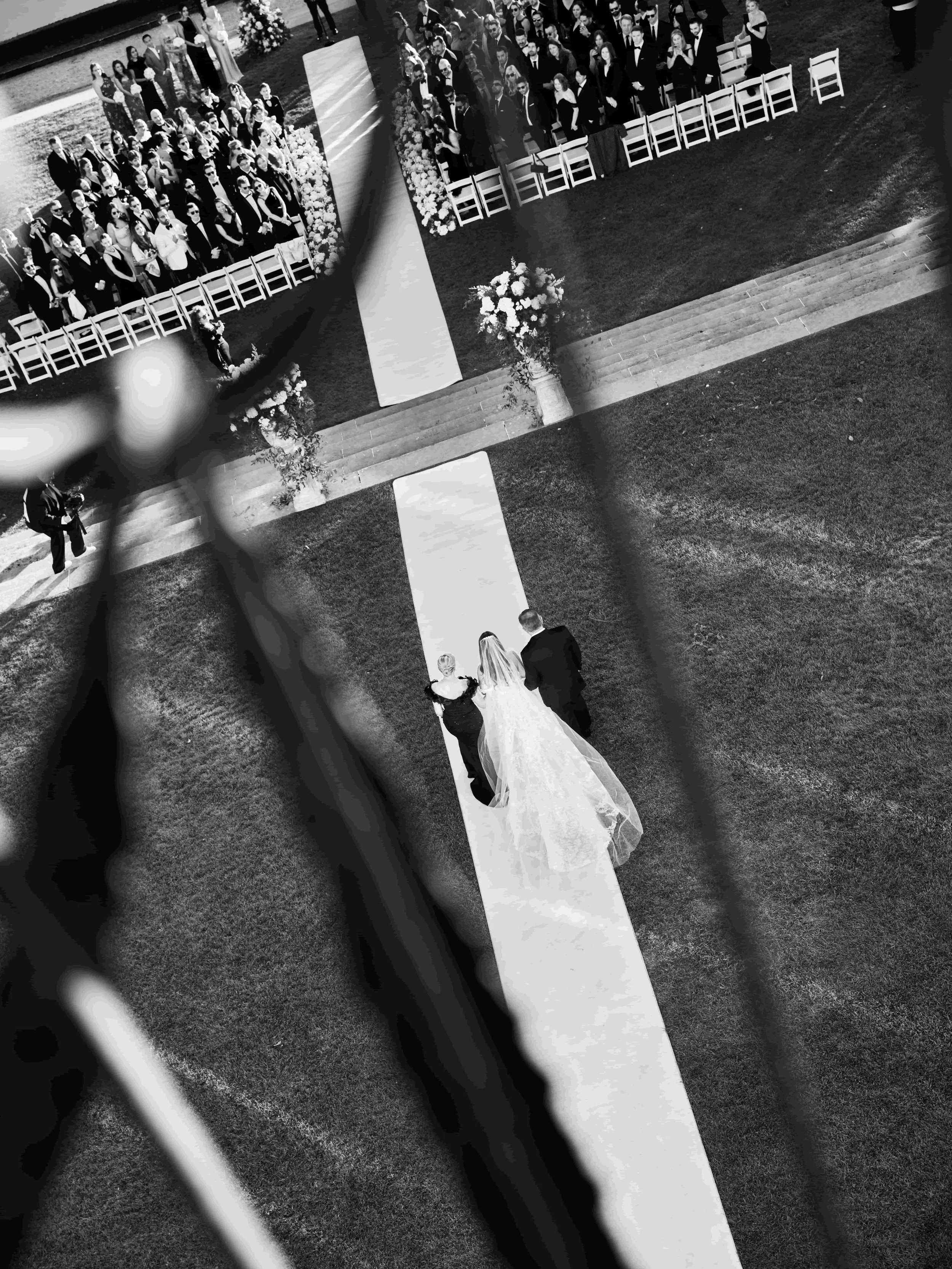
Loose editorial fits couples who want their gallery to look like a fashion feature but refuse to spend their wedding day posing for one. If you care about aesthetics and hate the word "cheese," this is your style. It rewards couples who trust their team and stay present in the day.
This style is for you if:
You save fashion campaigns and film stills to your inspiration folder, not just wedding content.
The idea of a 90-minute posed portrait session makes you want to elope.
You want your grandmother's laugh photographed with the same care as your dress.
Your venue has personality (architecture, landscape, city energy) that deserves screen time.
You want photo and video to feel like one production, not two.
Consider a different style if:
You want every family grouping documented in formal, traditional arrangements. A classic photographer will serve you better.
You are uncomfortable with any direction at all. Pure documentary coverage removes even light prompting.
You expect a fully styled, controlled, flat-lay-perfect gallery. That is classic editorial, and it is a legitimate choice; it is just a different one.
How Do You Find and Brief a Loose Editorial Photographer?
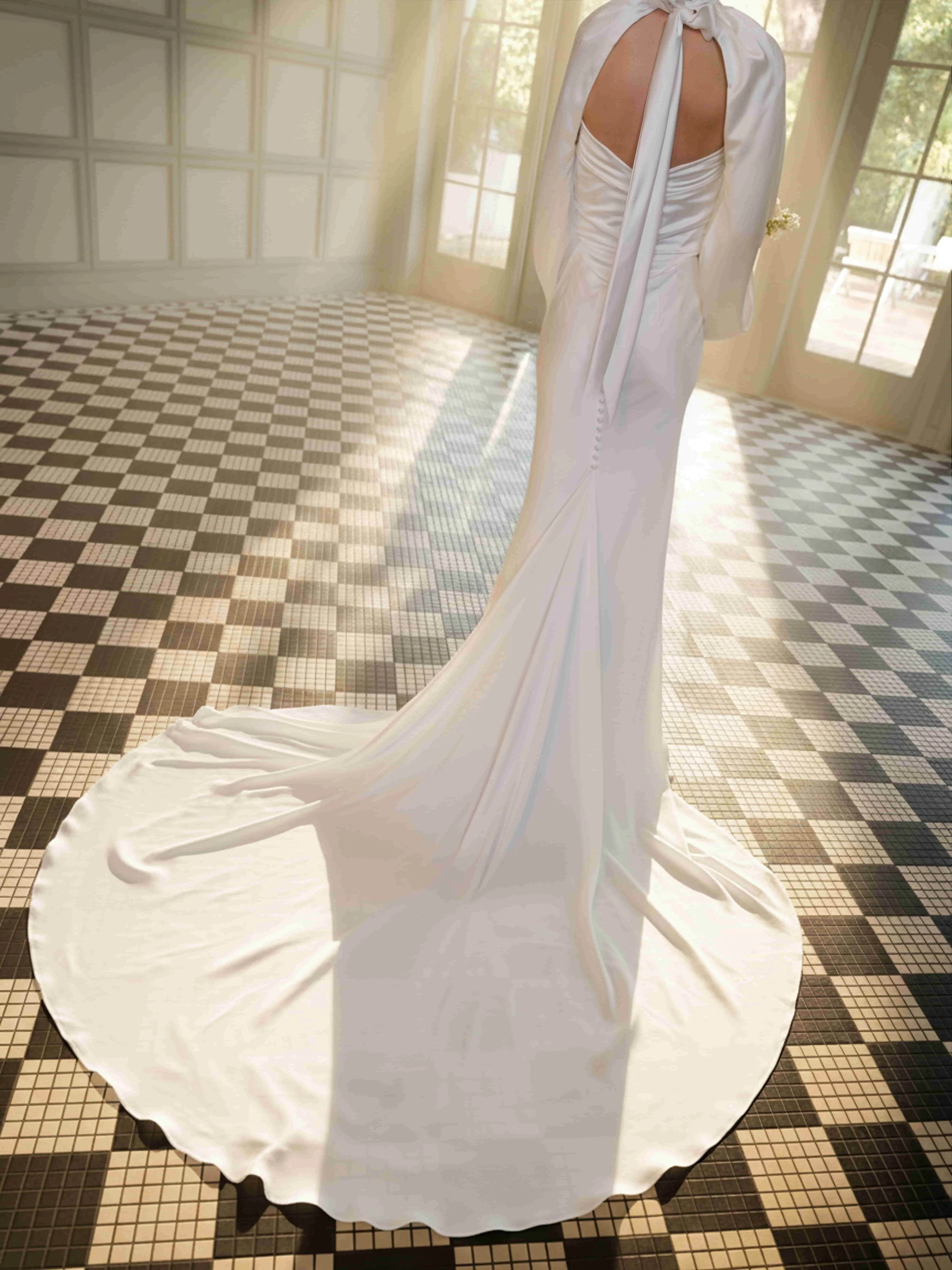
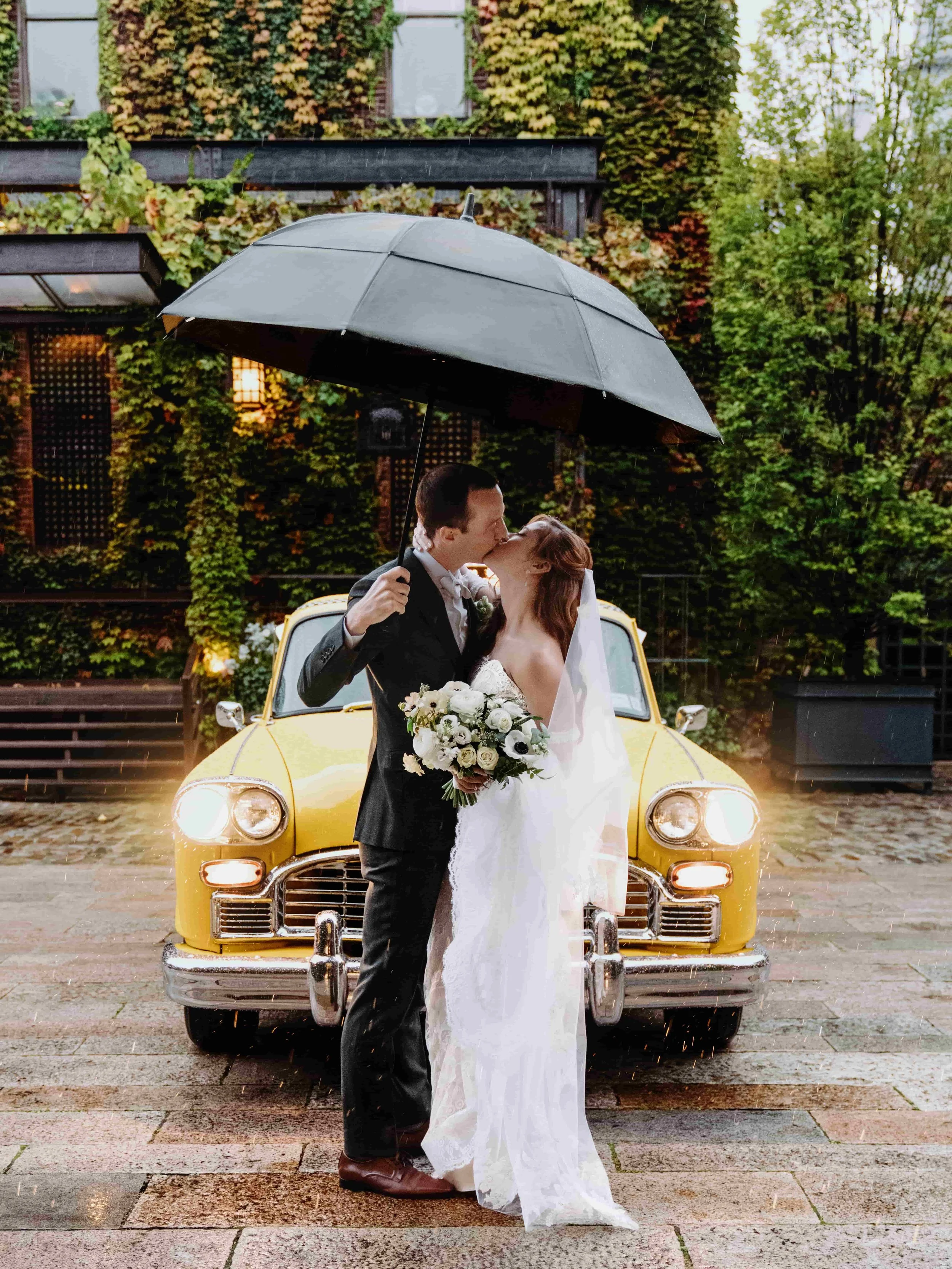
Judge full galleries, not Instagram grids. Anyone can curate nine editorial frames; the style only proves itself across a complete wedding. Ask to see two or three full galleries and check whether reception coverage holds the same visual standard as portraits.
Questions worth asking on the discovery call:
"Show me a full gallery from a dark venue." Editorial control of light is the hardest part of the style. Dance floors and dim ballrooms expose whether "loose editorial" is a skill or a hashtag.
"How do you direct couples during portraits?" You want to hear about prompts and movement, not pose lists.
"How much time do you need for portraits?" Loose editorial teams typically answer 20 to 40 minutes. If the answer is two hours, you are booking classic editorial with a trendy label.
"Do you shoot video in the same style?" If they offer both, ask to see a film and a gallery from the same wedding side by side.
On pricing: loose editorial sits mostly in the premium segment, since the style demands strong technical range. Market data from The Knot puts average US wedding photography spend around the low four figures, with experienced editorial teams in major markets such as New York and Los Angeles typically starting above that average. Our own photography starts at $1,900 for four-hour elopement coverage, with eight hours at $4,800 and ten hours at $5,890 – the full list is on our wedding packages page.
FAQ
-
Loose editorial is a wedding photography style combining editorial technique (deliberate composition, dramatic light, fashion-inspired framing) with a documentary approach to people. The photographer directs the visual frame but never scripts reactions or emotions. Galleries look polished and magazine-ready while every moment inside them stays real and unrepeated.
-
Essentially yes. "Candid editorial," "relaxed editorial," and "loose editorial" describe the same hybrid: unposed moments captured with editorial visual standards. "Loose editorial" is the term photographers use most; "candid editorial" appears more in trend coverage aimed at couples. When comparing vendors, look at full galleries rather than labels, since usage varies.
-
Documentary photographers observe without intervening at all, so the gallery's look depends on what the day naturally provides. Loose editorial photographers actively shape light, angles, and composition, and use light prompting during portraits, while keeping all moments unscripted. Documentary prioritizes the record; loose editorial prioritizes the record and the image quality equally.
-
Usually somewhat, yes. The style requires mastery of both editorial lighting and fast documentary shooting, so experienced loose editorial teams price in the premium range for their market. In cities like New York, Los Angeles, and San Francisco, expect starting rates above the national average for wedding photography, with photo and video bundles offering the best value.
-
Typically 20 to 40 minutes, noticeably less than classic editorial sessions. Because the photographer uses movement prompts instead of building poses shot by shot, strong frames come quickly. Many couples split this into two short sessions: one after the first look and ten minutes at sunset, keeping most of the cocktail hour free for guests.
-
Yes. A loose editorial wedding film pairs cinematic, composed frames with fully documentary sound and action: real vows, real toasts, no staged scenes. The approach works best when photo and video come from one team or from teams that share a visual language, so the album and film feel like one continuous story.
-
Request two or three complete wedding galleries, not portfolio highlights. Check three things: reception and dance floor images hold the same standard as portraits, couples never look stiffly posed, and the photographer can explain their prompting method in plain language. A dark-venue gallery is the fastest reliability test of editorial skill.
Conclusion
Loose editorial is not a filter or a preset. It is a working method: editorial standards applied to unrepeatable reality, in photographs and on film. If that balance of intention and honesty sounds like your wedding, look for a team that can show it to you across full galleries and full films, in the light your venue will actually have.
Planning a wedding in New York or Los Angeles?
Tell us your date and venue, and we will talk you through loose editorial photography and film as one production.