Drone Filming for Wedding Videos: The Cinematic Add-On That Changes Everything
Couples considering drone footage for their wedding film usually ask one of two things: "Is it worth the extra cost?" or "Will our venue even allow it?" Both are the right questions — and neither has a universal answer.
Quick Answer: Drone filming for wedding videos adds aerial perspective that ground cameras physically cannot capture — venue scale, landscape context, and transitional shots between ceremony and reception. In NYC, it costs $500–$1,500 as an add-on and requires permits filed 30+ days in advance. It's worth it for outdoor or estate venues; less so for indoor-only or dense urban locations with no airspace flexibility.
What Does Drone Filming Actually Add to a Wedding Film?
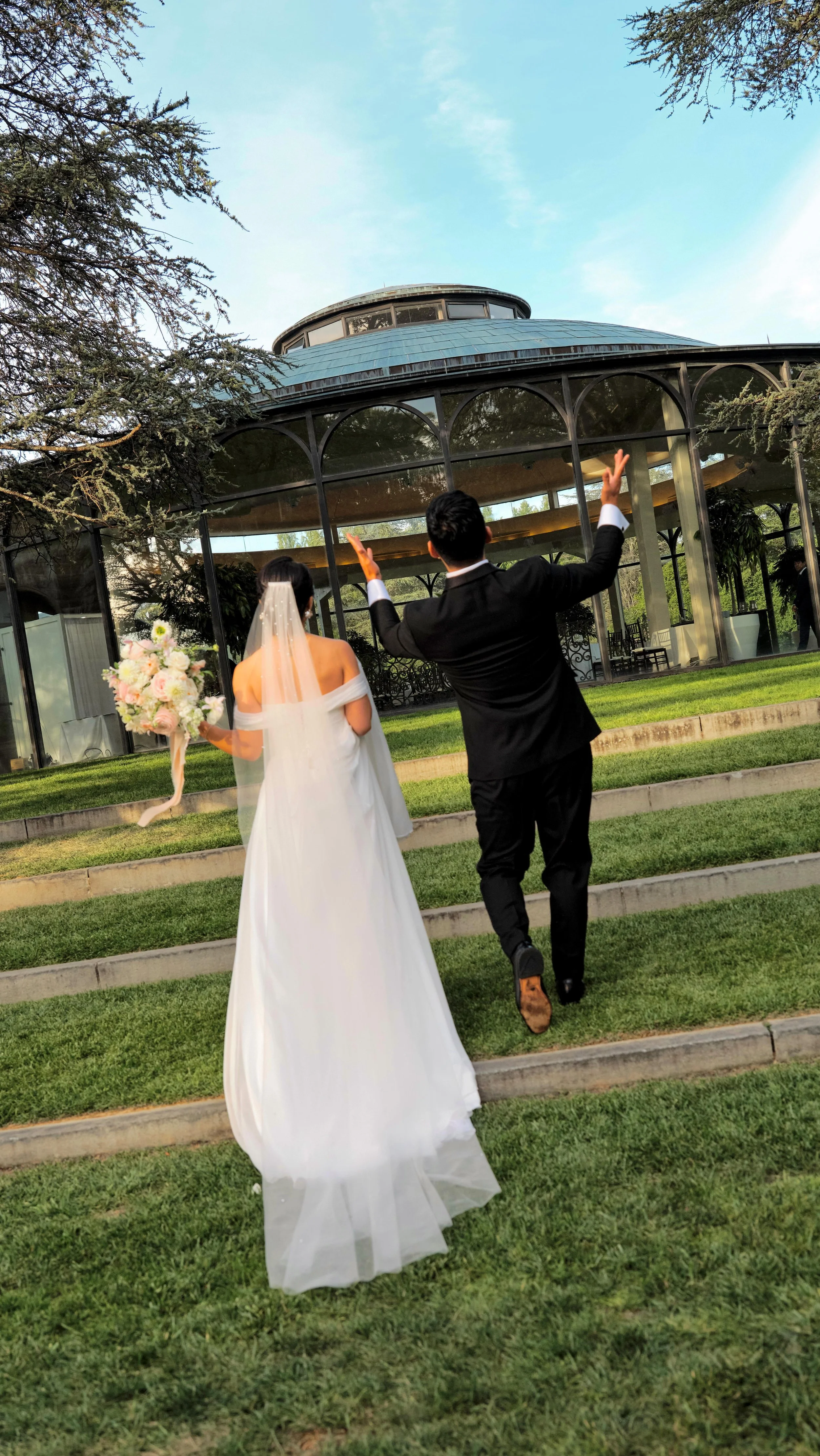
Drone footage gives a wedding film a third spatial dimension. Ground cameras capture moments at eye level — drone footage captures where those moments happen. The result is context: the estate grounds, the waterfront, the vineyard rows. Shots that tell the viewer this day existed somewhere specific, not just in a beautifully lit room.
When used with intention, drone or cinematic video add-ons for weddings do three things no ground camera can:
Establish scale. A Gilded Age mansion reads differently from 200 feet above than from the driveway. The aerial shot earns every interior frame that follows it.
Mark transitions. The drone rise after the ceremony, the slow pull-back as reception lights come on — these shots give the film rhythm, the way a cut to black signals a shift in a feature film.
Place the couple in the world. Two people in a 300mm frame feel intimate. Those same two people seen from above in an open garden or on a coastal bluff feel significant — their story located inside something larger than themselves.
This is what separates drone footage that looks impressive from drone filming that means something.
Is Drone Footage Worth the Extra Cost?
For outdoor and estate weddings, yes — drone or cinematic video add-ons for weddings consistently produce some of the most memorable shots in the final film. For indoor-only or dense urban venues without usable airspace, the return is significantly lower.
The honest breakdown:
Estate / vineyard / waterfront — High value. Grounds, landscape, and architecture are exactly what aerial perspective is built for.
Outdoor garden / park — Medium to high. Depends on permit clearance and what the surroundings actually look like from above.
NYC rooftop — Medium. Skyline context is strong; airspace restrictions and permit requirements are real.
Indoor ballroom only — Low. Exterior-only shots rarely justify the cost when there is no compelling landscape around the building.
Dense Manhattan block — Low. Limited usable airspace, and the visual payoff above a city block is minimal.
According to WeddingWire, drone add-ons for wedding videography typically range from $350 to $1,500 depending on the provider's certification level, equipment, and whether permit handling is included. Budget separately for permit fees in regulated markets like New York City.
Should I Choose Drone Filming or a Cinematic Video Add-On — What's the Difference?
These are two distinct things, and the terminology is often used interchangeably in ways that cause confusion.
Drone add-on means specifically aerial footage captured by an unmanned aircraft. It requires FAA Part 107 pilot certification, permits in regulated areas, and a cinematographer who can operate both the drone and compose a shot worth keeping.
Cinematic video add-on refers more broadly to supplementary film elements beyond standard documentary coverage. This could be a second camera operator, a dedicated gimbal sequence, a short-form edit delivered separately from the main highlight, or a social media cut with a distinct visual treatment.
At Arrakis Films, both types of drone or cinematic video add-ons for weddings serve the same goal: a film with the visual grammar of cinema. The drone is one tool in that vocabulary. A ground-level gimbal sequence through a candlelit reception can be more powerful than aerial footage over a parking structure. The choice is directorial, not promotional.
Who Is Drone Filming Right For?

Not every couple needs drone footage, and knowing whether you do before booking saves money and avoids disappointment.
Drone filming is a strong fit if:
Your ceremony or reception has outdoor grounds, a waterfront, rooftop, vineyard, or architectural exterior worth seeing from above
Your venue is outside dense urban airspace — Hudson Valley, Hamptons, Long Island, NJ waterfront, Westchester, or LA hillside venues
Your wedding film will be longer than a 3-minute highlight — aerial shots need room to breathe in an edit
Arrival shots, first-look in open landscape, or a grand exit are part of your day
Drone filming adds less value if:
Your wedding is entirely indoors with no usable exterior
You're at a Manhattan venue where airspace permits are uncertain or the surrounding block offers no visual payoff
Your timeline is already tight — drone setup and permitted flight windows take time
Cinematic video add-ons (ground-based) are often the better choice when:
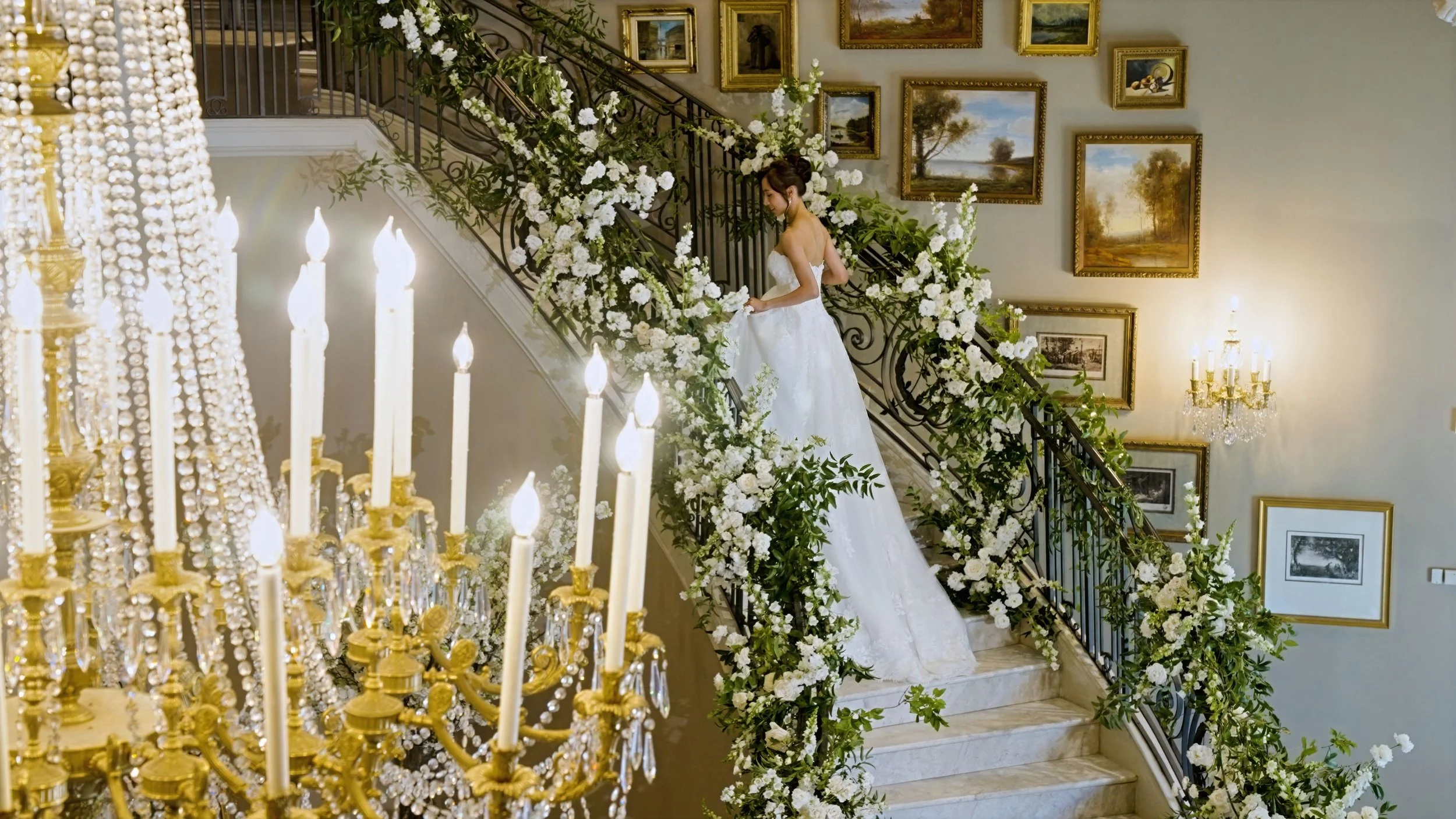
The venue is visually rich indoors — cathedral ceilings, candlelight, floral installations — and the story is inside, not above
You want a second edit format (Instagram cut, ceremony-only film) rather than new camera angles
Can You Fly Drones at Wedding Venues in New York City?
Yes — but it requires advance planning that most couples and some videographers underestimate.
Under NYC Admin Code §10-126(c), launching or landing a drone anywhere in the city requires an official NYPD permit filed through the city's UAS (unmanned aircraft systems) portal. Applications must be submitted at least 30 days before the shoot date. On top of that:
The drone pilot must hold an FAA Part 107 Remote Pilot Certificate
Commercial liability insurance is required, with the City of New York named as additional insured
Many shoots also require a separate filming permit from the Mayor's Office of Media and Entertainment
Central Park, Prospect Park, and most city-managed parks have additional restrictions layered on top of the above.
What to ask any videographer offering NYC drone coverage:
Are your pilots FAA Part 107 certified?
Do you handle all city and venue permitting, or does that fall to us?
What is your permit lead time, and does it affect our booking deadline?
What happens if the permit is denied — is the drone add-on refundable?
Do you carry commercial liability insurance naming the city as additional insured?
Venues outside Manhattan — private estates, Hudson Valley properties, Long Island, the Jersey waterfront — typically have significantly more airspace flexibility and shorter lead times.
How Arrakis Films Approaches Aerial Cinematography
Every creative decision starts with the location and the story — drone footage included.
Before any shoot, we assess the venue's airspace situation, permit requirements, and the specific shots the geography makes possible. We do not include drone footage as a default deliverable and reverse-engineer a reason to use it. We start with what the film needs.
Our technical approach to drone or cinematic video add-ons for weddings:
Footage is shot with the same color science and compositional logic as ground cameras — aerial and ground footage cut together without looking like two separate productions
We use gimbal + handheld hybrid on the ground alongside aerial to give the edit tonal range: smooth and cinematic where the moment calls for it, natural and immediate where it doesn't
Backup recording on redundant cards — aerial footage lost to a corrupt card is irreplaceable
Audio from drone sequences is layered with ceremony audio, not ambient wind — the sound edit matters as much as the image
Frequently Asked Questions
-
For elopements at scenic outdoor locations — Hudson Valley overlooks, coastal spots, vineyard properties — drone footage is often the single most impactful shot in the film. The intimacy of a small wedding actually makes aerial context more powerful, not less. For an indoor elopement in a hotel or restaurant, it adds minimal value. Location determines the answer more than guest count.
-
Expect to budget $500–$1,500 for a drone add-on from a properly certified videographer in New York. Lower prices often mean uncertified operators or permit costs passed to the client separately. Some teams include drone coverage in higher-tier packages with no separate line item. Always confirm whether permit fees and pilot certification are included in the quoted price.
-
Venues with private outdoor grounds — estates in Westchester, Long Island properties, waterfront venues in Brooklyn or the Hudson Valley — generally accommodate drone filming with standard permitting. Most Manhattan venues in dense airspace have restrictions that require NYPD UAS permits and sometimes venue-specific approval. Outdoor ceremony spaces in city parks require additional park department clearance on top of the NYPD permit.
-
Book at least 60–90 days before your wedding if permits are required. The NYPD UAS application window alone requires 30 days, and there are additional steps — insurance documentation, filming permits from the Mayor's Office — before that application can be submitted. For venues outside NYC proper, the lead time is shorter but advance planning is still required.
-
A drone shot is aerial — captured by an unmanned aircraft above the venue. A gimbal shot is ground-level but stabilized electronically, producing smooth, cinematic movement through ceremony aisles, around couples, or through reception spaces. Drone footage establishes location and scale. Gimbal footage brings the viewer into the physical space. Most cinematic wedding films use both: aerial for context, gimbal for immersion.
-
Yes. We manage all FAA and NYPD permit applications as part of the drone add-on process. You will not need to navigate permit paperwork independently. If a permit is denied for a specific location, we discuss alternatives before your date — not after.
Ready to Add Aerial Cinema to Your Film?
If your venue has a story worth seeing from above, drone filming for wedding videos can define the entire film. If it doesn't — a well-executed ground sequence will always beat a mediocre drone shot.
Every project starts with a conversation about location, light, and what the story actually needs. We will tell you honestly whether drone footage is right for your day.